 By st20113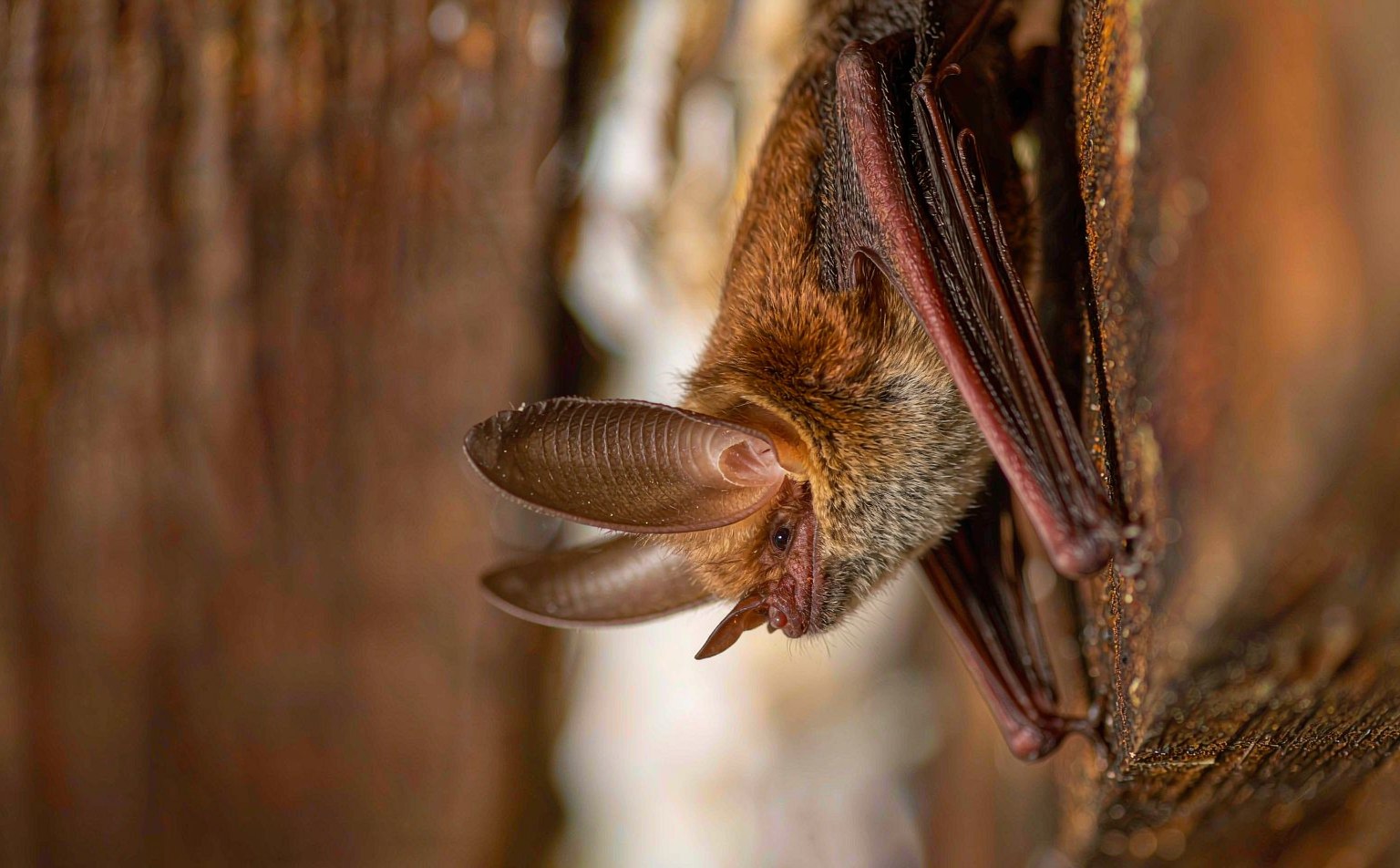
Plecotus auritus | Brown Long-eared Bat
Introduction
The Brown Long-eared Bat (Plecotus auritus) is one of the most endearing and instantly recognizable bats of Europe, a small, furry mammal whose enormous ears, nearly as long as its body, give it an almost comical, wide-eyed appearance. A creature of the night, it spends its days roosting in the quiet of buildings, tree cavities, and bat boxes, emerging at dusk to hunt insects on the wing through woodland, gardens, and along hedgerows. Among the many bats of the continent, few are as closely associated with human settlements and broad-leaved woods as this gentle, agile flyer.
Widespread and familiar across temperate Europe, the Brown Long-eared Bat is a beneficial neighbor to people, consuming vast numbers of moths, flies, and other nocturnal insects each summer. Its tolerance of modified landscapes has helped it remain common even as some other bat species have declined, and its presence in a garden or attic is a sign of a healthy, insect-rich environment.
As a member of the rich European bat fauna, it shares the night sky with a variety of relatives, including the Daubenton’s bat and the northern bat, each exploiting a slightly different slice of the same aerial hunting grounds.
Taxonomy
The Brown Long-eared Bat was first described by Carl Linnaeus in 1758 and is the type species of the genus Plecotus, the long-eared bats, found across Europe, Asia, and North Africa. Its scientific name is apt: Plecotus combines the Greek for “folded” and “ear,” while auritus means “eared,” a direct nod to the animal’s most striking feature.
The genus Plecotus belongs to the family Vespertilionidae, the vesper or evening bats, the largest family of bats in the world. Several Plecotus species occur in Europe, and telling them apart often requires measurement of the tragus, the small flap inside the ear, since the external similarity between species can be close.
Molecular studies place the vesper bats within the suborder of microbats, the echolocating bats that navigate and hunt by sound rather than sight. The Brown Long-eared Bat’s lineage reflects a long history of nocturnal insectivory, and its huge ears are a specialized adaptation for detecting the faint sounds of prey and for the precise echolocation that guides its flight.
Physical Characteristics
The Brown Long-eared Bat is a small bat, with a body length of about 4 to 5 centimeters and a wingspan of 24 to 28 centimeters, weighing only 6 to 12 grams. The fur is long, soft, and a warm brown on the back, paler and greyish on the belly, giving the animal a plush, mouse-like look, while the face is pale and almost rabbit-like in its gentleness.
The defining feature is the ears, which are very long, broad, and rounded, often as long as the body itself, and which the bat can fold back and tuck under its wings while resting. A tall, pointed tragus stands within each ear, and the eyes, though small, are dark and noticeable against the pale face. The wings are broad and rounded, suited to slow, maneuverable flight among branches and around buildings.
In flight the bat appears moth-like and unhurried, quite different from the fast, straight dashes of open-country species. Juveniles resemble adults but are smaller and greyer, and the species’ overall impression is of a delicate, furry creature whose outsized ears dominate its otherwise tiny frame, a design tuned to a life lived by sound in the dark.
Habitat
Brown Long-eared Bats occupy a wide range of wooded and human-modified habitats, from deciduous and mixed woodland and parkland to orchards, gardens, and the edges of farmland. They roost in tree cavities, under bark, in bat boxes, and frequently in buildings, where they favor quiet roof spaces, lofts, and wall voids, often returning to the same sites year after year.
The key requirements are roosting features by day and insect-rich hunting ground by night, with the bats typically foraging low and slowly along woodland edges, hedgerows, and around streetlights where moths gather. They are less tied to water than some relatives and may hunt well away from streams, though they readily use riparian trees where these are available.
Although fundamentally associated with broad-leaved trees, the species has adapted well to the varied mosaic of the farmed and suburban landscape, and it is one of the bats most likely to be found roosting in houses. Its ability to exploit both natural and artificial roosts has made it one of the more resilient members of the European bat community.
Diet
The Brown Long-eared Bat is a dedicated predator of insects, taking a broad variety of nocturnal prey but specializing in moths, which it often catches by gleaning from surfaces as well as by aerial pursuit. Its large ears allow it to hear the faint sounds of a moth’s wingbeats or its movements on leaves, and it can locate prey by sound alone in complete darkness.
Flies, beetles, mosquitoes, and other small insects round out the diet, and the bat’s slow, maneuverable flight lets it work close to vegetation and structures where such prey concentrate. Unlike some bats that scoop prey from open water, the Brown Long-eared Bat tends to hunt among and around foliage, plucking insects from leaves and bark with its mouth or tail membrane.
A single bat may consume a substantial fraction of its body weight in insects on a warm summer night, and over a season a colony removes enormous numbers of pest species from the local environment. This reliance on abundant, silent-flying prey links the species closely to the health of the invertebrate community, and to the availability of roosts that let it rest safely through the day.
Reproduction
Breeding follows the pattern typical of temperate bats, with mating in autumn and the sperm stored by the female until spring, when a single young is born after a delayed development. The female gathers in small maternity colonies in warm, sheltered roosts, where she gives birth to one pup, occasionally two, in early summer.
The pup is born blind and helpless but develops rapidly, clinging to the mother or the roost wall and being fed on milk until it can fly at about three weeks of age. The mothers recognize their own young by voice and scent among the cluster, and the colony is busy with the comings and goings of nursing females through the short northern summer.
Males usually roost apart from the maternity groups, and the young become independent by late summer before the bats begin to build the fat reserves needed for hibernation. As with other temperate bats, the species breeds slowly, producing only one offspring per year, which makes populations vulnerable to any increase in adult mortality but resilient once stable roosts are secured.
Conservation
The Brown Long-eared Bat is widespread and common across much of its range and is classified by the IUCN as a species of Least Concern, though it is protected under national and European law as all bats are. In Britain and elsewhere it has even benefited from the provision of bat boxes and the growing awareness of bat conservation among householders and foresters.
The principal threats are the loss and disturbance of roost sites, the isolation of woodlands, and the decline of insect prey through pesticide use and the intensification of land management. Renovation of old buildings without regard for roosting bats can destroy colonies, and the removal of mature, cavity-rich trees reduces the natural roosting and foraging habitat on which the species depends.
Conservation measures center on protecting known roosts, retaining veteran trees and hedgerows, reducing light pollution and pesticide use, and installing bat boxes to supplement natural sites. Because the Brown Long-eared Bat uses both houses and woods, cooperation between landowners and conservationists is especially effective, and the species stands as a small but encouraging example of how bats and people can share the same landscape.
Fun Facts
- The bat’s ears are so long it often folds them back and tucks them under its wings while resting, leaving only the pointed tragus visible.
- It can catch moths not only in flight but by plucking them gently from leaves, using sound to locate prey it cannot see.
- A single Brown Long-eared Bat may eat thousands of insects in a single summer night, acting as a natural pest controller.
- The species navigates by echolocation so fine that it can detect a human hair suspended in the air of a dark room.
- Despite its tiny size, it can live for more than a decade in the wild, returning to the same roost year after year.