 By st20113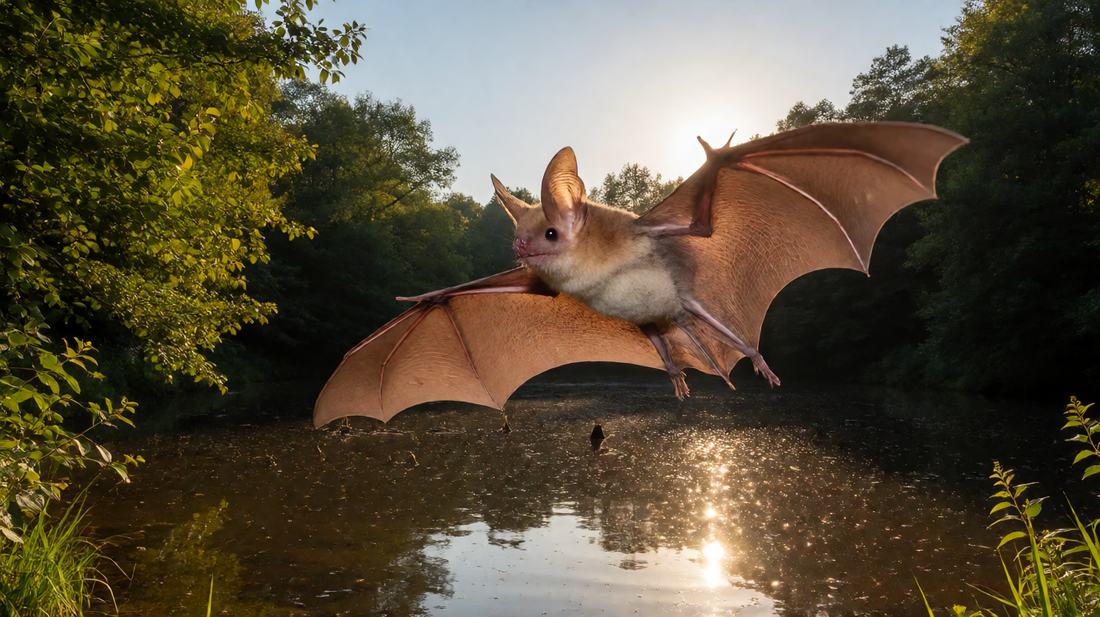
Myotis nattereri | Natterer’s Bat
Species Profile · Vespertilionidae
Natterer’s Bat
A bat that takes spiders straight out of their webs, and the only one in Europe with a comb of stiff bristles along its tail.
IUCN: Least Concern
Range
Forearm
Wingspan
Weight
Roost
The bat that steals from webs
A slow, precise hunter of the cluttered wood
The Natterer’s bat is a medium bat with pale wings and a pale pink face. It does something few bats do. It takes spiders straight from their webs. It also picks caterpillars off leaves and takes insects from the ground. Heinrich Kuhl described the species in 1817.
He named it after the Austrian naturalist Johann Natterer, who spent years in Brazil. The bat lives across most of Europe, in parts of the Middle East and in a corner of North Africa. In summer it roosts in old timbered buildings, in tree holes and in bat boxes. Few people see it. It comes out an hour after sunset and flies slowly among trees, usually below 5 m.
Bat workers know it at once. It is the only European bat with a fringe of stiff hairs along the free edge of its tail membrane. That small detail explains much about how the animal lives.
Family tree
Myotis, the richest bat genus
The Natterer’s bat sits in the family Vespertilionidae, the evening bats. That is the largest bat family in the world. It also sits in the genus Myotis, which holds about 120 species. After the rodents, Myotis is the richest genus of mammals. Kuhl put the bat in Myotis in 1817. He called it Vespertilio nattereri. The name Myotis nattereri has stood for most of the time since.
The genus is hard work. Many of its members look alike. Small details of the ears, the teeth and the wing bones tell them apart. Natterer’s bat is a close relative of the Daubenton’s bat, a species that skims the water. The two share a genus, a body size and much of Europe. They often roost and hibernate in the same places. For nearly 200 years the name covered every Natterer’s-like bat from Ireland to Iran.
DNA studies changed that. In 2006 the Iberian animals became a separate species, Myotis escalerai. In 2019 two more were split off. Myotis crypticus came from the Alps and Italy, and Myotis zenatius from Morocco and Algeria. True Myotis nattereri is now the bat of temperate Europe and the Balkans. Old records from Spain and Portugal belong to the other species. A few Middle Eastern groups still wait for a name.
Pink face, bristled tail
How to identify one
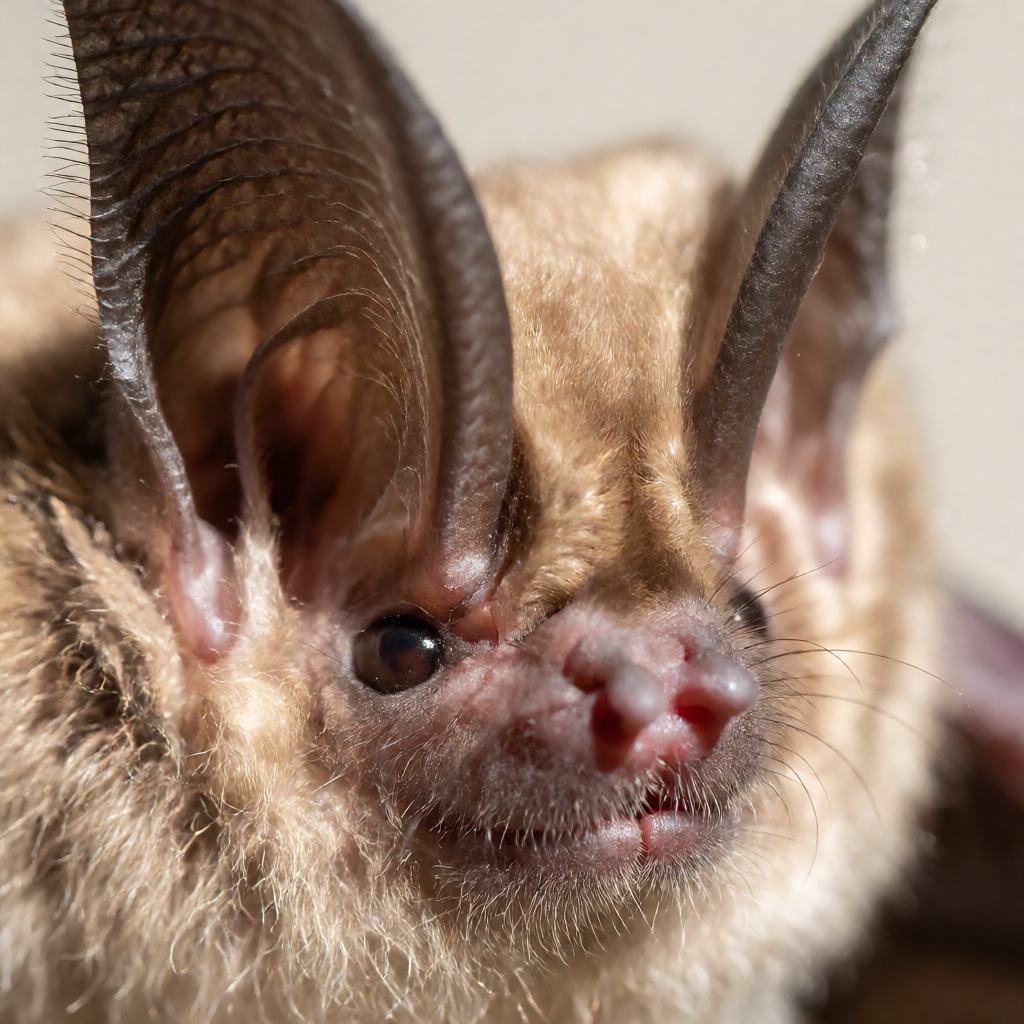
The Natterer’s bat is built for slow, precise flight in cluttered places. It is not built for speed in the open. Head and body measure 40 to 50 mm. The forearm, the standard measure for bats, is 36 to 43 mm long. The wingspan runs from 245 to 300 mm. Adults weigh 7 to 12 g, about the same as 2 sheets of A4 paper. The fur is short and dense. It is buff-brown or grey-brown on the back and whitish-grey below, so the two surfaces contrast sharply.
The face is bare and pink. That gave the animal its old name, the red-armed bat. The ears and wing membranes are smoky grey. The ears are long and narrow, and they curve back at the tip. The tragus, a small lobe inside each ear, is long, thin and sharp. The calcar, a spur of cartilage, is shaped like the letter S. One feature settles the identity of the species. A fringe of stiff, curved bristles lines the free edge of the broad tail membrane.
Two rows of short bristles run along the rim. No other European bat has anything like them. The bristles look like sense organs. The bat scoops much of its food out of the air or off leaves with the tail membrane. It does not catch the food in its mouth. The bristles probably tell the bat what it has caught.
1
2
3
Old timber and tree holes
Where it lives
The Natterer’s bat is a woodland animal that has learned to use buildings. It wants mature trees and old timber. Across most of its range it hunts in deciduous and mixed forest, in parkland, on wooded farms and along rivers and lakes. It flies from sea level up to about 2000 m in the mountains. It likes a mix of woodland and open ground. It hunts close to plants, often within a few metres of the ground or the leaves. Few bats of its size do that. Summer roosts are mostly in old buildings with heavy timber: castles, manor houses, churches and old barns.
The bat squeezes into cracks in beams and into gaps at the joints. It also uses holes in trees, bat boxes and bridges. In central Europe, colonies in tree roosts hold 20 to 50 females. In large buildings they may hold 120. One winter cluster of about 150 animals has been found at a single site. Colonies move often, every 2 to 5 days, so numbers in a building can swing from night to night. In winter the bat hibernates in caves, mines, tunnels, cellars and rock cracks. It wedges itself near the entrance, where the air is cold and steady.
It reaches hibernation sites in December, peaks in January or early February and leaves by early March. The animals squeeze into gaps so tight that they are often found on their backs, on their sides or resting on their heads. Radio tracking shows that the species stays put. Summer roosts and winter sites usually lie within 40 km of each other. They are rarely more than 120 km apart. Moves of 266 to 327 km have been recorded.
Surface hunter
What it eats
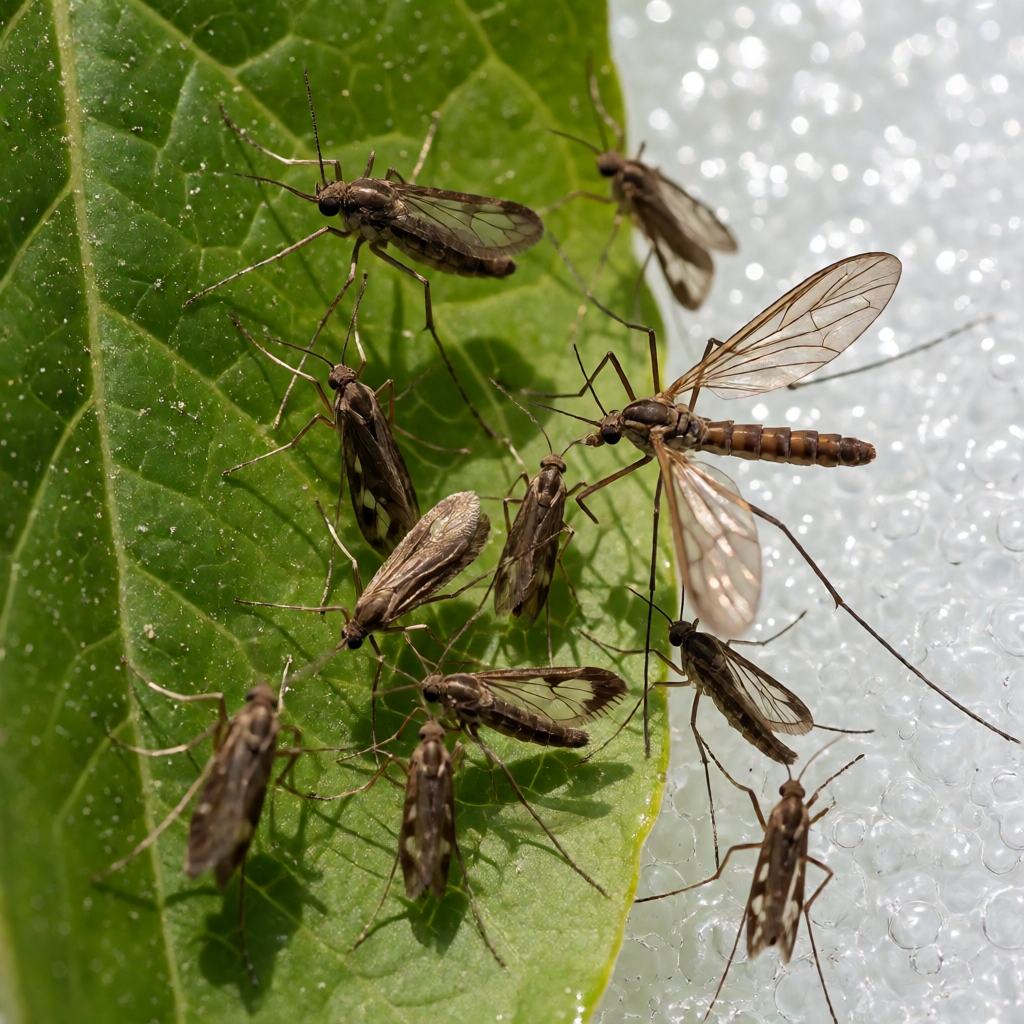
The Natterer’s bat hunts insects and takes most of its food from surfaces. It does not take them from open air. Flies, and above all midges, form the bulk of the diet. Small moths, caddis flies and lacewings come next. Beetles, small wasps, spiders, harvestmen and caterpillars appear often. In some areas the bat takes millipedes, woodlice and water insects such as crane flies and stoneflies. Much of this prey flies weakly or not at all.
That is why the bat hunts so close to plants. It hovers beside leaves and picks insects off them. It can also take spiders straight from their webs. That takes a very sharp echo picture and a high tolerance for sticky silk. The bat carries larger items to a perch, a branch where it hangs and eats. The remains that fall below such perches tell bat workers what a local colony eats. Droppings under roosts show a lot of ground prey too, including spiders and caterpillars.
So the bat forages on the ground as well as in the air. Its echo calls are unusually quiet. They sweep from about 35 to 80 kHz, with most energy near 50 kHz. They are so faint that they are hard to record at any distance. On a bat detector they sound like fast, uneven clicks, like crumpling cellophane. Quiet, wide-band calls suit a bat that hunts near surfaces. They give a detailed echo without telling every moth in the wood where the bat is.
Colonies that move every few days
The breeding cycle
Natterer’s bats mate in autumn, though mating has been seen in every winter month. In September, males and females gather at swarm sites around cave entrances and old roosts. Females store sperm through the winter and release eggs in spring. Maternity colonies of adult females form in May and June. They last until July, sometimes into September or October, and they move roost often. Each female has 1 young, usually at the end of June or in early July.
The pup is born blind and naked and weighs only a couple of grams. For the first 3 weeks it lives on its mother’s milk. She leaves it in a crèche inside the roost while she hunts. Young bats make their first flights inside the roost at about 20 days. They are weaned and able to feed themselves by 4 to 6 weeks. Growth is fast, but these animals live long.
Individuals have reached 25 years, and more than a decade is not unusual. Females in most colonies are not ready to breed in their first year. One pup a year is a low rate. It means that numbers recover slowly from any loss. A colony disturbed in June or July may leave the roost and leave the pups behind. That is one reason every bat species in Britain is protected by law, and why roost checks need a licence.
Least Concern, locally scarce
Conservation
The Natterer’s bat is listed as Least Concern on the global Red List. The British assessment also classes it as Least Concern in England, Scotland and Wales, though it has become scarce in parts of the country. Its range is very wide, from Ireland to Kazakhstan, and no single threat covers all of it. That explains the global verdict. Local declines are real. They come from the slow loss of 3 things. The first is old timber.
The barns, churches and manor houses with thick beam joints make the best maternity roosts. Those are exactly the buildings that get repaired, converted or pulled down. The second is mature woodland with a rich insect fauna. The third is clean water, because many of the insects the bat eats come from rivers and ponds. Intensive farming strips out permanent pasture, hedgerows and old trees, and insect numbers are falling everywhere. Both changes cut the food supply. The bat is hard to find.
Its calls are quiet and people rarely see it. A colony can vanish with nobody noticing. The law protects the animals, their roosts and their resting places. Practical conservation means leaving old trees standing, keeping beam joints intact during repairs, avoiding disturbance from May to September and cutting farm chemical use. Bat detectors and surveys of droppings matter more for this species than for most. The animals themselves are so seldom seen.
Quick hits
Five things to remember
- It is the only European bat with a fringe of stiff bristles along its tail membrane.
- It can take spiders straight from their webs.
- Its echo calls are among the quietest of any European bat.
- It catches much of its food with the tail membrane rather than the mouth.
- Its old name, the red-armed bat, comes from the pink skin of its face and limbs.