 By st20113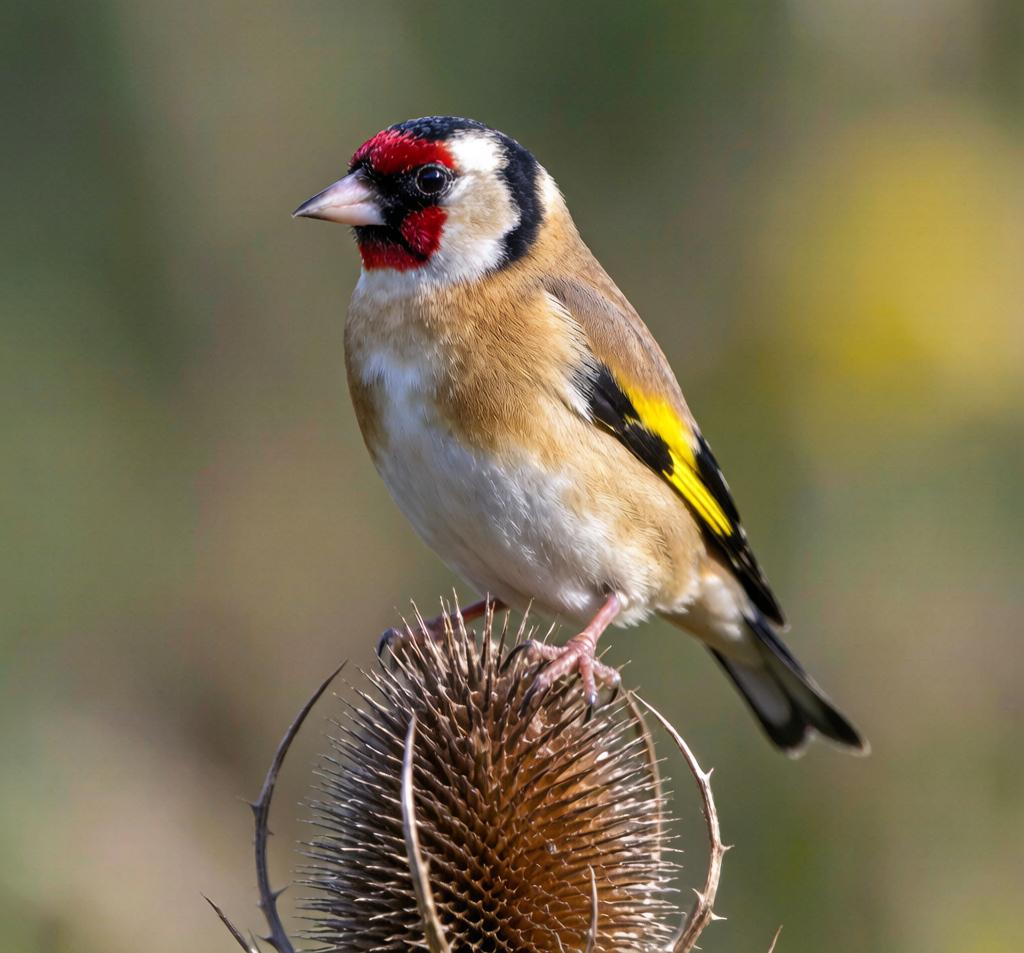
Introduction
The European goldfinch is among the most vibrant and recognizable songbirds across its range, instantly identifiable by its crimson face mask, golden wing bars, and elegant white cheeks.
Native to Europe, North Africa, and parts of western Asia, it thrives in open woodland, orchard meadows, and roadside verges where thistles and teasels go to seed.
The goldfinch has benefited enormously from changing agricultural practices, readily visiting bird feeders in winter when natural seed sources dwindle.
Its liquid, tinkling song and social flocking behaviour have made it a beloved subject for birdwatchers across the continent.
Like the common chaffinch and the Eurasian jay, it flourishes in wildflower-rich habitats across its broad European range.
Taxonomy
The European goldfinch belongs to the finch family Fringillidae, a diverse group of seed-eating songbirds with thick, conical bills.
Its scientific name Carduelis carduelis derives from the Latin for thistle finch, reflecting its strong association with thistle and teasel seeds as a primary food source.
The genus Carduelis has undergone significant taxonomic revision, and the goldfinch is now grouped alongside the siskin, greenfinch, and redpoll.
At least 13 subspecies are recognized across the species’ range, varying in plumage saturation and size from western Europe to Central Asia.
Physical Characteristics
The European goldfinch is a small finch, 12 to 14 centimetres in length with a wingspan of 21 to 25 centimetres and a weight of 14 to 19 grams.
The face is decorated with a vivid crimson red mask extending from the bill base to behind the eye, bordered by pure white above and below.
The crown, nape, and back are warm brownish-buff, contrasting sharply with the black wings that carry brilliant golden-yellow wing bars.
The bill is horn-pink and specialized for extracting seeds from the tightly packed flower heads of thistles, teasels, and other composite plants.
Habitat
The goldfinch inhabits open and semi-open landscapes dominated by wildflower meadows, hedgerow farmland, orchards, and woodland edges where seed-bearing plants flourish.
It has a strong association with areas dominated by thistles, teasels, and burdock, whose flower heads provide a rich and reliable seed source throughout summer and autumn.
The species readily colonizes parks, gardens, and roadside verges where wildflowers are permitted to grow.
In winter, goldfinches form large nomadic flocks that wander widely in search of seed sources, often mixing with siskins and redpolls on farmland and wetland margins.
Diet
The European goldfinch is a specialized seed eater with bill morphology perfectly adapted for extracting seeds from thistle heads, teasels, and other composite plants.
During the breeding season, adults also collect small insects and caterpillars to feed to nestlings, providing essential protein for rapid chick growth.
Winter flocks concentrate on seed-rich habitats including ruderal ground, farmland stubble, and garden feeders where nyjer and sunflower hearts provide reliable food.
Its willingness to visit garden feeders has supported dramatic population increases in parts of northern Europe where winter feeding is widespread.
Reproduction
Breeding begins in late April in southern Europe and May further north, with pairs forming monogamous bonds that typically persist for the breeding season.
The nest is a neat cup of grasses, moss, and lichen, lined with plant down and rabbit fur, placed in dense foliage, ivy, or thorny shrubs two to four metres above ground.
Clutches of four to six pale blue eggs with fine reddish speckling are incubated by the female alone for 11 to 13 days, while the male provisions her with seeds throughout.
Both parents feed the altricial chicks on regurgitated seeds and soft invertebrates for 13 to 18 days until fledging.
Conservation
The European goldfinch is assessed as Least Concern globally, with a large and apparently stable population estimated at 50 to 100 million individuals across Europe.
It is protected under the EU Birds Directive, which requires member states to maintain populations of all common wild bird species.
Threats include agricultural intensification, loss of hedgerows and field margins, and the use of herbicides that eliminate seed-bearing weeds.
Maintaining wildflower-rich road verges, protecting old hedgerows, and supporting seed mixes in agri-environment schemes all benefit goldfinch populations.
Fun Facts
The European goldfinch has been kept as a cage bird for more than 2,000 years, prized for its beautiful plumage and melodic song.
In the wild, goldfinches communicate using a complex song system that includes melodious warbling, metallic notes, and distinctive alarm calls.
Flocks of goldfinches working thistle patches create a distinctive soundscape of tearing seed cases and soft contact calls.
The species’ dramatic population increases in 20th-century Britain are largely attributed to the spread of winter bird feeding and nyjer seed in garden feeders.
[…] It is less close to the goldfinch, with which it was once grouped. The link with the goldfinch, Carduelis carduelis, is still a useful […]