 By st20113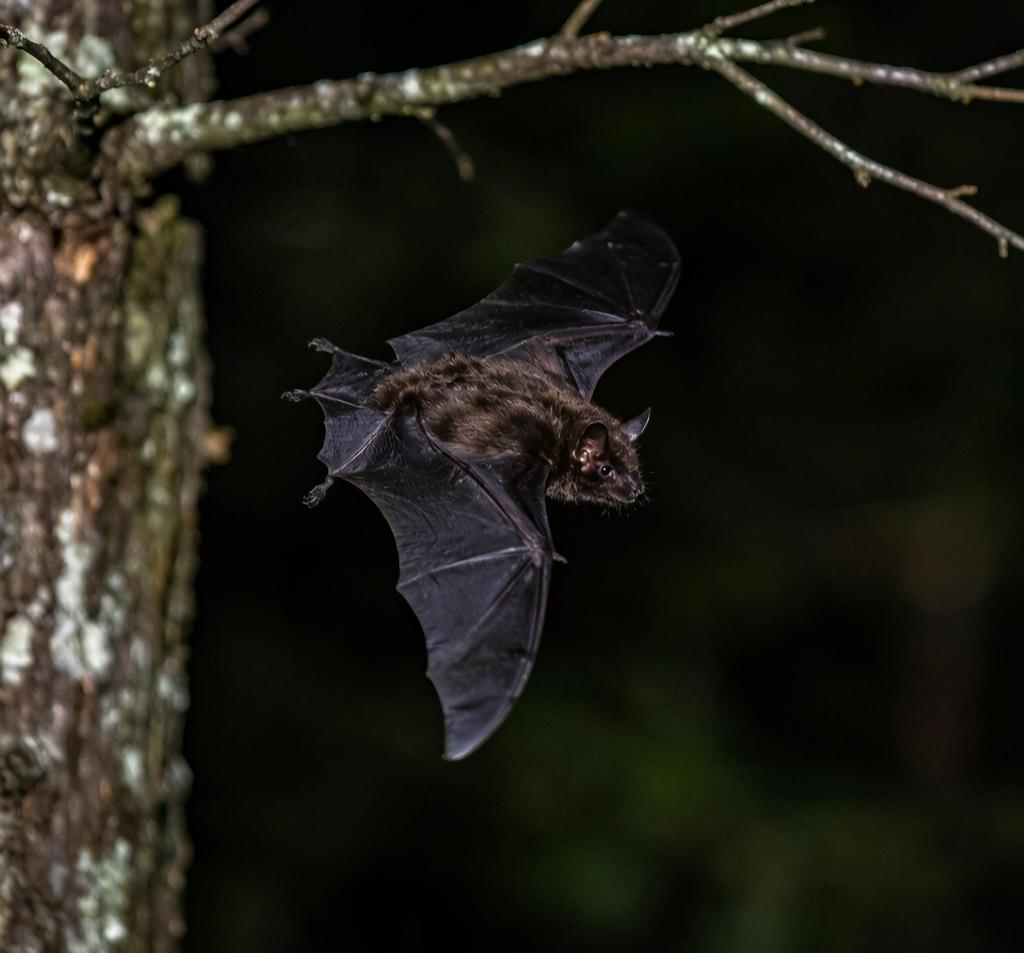
Introduction
The northern bat is one of the most cold-tolerant bat species in the world, thriving across the boreal forests and mountainous regions of northern Europe and Asia.
Its ability to roost in rocky crevices, buildings, and tree hollows allows it to exploit a wide variety of habitats from lowland wetlands to subalpine meadows.
A versatile hunter, it catches flying insects in open air, gleans arthropods from foliage, and pursues beetles along the ground with remarkable flexibility.
Echolocation calls adapted for both cluttered and open environments give it exceptional versatility in hunting strategies across its vast boreal range.
Its widespread distribution and stable populations make it one of the most successful boreal mammals on Earth.
Taxonomy
The northern bat belongs to the family Vespertilionidae, the most species-rich bat family globally with hundreds of species across every continent except Antarctica.
Its scientific name Eptesicus nilssonii honours Nilsson, the Swedish naturalist who first described the species from Scandinavian specimens.
The genus Eptesicus contains approximately 30 species distributed across the Americas, Europe, Asia, and Africa, all characterized by free tails enclosed in the interfemoral membrane.
Genetic studies reveal the northern bat is most closely related to the serotine bat and the North American little brown bat.
Physical Characteristics
The northern bat is a medium-sized bat with a wingspan of 240 to 290 millimetres and a body weight of 11 to 18 grams.
Its fur is uniformly dark brown above with pale-tipped hairs giving the dorsal surface a slightly frosty appearance, an adaptation for thermal insulation in cold northern climates.
The ears are relatively short and rounded compared to many other European bats, and the wings are broad and rounded, an adaptation for boreal forest environments.
Its teeth are small and sharp, reflecting a diet dominated by small flying insects caught in aerial hawking bouts or gleaned from surfaces.
Habitat
The northern bat is strongly associated with boreal and subalpine coniferous forest ecosystems, but its broad ecological tolerance allows it to exploit diverse habitats.
Summer roosts are found in rocky crevices, buildings, hollow trees, and bat boxes that provide warm microclimates for maternity colonies.
Foraging occurs over lake margins, forest clearings, river valleys, and urban gardens, with individuals commuting up to 20 kilometres from roost sites.
Winter hibernation occurs in deep caves, mines, and rock crevices where temperatures remain stable between 0 and 5 degrees Celsius, allowing survival in harsh continental winters.
Diet
The northern bat is an opportunistic, generalized insectivore whose diet varies seasonally and geographically according to prey availability.
Primary prey includes chironomid midges, moths, beetles, caddisflies, and mayflies captured in aerial hawking flights over water bodies and forest clearings.
Echolocation calls in the 25 to 45 kilohertz range allow it to detect and track small flying insects against complex backgrounds.
In boreal regions with short summer nights, the bat extends foraging into daylight hours, exploiting swarms of aquatic insects that emerge at dusk.
Reproduction
Mating occurs in autumn at swarming sites near hibernacula, with females storing sperm through winter and ovulating in spring upon emergence.
Gestation lasts approximately 60 to 70 days, culminating in the birth of one to three pups, typically twins, in June or July.
Maternity colonies form in warm roof spaces, bat boxes, and building crevices, with females aggregating in groups of 10 to 50 to benefit from communal thermoregulation.
Northern bats can live more than 30 years, though most individuals survive 5 to 15 years in the wild.
Conservation
The northern bat is listed as Least Concern globally, with a wide range and population that appears stable in most regions.
It is protected under national and international legislation including the Bonn Convention and the Eurobats Agreement, which require protection of roosting and hibernation sites.
Primary threats include disturbance and destruction of roost sites, loss of foraging habitat through intensive forestry, and wind turbine collisions in northern Europe.
Conservation efforts that retain old trees with suitable roosting cavities and minimize light pollution around foraging areas benefit this wide-ranging boreal bat.
Fun Facts
Individuals have been observed foraging at midnight in 24-hour daylight environments, exploiting the brief but intense summer insect hatches of the subarctic.
Remarkably faithful to both summer roost sites and winter hibernacula, individuals have been documented returning to the same cave crevice for more than 20 consecutive years.
It is one of the few bats that regularly forages over frozen ground and snow, a testament to the extraordinary insulating efficiency of its dense fur.
The northern bat shares its boreal forest habitat with the European water shrew, with both species exploiting wetland margins for food.
It coexists with the red fox across much of its range, with both species playing key roles as small mammal and insect predators in northern ecosystems.
In lowland wetlands the northern bat forages alongside the European water vole, another semiaquatic mammal of northern latitudes.