 By st20113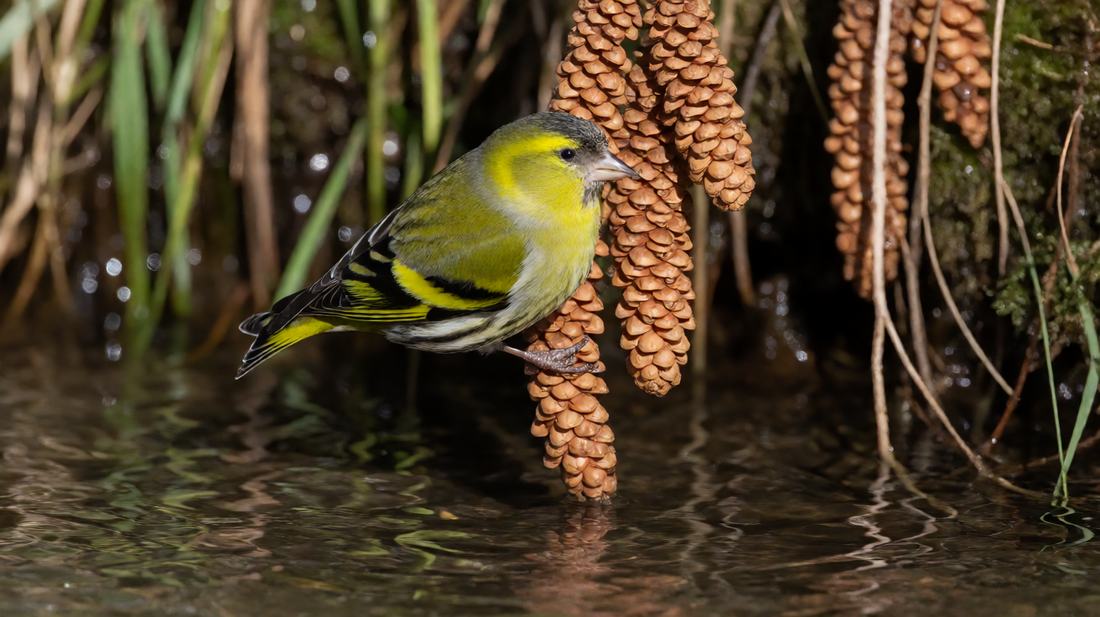
Spinus spinus | Eurasian Siskin
Species Profile · Fringillidae
Eurasian Siskin
A tiny, acrobatic finch of the northern conifer that hangs upside down to strip the cone — and that now brightens the winter bird table as the forests have been planted.
IUCN: Least Concern
Range
Length
Weight
Nest
Diet
The acrobat of the conifer
A finch that hangs upside down
The Eurasian siskin is a tiny, acrobatic finch of the family Fringillidae. It is among the most restless and most nomadic seed-eating birds of the northern forest. The same bird hangs upside down from the tip of a conifer to strip its cone in the taiga of Russia. In winter it visits the gardens and alder copses of Britain. Its sharp, twittering call makes it a welcome guest at the bird table. The bird lives in trees, not on the ground. The male in breeding dress is a neat little finch. He has a black crown.
His body is yellow and green. His wing bars are yellow. His rump is yellow. He is unmistakable among the conifers. He feeds in restless parties on the outer branches. He hangs at every angle to reach the seed. He gives a fast, see-sawing flight call as he moves. This makes him a constant presence of the boreal wood and the winter feeder.
The showy male and the streaked green female show the clearest sex difference among finches. The siskin likes conifer and birch, not open field. In Europe its numbers have spread and grown. The planting of conifer and the garden feeder gave it more homes. It is now a regular, abundant bird of the mixed wood and town. Its true home stays the forest of the north.
Family tree
Spinus, the small finches
The Eurasian siskin is in the genus Spinus, a group of small finches. They differ from the linnets and bullfinches by the finer, more pointed bill. They have a bold yellow and black wing pattern. The siskin is close to the European Goldfinch (Carduelis carduelis). That more colourful finch shares the seed-eating habit and the acrobatic way of feeding. This shows that the finches are a successful spread of bill specialists.
They have colonised the seeds of the northern plants in several lines. Linnaeus described the bird in 1758. Experts treat it as one wide form with no agreed subspecies. The birds of the east are a little larger than those of the west. The planting of conifer has let the temperate birds spread south of their natural range. The boreal birds have held their numbers.
The centre of the species stays the taiga. Its winter flocks of the west have grown. The bird is irruptive. The number that reach the south in a year depends on the size of the northern cone crop.
Black cap, yellow wing
How to identify one
An adult Eurasian siskin is 11 to 12.5 centimetres long. Its wingspan is 20 to 23 centimetres. The female weighs about 10 grams. The larger male can reach 18 grams. The tiny size and fine pointed bill give it a neat shape on the twig. Its flight is fast and roller-coaster. It flaps and glides as the flock skims low across the wood.
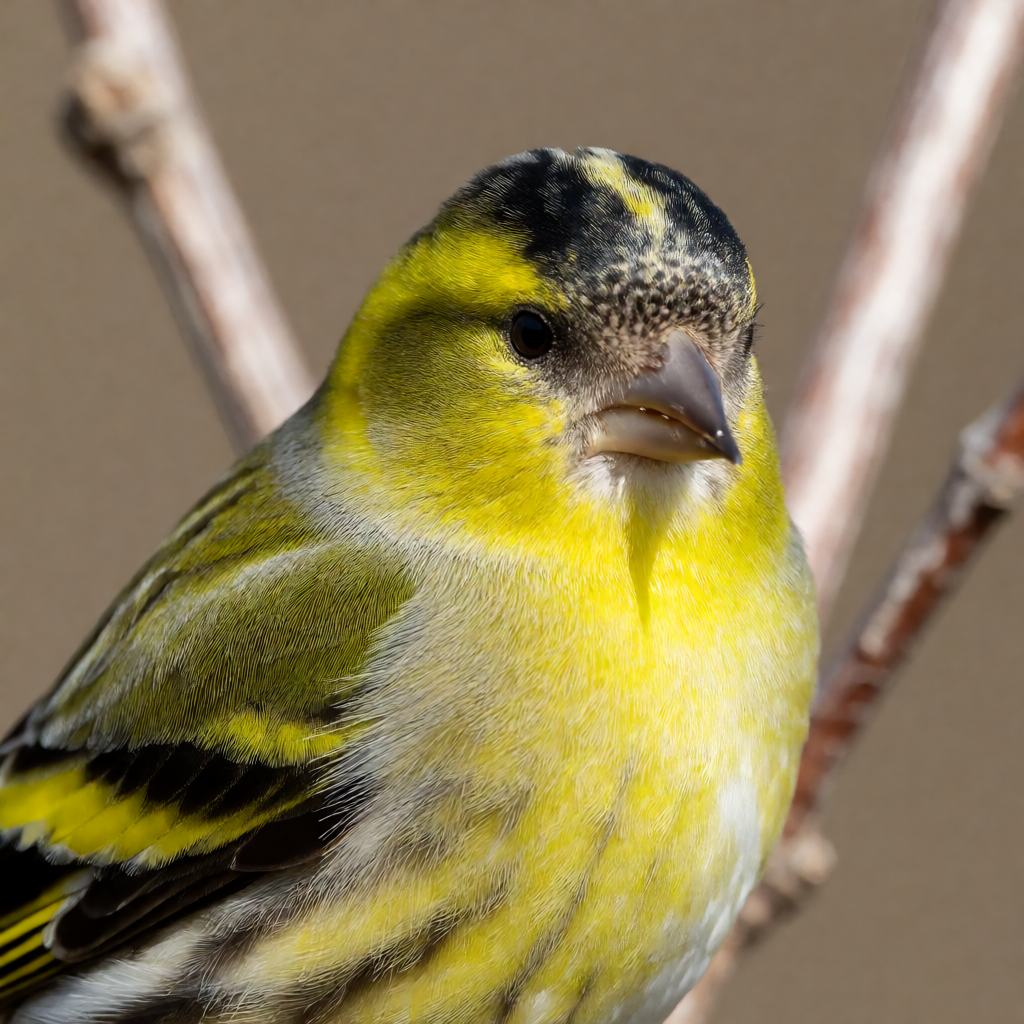
The male in breeding dress has a black crown and a black bib. His face and back are yellow-green. His wing bars and rump are yellow. His flank is streaked. The female is streaked green and yellow with no black cap and a plain face. The two are told apart by the head and the wing. The young bird looks like the female until its first autumn.
Then the male begins to show the black. The wings are short and pointed. Flight is fast and direct with a tight flock that twists as one. The voice is a sharp, see-sawing call in flight and from the perch. A soft warbling song is sung from an open post in spring. The wing feathers moult soon after breeding. The birds then gather in the flocks that take them south.
1
2
3
Conifer, birch and feeder
Where it lives
The siskin lives in the conifer and the mixed wood with a fringe of alder and birch. Above all it needs the seed of the cone and the catkin. It also needs the open water and the weedy margin of the forest. The species is absent from the closed broadleaf wood of the low plain and the intensively farmed field. It is a creature of the boreal and planted forest of the north and upland alike.
In Europe the birds are resident across the milder north and west to the limit of the conifer. They breed from the southern pine to the northern spruce wherever the cone crop is heavy. In the colder east the birds move south and west in winter in numbers that vary with the crop. The siskin is an irruptive, regular migrant. It travels chiefly by day in flocks that twist as one.
Rings show a single bird may return to the same wood for the whole of a life that can exceed eight years. The young disperse along the woodland to find their own ground. The garden feeder has let the bird winter well south of its natural range.
A cone-seed eater
What it eats
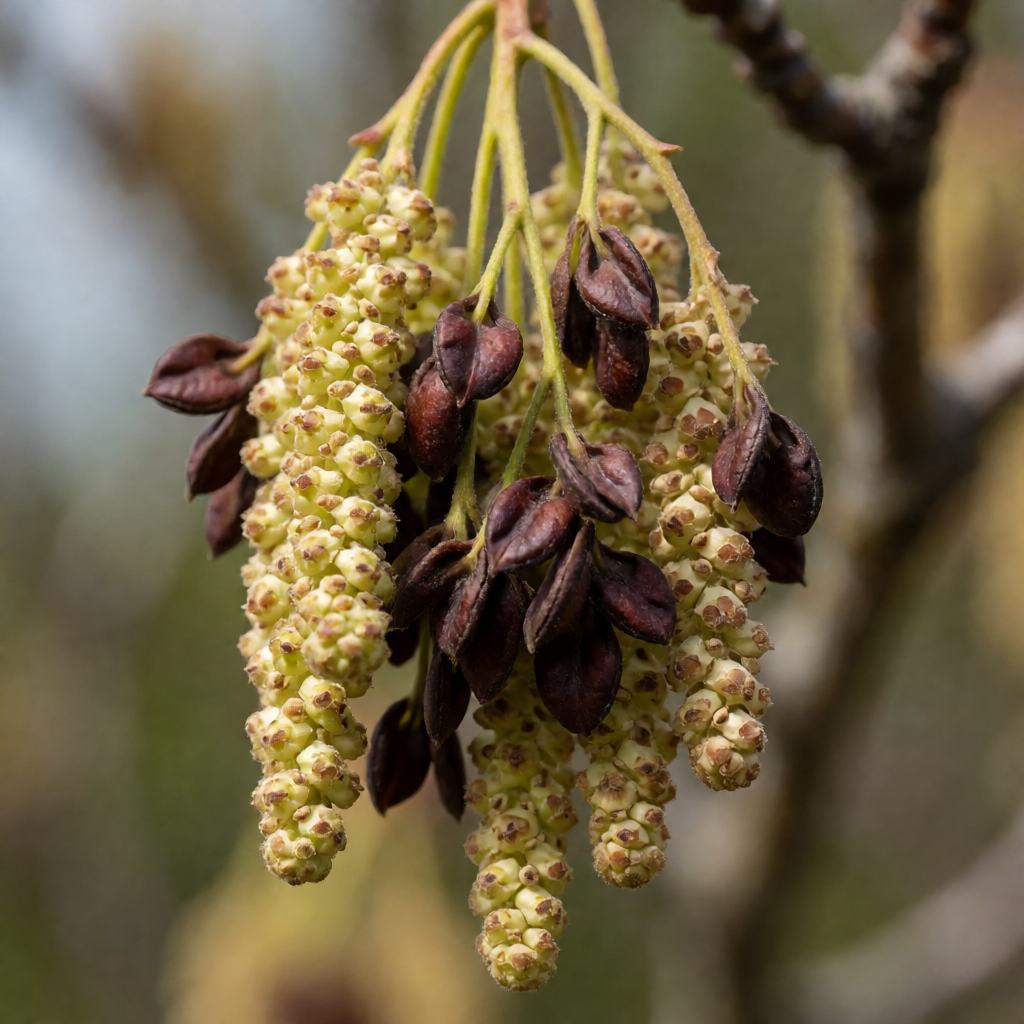
The siskin feeds almost wholly on seeds. Its diet is the small seeds of the cone and the catkin. It takes them by clinging to the tip of the branch and hanging at every angle to reach the seed with a fine but strong bill. A flock in a conifer eats the seeds of spruce, pine, larch, alder and birch. To this plant diet it adds buds and leaves of the herb where they are tender.
In the breeding season it takes the small invertebrates that supply protein for the eggs and the young. The siskin feeds by clinging and hulling, not by digging. It swallows grit to help the gizzard crush the hard seed. It tolerates cold and snow well. This is why it thrives on the conifer of the north and the nyjer feeder of the town.
It is among the finches least at risk from the loss of weedy stubble. The cone and the catkin are unaffected by the improvement of farmland. The planting of conifer has multiplied the food the winter flocks need.
A cup in the spruce
The breeding cycle
Siskins pair in the spring. The bond lasts one breeding season. The two adults share the nest, the sitting and the care of the young. The male takes a full part in the brood. This lets the species raise a single family in the short northern summer. Nesting starts in late April and runs into June.
The site is a neat cup of grass, moss and lichen high in the conifer. It is often at the tip of a spruce or larch and hidden among the needles. The female lays a clutch of four to six eggs. They are pale blue and spotted dark. She sits on them alone for thirteen to fifteen days. The male feeds her on the nest.
The chicks are born naked and blind. Both parents feed them and defend them against wood predators. They can fly at fifteen to eighteen days. By then the family has split up and the young have joined the flocks that take them south.
A bird that has spread
Conservation
The Eurasian siskin is Least Concern on the global Red List. Its recent history is mostly a win. The boreal populations of the east have held their numbers. The western populations have grown. The planting of conifer and the garden feeder helped this. The species is now a regular breeder well south of its natural range.
It is an abundant bird of the mixed wood and town. The species is protected across its range. In Europe the key woods have conifer and are managed to hold the fringe of alder and birch the bird needs. The international deals on migratory landbirds have cut the trapping on passage and winter flocks. Yet the bird depends on the cone crop. It is vulnerable to the swing of the irruption.
It is listed on the European Union’s birds directive as a bird of interest. The main threats are the loss of the old conifer to clear-fell. The reduction of alder and birch to the field is another. The chemical that removes seed from the margin also hurts. The trapping of the bird on passage in parts of its range still occurs. Managing the siskin means keeping the mixed wood and the feeder across the northern landscape and paying the forester to leave the cone the flock needs.
Quick hits
Five things to remember
- The siskin is among the most acrobatic of finches. It feeds by hanging upside down from the tip of a conifer to strip the seed from the cone. This lets it reach food no ground feeder could.
- The male has a black crown and a black bib with a yellow and green body and yellow wing bars. The female is streaked green and yellow with no black cap. The two sexes look like different birds until the young male shows the colour in his first autumn.
- The siskin is an irruptive migrant. The number that reach the south depends on the size of the northern cone crop. A good year in the taiga can send thousands of birds south to the gardens of Britain.
- The siskin lives almost wholly on the small seeds of the cone and the catkin. A flock in a conifer takes the seeds of spruce, pine, larch, alder and birch by clinging to the branch at every angle.
- The garden feeder has let the siskin winter well south of its natural range. It is now one of the commonest birds of the town garden in the cold months of the year.