 By st20113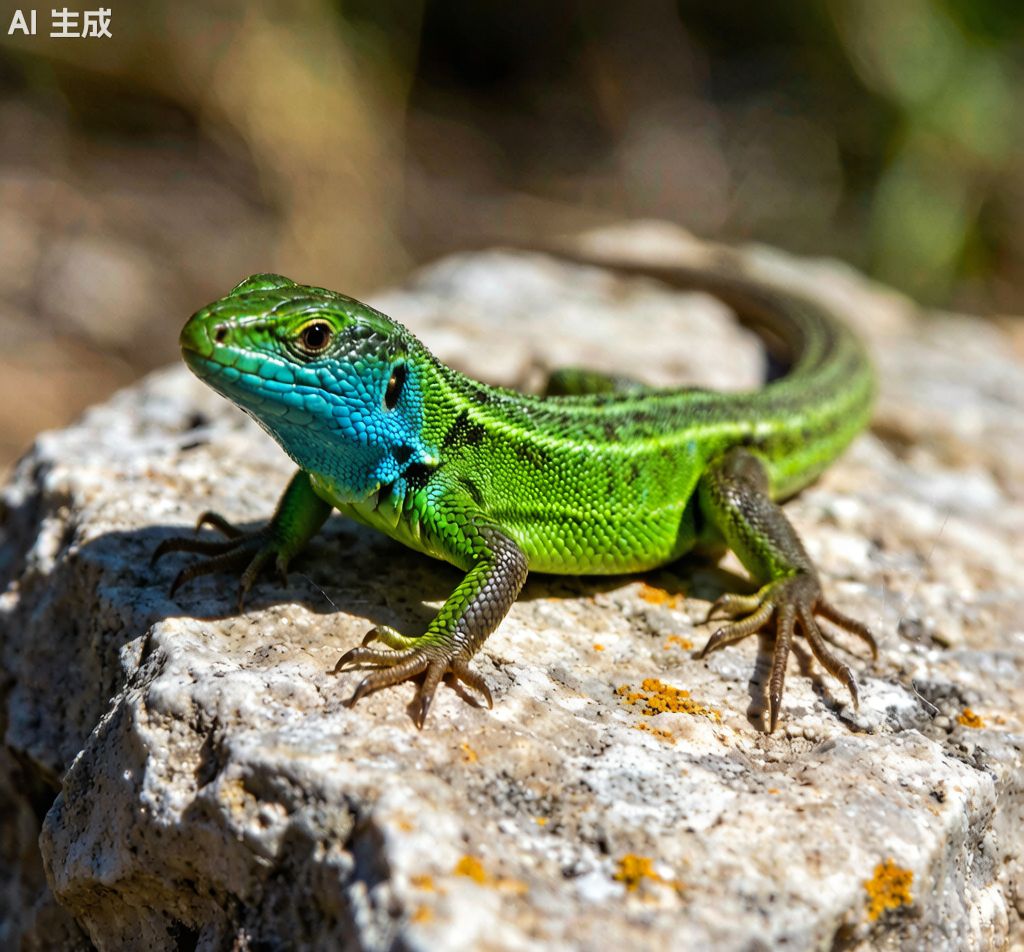
Introduction
The Balkan Green Lizard (Lacerta trilineata) is one of the largest and most striking lizards in southeastern Europe. With its vivid green coloration and impressive size, this species is a familiar sight in the Balkan Peninsula and parts of Greece, Italy, and Turkey. The Balkan green lizard inhabits warm, bushy habitats where it hunts insects and basks in the sun. Despite its bright appearance, the species is shy and quick to retreat into dense cover when disturbed.
The Balkan green lizard’s range centers on the Balkans but extends into parts of Italy and Turkey, reflecting complex historical biogeography. Its preference for warm shrubland makes it sensitive to fire management and agricultural change. The species is often observed basking on rocks and low branches.
Taxonomy
Lacerta trilineata belongs to the family Lacertidae, the wall lizards. The species is closely related to the European green lizard (Lacerta viridis) and was once considered conspecific. The Balkan green lizard is distinguished by its larger size and specific scale characteristics. Genetic studies have clarified the relationship between these green lizard species across Europe.
Physical Characteristics
Balkan green lizards are large, reaching 30 to 40 centimeters in total length including the long tail. Males display brilliant emerald green coloration with a blue throat and sometimes blue spots on the flanks, while females are duller green or brownish. The species has a robust build, strong limbs, and a long tail that can be autotomized. The common lizard is much smaller and more widespread.
Habitat
This species inhabits shrubland, open woodland, olive groves, grassy meadows with bushes, and rural gardens. It prefers warm, sunny areas with dense low vegetation for cover. The Balkan green lizard is often found near water and in riparian vegetation. The species is active from spring to autumn, hibernating in winter. The grass snake shares similar warm habitats.
Diet
The Balkan green lizard is an opportunistic predator feeding on insects, spiders, and other invertebrates. Larger individuals may consume small vertebrates including other lizards, nestling birds, and fruits. Hunting is active, with the lizard pursuing prey or ambushing from a perch. The species plays a role in controlling insect populations in its habitat.
Like many Mediterranean reptiles, the Balkan green lizard enters summer dormancy during the hottest, driest periods, re-emerging when conditions improve. This behavioral flexibility helps it persist in seasonal climates. Such adaptations highlight the species’ resilience to environmental variation.
Reproduction
Mating occurs in late spring and early summer. Females lay clutches of 6 to 20 eggs in warm, humid soil or under stones. Eggs incubate for approximately two months before hatching. Young lizards are independent from birth and must avoid predators while growing. The red fox preys on both juveniles and adults.
Preserving patches of natural shrubland within agricultural mosaics is essential for maintaining viable lizard populations. The species readily uses field margins and abandoned terraces if vegetation is allowed to develop. Public education reduces persecution and encourages reporting of sightings.
Conservation
The Balkan green lizard is not currently considered threatened, with stable populations across much of its range. However, habitat loss from agricultural intensification and urbanization poses local threats. Conservation of shrubby, semi-natural habitats benefits this and other Mediterranean reptiles. The species is protected under national legislation in several countries.
Fun Facts
Male Balkan green lizards perform elaborate push-up displays and bite contests to establish territory and attract mates. The species can run bipedally for short distances when escaping predators. Their bright green color comes from a combination of pigments and structural coloration. The Balkan green lizard’s tail, if lost, regenerates as a cartilaginous replacement rather than bone. The species can live over 15 years in the wild.
These lizards are surprisingly strong swimmers and may dive into water to escape predators. Their green coloration intensifies during the breeding season as males compete for females. The Balkan green lizard’s presence is a good indicator of intact Mediterranean scrub ecosystems.
Regional populations show subtle differences in size and coloration, reflecting local environmental conditions across the species’ range. Such variation makes the Balkan green lizard a valuable subject for studying reptile adaptation. Continued field research is revealing the full extent of its distribution.