 By st20113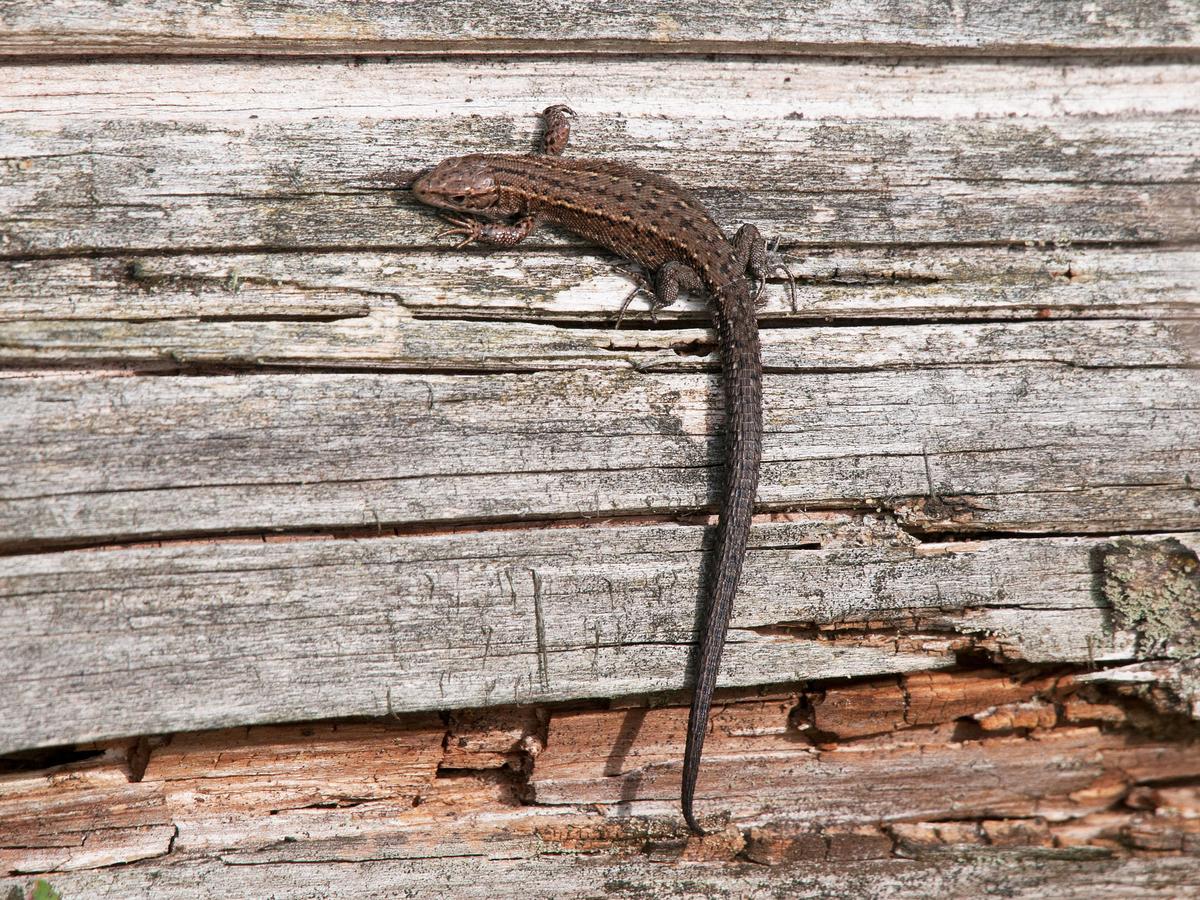
Introduction
The common lizard (Zootoca vivipara), also called the viviparous lizard, is a small, widespread reptile found across Europe and northern Asia, from lowland heath to arctic tundra. Adults reach 12 to 15 centimeters including the tail and are usually brown or grey with a row of darker spots along the back. Unusually among lizards, this species gives birth to live young rather than laying eggs, an adaptation to cold climates where buried eggs would not warm enough to develop. It is one of the most cold-tolerant reptiles in the world and the only lizard found inside the Arctic Circle. Shy and quick, it suns on rocks and logs before darting into cover at the first sign of danger, making it a familiar sight in European grasslands.
Taxonomy
The common lizard belongs to the family Lacertidae, the true lizards, which includes many slender, ground-dwelling species across Europe, Africa, and Asia. Its scientific name Zootoca vivipara was long rendered as Lacerta vivipara until genetic studies revealed it deserved its own genus. The species name means “live-bearing,” highlighting its unusual reproduction. It is distinct from the adder, the only venomous reptile it often shares habitat with, though the two are only distantly related. Several regional forms exist, some of which have shifted between egg-laying and live-bearing depending on climate.
Physical Characteristics
Common lizards have a smooth, rounded body with small scales and a long tail that can detach when grabbed by a predator, later regrowing as a shorter replacement. Coloration is highly variable, often brown, bronze, or greenish with two pale lines along the sides and a dark stripe down the spine. Males develop bright yellow or orange bellies during the breeding season. They have movable eyelids and keen eyesight for spotting insects. Adults weigh only a few grams. Their slender limbs and flexible body let them squeeze into cracks and burrow into leaf litter. The regrown tail is paler and less patterned than the original.
Habitat
This lizard occupies an extraordinary range of habitats: heathland, moor, grassland, woodland edges, dunes, and mountain slopes. It prefers sunny, open spots with low vegetation and plenty of places to hide. In the far north it survives where almost no other reptile can, basking on warm rocks during the brief summer. It shares some southern range with the red fox, which may prey on it, though foxes rarely specialize in such small, fast prey. Moist microhabitats help it avoid desiccation, and it is often found near ponds or damp meadows where insect food is abundant.
Diet
Common lizards are insectivores that feed on small invertebrates such as flies, spiders, beetles, caterpillars, and springtails. They are sit-and-wait hunters, darting from a sunny perch to seize prey with a quick flick of the tongue. Young lizards eat tiny mites and aphids. Because they are cold-blooded, they can survive on surprisingly little food, and individuals in harsh northern areas may eat only sporadically through short active seasons. Their appetite increases sharply in spring after hibernation and again before they re-enter dormancy in autumn. They play a useful role in controlling garden and grassland insect pests.
Reproduction
Unlike most lizards, the common lizard is largely viviparous: the female retains eggs inside her body, where the embryos develop and are born as miniature live young. In warmer parts of its range some populations lay eggs instead, showing remarkable flexibility. Mating occurs in spring, and four to ten young are born in mid-summer, each about 3 centimeters long and independent immediately. This live-bearing strategy lets mothers bask to warm the developing offspring, a crucial advantage in cool climates. Hatchlings must fend for themselves at once, dispersing into cover to avoid predators including birds, snakes, and larger lizards.
Conservation
The common lizard is currently listed as Least Concern and remains widespread, but it has declined locally because of habitat loss, draining of wetlands, intensive grassland management, and the disappearance of sunny refuge spots. It benefits from light grazing, scrub clearance, and the preservation of heath and meadow mosaics. Because it is harmless and ecologically useful, it is protected in many countries from intentional killing and collection. Climate warming may actually help its northern populations while threatening southern ones with overheating. Routine reptile surveys during spring basking counts help track local abundance.
Fun Facts
The common lizard is one of the only reptiles that lives north of the Arctic Circle. Its ability to give birth to live young instead of laying eggs is rare among lizards and evolved to beat the cold. If a predator grabs its tail, the tail snaps off and wriggles to distract the attacker while the lizard escapes. Males flash bright orange bellies in spring to attract mates. A hatchling is only about the size of a paperclip yet fully independent. It can survive freezing temperatures by producing natural antifreeze compounds in its blood.
[…] to the family Lacertidae, the true lizards, within the genus Lacerta. It is a close relative of the common lizard and the wall lizard, though it grows far larger and brighter. Several related green lizards occur […]
[…] on bark and stone. The toes bear leaf-like expansions with microscopic hairs for clinging. The common lizard is diurnal and lacks toe […]
[…] The species has a robust build, strong limbs, and a long tail that can be autotomized. The common lizard is much smaller and more […]