 By st20113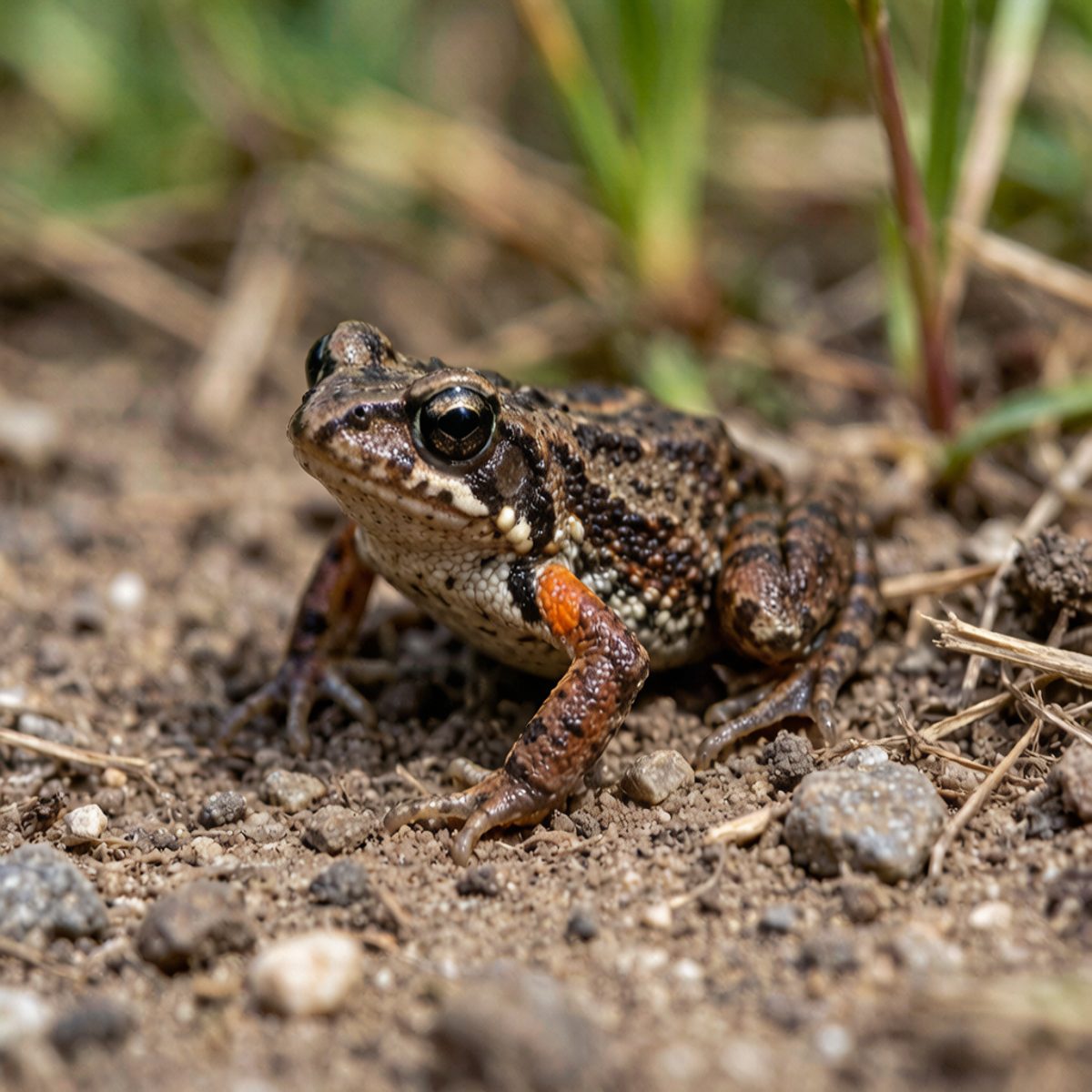
Introduction
The common midwife toad, scientifically Alytes obstetricans, is a small, secretive amphibian famous for one of the most unusual parenting habits in the animal kingdom. After the female lays her eggs, the male wraps the string of eggs around his own hind legs and carries them for weeks until they are ready to hatch. Native to western and central Europe, it spends most of its life on land, hidden among rocks and soil, far from the water it needs only for breeding. On mild nights its whistling call carries surprisingly far across a garden or hillside, often the only clue that the tiny amphibian is nearby. Though rarely seen, it can be remarkably common in suitable countryside, especially where stone walls and ponds still exist side by side. Its odd parenting has fascinated naturalists for centuries and earned it a place in European folklore.
Taxonomy
The midwife toad belongs to the family Alytidae, the painted frogs and midwife toads, within the genus Alytes. It is more closely tied to damp terrestrial life than many frogs. It shares European landscapes with large wild mammals such as the brown bear and the red fox, though the tiny toad is rarely noticed by such bigger neighbours and keeps to burrows and stone piles.
Physical Characteristics
Adults are small, measuring 4 to 5 centimeters, with a stout body and warty, grey-brown skin that provides camouflage among soil and stones. The eyes are large with vertical pupils, and the limbs are short. Unlike many frogs, the midwife toad moves with a slow walk rather than great leaps. A gland behind the eye can produce a mild toxin that makes it distasteful to predators, a useful defence for a creature that often sits in the open at night.
Habitat
Midwife toads inhabit woodlands, rocky hillsides, gardens, and farmland with loose soil and plenty of hiding places. They prefer areas near temporary pools, streams, or wells where the male can later release the tadpoles. Mostly nocturnal, they shelter by day under stones, logs, or in burrows and emerge after dark to hunt. Their tolerance of disturbed habitats has helped them persist close to human settlements across much of Europe.
Diet
These toads feed on small invertebrates such as ants, beetles, spiders, and caterpillars, which they catch with a quick flick of the tongue. As largely terrestrial hunters, they play a modest role in controlling garden and soil pests. They are patient ambush feeders, waiting motionless until prey comes within range. Because they eat a wide variety of tiny arthropods, they fit neatly into the ground-level food web without specializing on any single prey type.
Reproduction
Breeding is extraordinary: the male clasps the female’s egg string and coils it around his legs, guarding it for three to six weeks while keeping it moist. When the tadpoles within begin to stir, he enters the water and releases them to complete development. The tadpoles feed and grow in ponds or pools before metamorphosing into tiny toadlets. This devoted care by the male is rare among amphibians and gives the species its common name.
Conservation
The common midwife toad is listed as Least Concern, though some local populations have declined due to habitat loss, pollution, and the spread of a deadly amphibian fungus. It benefits from garden ponds and quiet rocky ground, and is protected in several countries. Conservation efforts focus on keeping breeding pools clean and free of introduced fish that eat the tadpoles. Its secretive habits mean healthy numbers can persist unnoticed in suitable places.
Fun Facts
The male’s loud, whistling call on warm nights is how people often first detect this shy toad. He may carry several hundred eggs at once, looking oddly bandaged around the legs. The tadpoles develop entirely in water while the father stays mostly on land nearby. A single male can look after the eggs of more than one female in a season. Their warty skin toxin makes them unpleasant to most predators that might try a bite.