 By st20113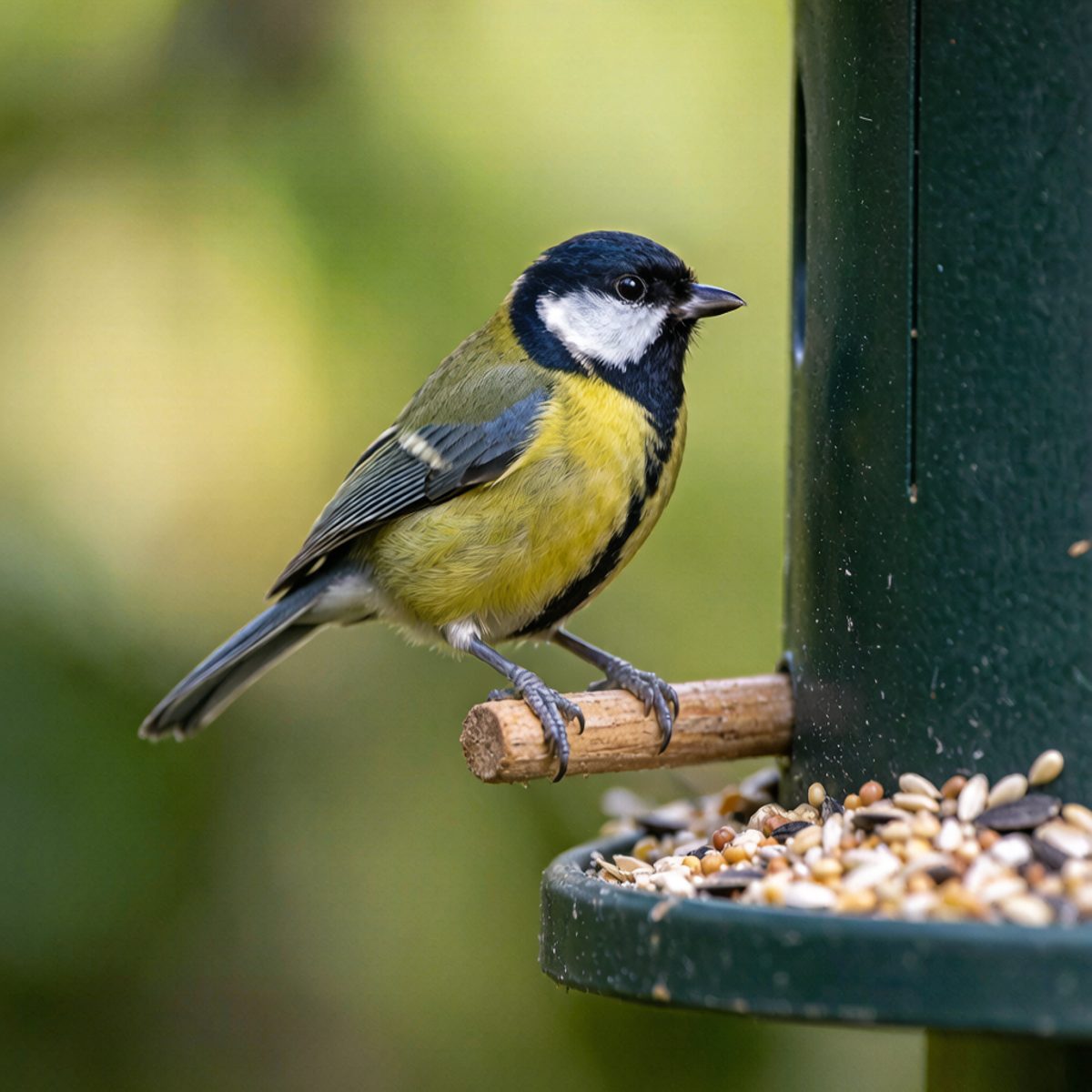
Introduction
The great tit, scientifically Parus major, is one of the most common and adaptable songbirds of Europe and Asia. Slightly larger than a robin, it is unmistakable with its black head, white cheeks, yellow underparts, and greenish back. A regular visitor to gardens and woodlands, it is a bold, intelligent forager that has learned to exploit bird feeders and even milk bottles. Its ringing, two-syllable song is a familiar sound of spring across the continent. The male repeats his loud ‘teacher-teacher’ phrase from exposed perches to claim ground and attract a mate, while females judge rivals by the size of the black bib on the chest. Great tits have become a favourite subject of long-term studies because they readily use nest boxes, letting scientists track thousands of broods each year. Their numbers rise and fall with the abundance of caterpillars, making them a living indicator of forest health and climate shift.
Taxonomy
The great tit belongs to the family Paridae, the tits and chickadees, within the genus Parus. It is related to a cluster of small, acrobatic woodland birds. Like the honey bee and other flower visitors, it plays a part in the broader community of invertebrates and the animals that depend on them, though the tit itself is a predator of caterpillars and insects rather than a pollinator.
Physical Characteristics
Great tits measure 12 to 15 centimeters in length with a wingspan of 22 to 26 centimeters, weighing 14 to 22 grams. The head is glossy black in males, slightly duller in females, with bold white cheeks and a black bib that widens in males. The back is olive-green, the wings blue-grey with a white wingbar, and the belly bright yellow. A short, stout bill is suited to cracking seeds, and strong feet allow it to hang upside down while foraging.
Habitat
Great tits occupy deciduous and mixed woodlands, parks, orchards, hedgerows, and gardens wherever there are trees and shrubs. They nest in natural holes, old woodpecker cavities, and nest boxes, showing great flexibility in site choice. In winter they join mixed flocks with other tits and creepers, roaming woodlands in search of food. Their adaptability to human landscapes has made them one of the most numerous birds of the region.
Diet
In summer great tits feed chiefly on caterpillars, beetles, and other insects, which they gather to feed their chicks. In autumn and winter they switch to seeds, nuts, and berries, frequenting bird feeders for sunflower seeds and peanuts. They are adept at hammering open seeds with their bills and will cache surplus food. As voracious consumers of tree caterpillars, they provide natural pest control in forests and orchards alike. A single brood may eat thousands of caterpillars before leaving the nest, sparing trees from defoliation. In gardens they also take sunflower hearts and suet, delighting observers at feeding stations through the coldest months.
Reproduction
Breeding begins in spring. The pair nests in a cavity, lining it with moss, hair, and feathers. The female lays seven to nine white eggs spotted with red, incubating them for about thirteen to fifteen days. Both parents feed the chicks, which fledge after roughly sixteen to twenty-two days. Great tits often raise one or two broods per season, with clutch size varying with food abundance.
Conservation
The great tit is widespread and abundant, classified as Least Concern with a stable population. It benefits from nest-box programs, mature trees, and garden feeders, though intensive forestry and pesticide use can reduce insect food locally. Because it is easy to study, the species has become a model organism for understanding bird populations and climate effects. Its resilience makes it a reliable presence in European woodlands.
Fun Facts
The great tit’s song is often written as “teacher-teacher,” repeated with rising emphasis. It can open milk bottles left on doorsteps, a behavior once learned and spread socially. Males with the largest black bibs tend to dominate rivals and attract mates. The birds can remember thousands of hidden food caches through the winter. They sometimes use hairs from hibernating animals to line their nests in early spring.
[…] is most often compared with the Great Tit and the Blue Tit, but its preference for conifers and its plain grey underside separate it […]
[…] gardens it often forages near the Great Tit and the Eurasian Wren, and mixed flocks may also include the Eurasian Jay in woodland edges, though […]
[…] the genus Parus. Modern classification assigns it to the genus Cyanistes, separated from the larger Great Tit and its relatives on the basis of plumage, vocalisations and genetic evidence. Several subspecies […]