 By st20113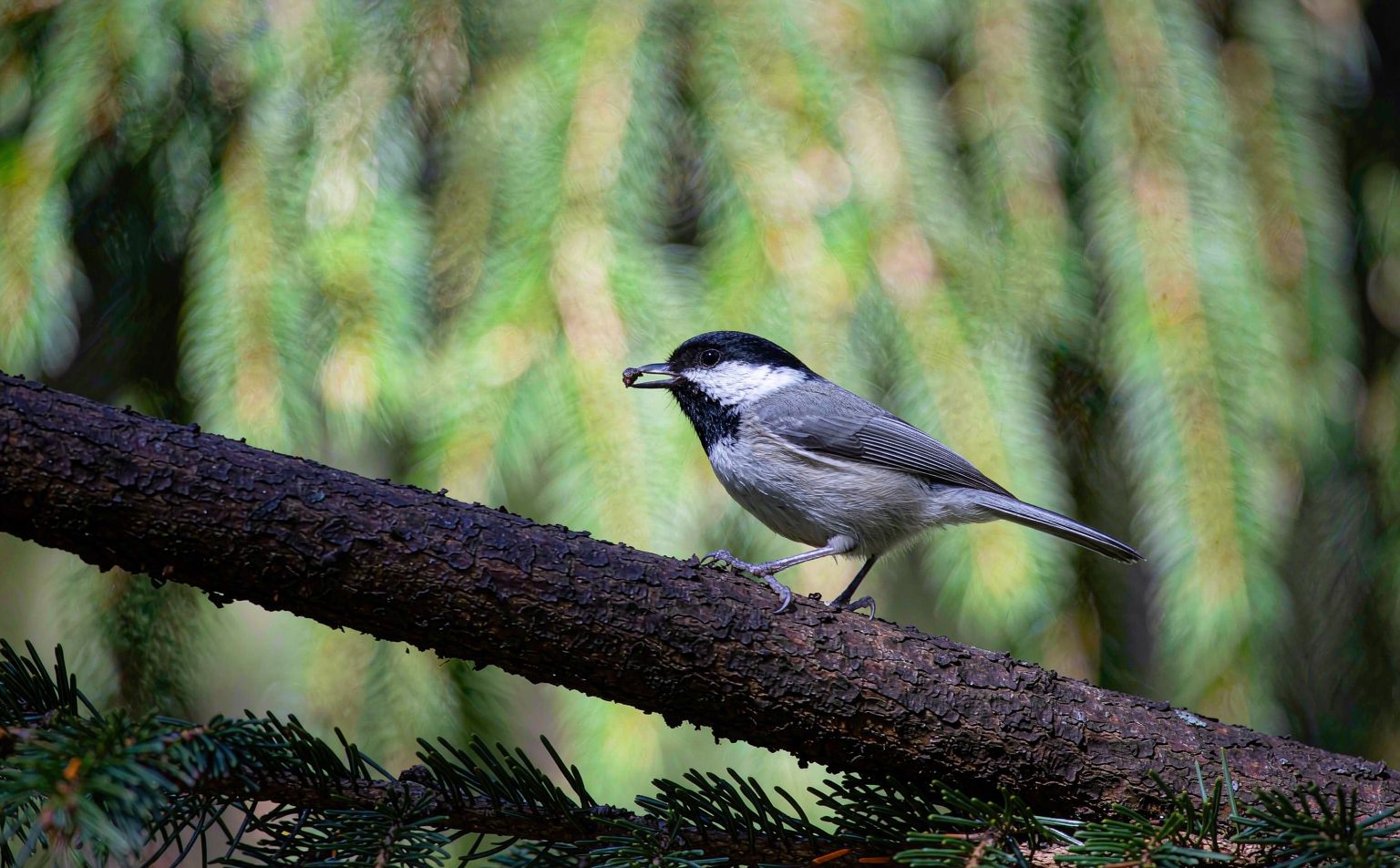
Periparus ater | Coal Tit
Introduction
The Coal Tit (Periparus ater) is a small, restless songbird of coniferous and mixed woodlands across Europe, North Africa and temperate Asia. At a glance it resembles the Blue Tit, but it lacks the bright yellow breast and instead wears a neat black cap and bib set against pale cheeks and a smoky grey back. It is a bird of evergreen forests first and foremost, though it readily visits gardens, especially in winter when flocks range widely in search of seeds.
Quiet and unobtrusive compared with its louder relatives, the Coal Tit nevertheless plays an important ecological role as a consumer of conifer pests. Its slender bill and acrobatic habits let it pick scale insects and caterpillars from needle clusters that few other birds can exploit, making it a characteristic voice of the pine and spruce woods.
Taxonomy
Carl Linnaeus first described the Coal Tit in 1758 under the genus Parus. Today it is placed in Periparus, a small genus that also includes the crested and rufous-bellied tits, reflecting differences in structure and vocalisations from the typical tits. The species is highly variable across its vast range, with numerous subspecies occupying regions from the British Isles to the Himalayas.
It is most often compared with the Great Tit and the Blue Tit, but its preference for conifers and its plain grey underside separate it ecologically. In mixed winter flocks it may travel alongside the Eurasian Jay and be loosely associated with the Common Magpie in woodland edge habitats.
Physical Characteristics
The Coal Tit measures about 10 to 11.5 centimetres long with a wingspan near 17 to 21 centimetres and a mass of 8 to 10 grams. Its defining features are a glossy black crown and nape and a black bib, offset by clean white cheeks and a white nape patch on the back of the neck. The upperparts are greyish-olive, the wings are dark with two pale wing bars, and the underparts are pale buff-grey rather than yellow.
The short, fine bill is dark and well adapted to extracting tiny prey from bark and needles. Juveniles resemble adults but have duller caps and a browner tone overall. The combination of the white nape spot and the absence of strong yellow or blue colouration is the quickest way to tell a Coal Tit from the more colourful tits sharing its range.
Habitat
Coniferous woodland is the Coal Tit’s stronghold, particularly stands of pine, spruce, fir and larch where it forages among the dense foliage. It also uses mixed and broadleaf woods, plantations and, in winter, almost any wooded or garden habitat. In mountainous regions it can be found high in the subalpine zone among scattered conifers.
Unlike some tits that depend heavily on nest boxes, the Coal Tit often chooses natural cavities, including holes in decaying stumps, root plates and even narrow crevices in the ground or walls. This flexibility allows it to breed in dense forest where artificial sites are rare, and it remains largely resident, though some northern birds move south or to lower elevations in severe weather.
Diet
The Coal Tit feeds mainly on small invertebrates, especially the larvae and adults of insects associated with conifers, such as aphids, scale insects, caterpillars and bark beetles. Its slim bill is ideal for prising prey from the tightly packed needles where larger birds cannot follow. During the breeding season this protein-rich diet is essential for rearing fast-growing chicks.
In autumn and winter the diet shifts toward seeds, particularly those of conifers, which the bird stores in bark crevices and leaf litter for later use. It also visits garden feeders for sunflower seeds, peanuts and suet, often taking a single item and flying off to eat it in cover. This hoarding behaviour helps the species survive periods when fresh food is scarce.
Reproduction
Coal Tits breed from late April into June. The female builds a neat cup of moss, hair and feathers inside a cavity, sometimes lining the entrance tunnel, and lays a clutch of typically seven to eleven eggs. Incubation lasts about thirteen to sixteen days and is performed solely by the female, who is fed by the male at the nest.
The altricial young are fed by both parents and fledge after roughly eighteen to twenty-one days. Where food is abundant a pair may raise a second brood. Because the species often nests in concealed or low sites, the young are relatively sheltered, though predation by mammals and larger birds remains a constant risk.
Conservation
The Coal Tit is listed as Least Concern, with a very large and apparently stable global population. Its intimate association with coniferous forest means it benefits from extensive plantation forestry across Europe and Asia, even as ancient woodland declines. Supplementary winter feeding has also helped it persist in fragmented landscapes.
Potential threats include the loss of native broadleaf-conifer mosaic habitats and the homogenisation of forests through intensive management. Because the species relies on a steady supply of conifer seeds and invertebrate prey, the health of evergreen woodlands is central to its future. Leaving standing deadwood and unmanaged corners in plantations supports the cavities and prey base it needs.
Fun Facts
- A Coal Tit can hide hundreds of conifer seeds in a single season, and remembers many of the hiding places.
- Its white nape patch is unique among European tits and helps identify it at a glance.
- Coal Tits often forage high in the canopy where their thin calls are easier to hear than to see.
- The species has colonised gardens so thoroughly that urban flocks can outnumber those in nearby woods in winter.
- Despite its small size, it is a bold defender of a food cache and will chase away larger birds.