 By st20113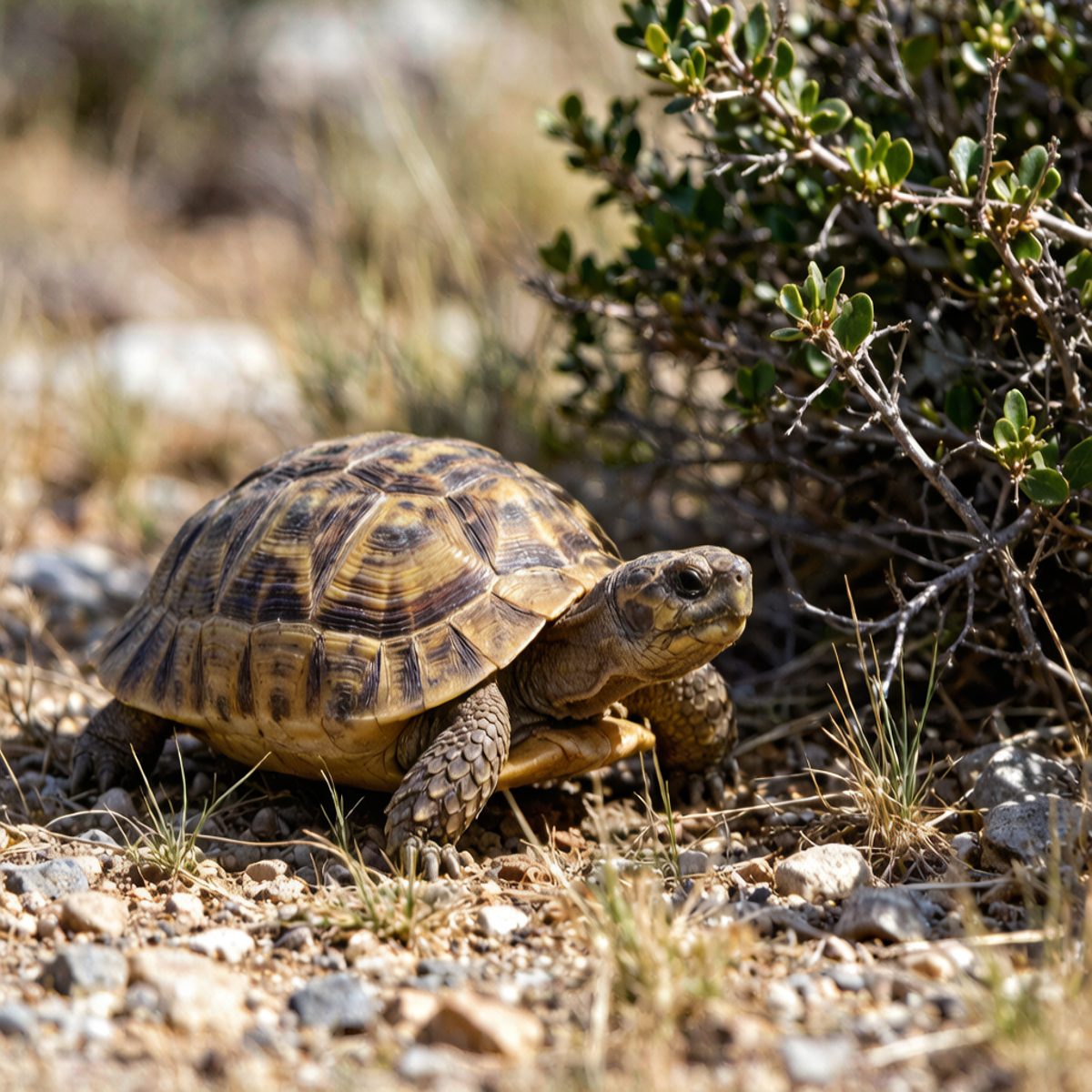
Introduction
Hermann’s tortoise, scientifically Testudo hermanni, is a small, charming chelonian native to the sunny scrublands and woodlands of southern Europe. With its domed shell marked by yellow and dark patterns and a distinctive spur on the tail, it is a favorite among European reptiles. A slow but resilient creature, it spends much of the year basking, grazing, and retreating into its shell at the first hint of danger. It is one of the few tortoises found naturally in Europe. Two main populations live in the west around Spain and France and in the east around the Balkans and Italy, separated for thousands of years and now treated as distinct subspecies. In spring the males chase females with head-bobbing displays and gentle bites, and after mating the female walks far to find loose, sunny soil for her eggs. Because they grow so slowly and live so long, a single tortoise may witness decades of change in the scrub it calls home.
Taxonomy
Hermann’s tortoise belongs to the family Testudinidae, the tortoises, within the genus Testudo. It is a relative of other European shelled reptiles, though it lives on land rather than in water. It shares Mediterranean habitats with larger mammals such as the brown bear and the red fox, which may prey on eggs and young, while the adult tortoise relies on its bony shell for protection.
Physical Characteristics
Adults reach 15 to 20 centimeters in shell length, with males slightly smaller than females. The carapace is domed andyellowish with dark blotches, while the plastron is pale with dark markings. A key feature is the horny spur at the tip of the tail and the absence of a nuchal shield at the front of the shell. Sturdy elephantine legs and a hard beak-like mouth suit a life of grazing and burrowing in dry soil.
Habitat
Hermann’s tortoises favor warm, dry habitats such as Mediterranean scrub, maquis, open woodland, and grassland with scattered bushes. They need sunny basking spots and shaded retreats, and they dig shallow burrows to escape heat and cold. During the hottest summer weeks they may aestivate, becoming inactive until conditions improve. In cooler months they hibernate buried in leaf litter or soft earth, emerging with the spring warmth.
Diet
These tortoises are primarily herbivorous, feeding on grasses, leaves, flowers, and succulent plants, with occasional fruit. They browse selectively, avoiding toxic species and favoring nutritious greens. In captivity a varied leafy diet is essential, as excessive protein or fruit causes shell deformities. As gentle grazers, they help trim vegetation and disperse seeds across their scrubland homes, linking them to the plant communities they depend upon. Their slow daily wanderings connect scattered plants and keep open ground from being swallowed by dense thicket. By surviving on low, tough foliage they thrive where few other large reptiles could, turning dry scrub into a quiet garden of their own.
Reproduction
Mating occurs in spring after hibernation. Females lay two to twelve eggs in a sunny, well-drained nest scratched into the soil, sometimes producing two clutches in a season. The eggs incubate for eight to twelve weeks, with temperature influencing the sex of the hatchlings. The young emerge small and vulnerable, growing slowly and taking eight to ten years to reach maturity. Many fall prey to birds, mammals, and drought before adulthood.
Conservation
Hermann’s tortoise is listed as Near Threatened, with some populations Endangered, due to habitat loss, road kills, illegal collection for the pet trade, and wildfires. It is protected under European law, and captive-breeding and release programs support wild populations. Preserving Mediterranean scrub and controlling traffic and collection are vital. Public awareness has grown, helping reduce the trade that once devastated local groups.
Fun Facts
A Hermann’s tortoise can live more than fifty years, outlasting many of its human observers. The tail spur helps males grip females during mating. Their shells harden with age, becoming nearly impregnable to most predators. They can drink by sucking water through their nostrils, a neat trick in dry summers. In winter they dig backward into soft earth to sleep through the cold months undisturbed.