 By st20113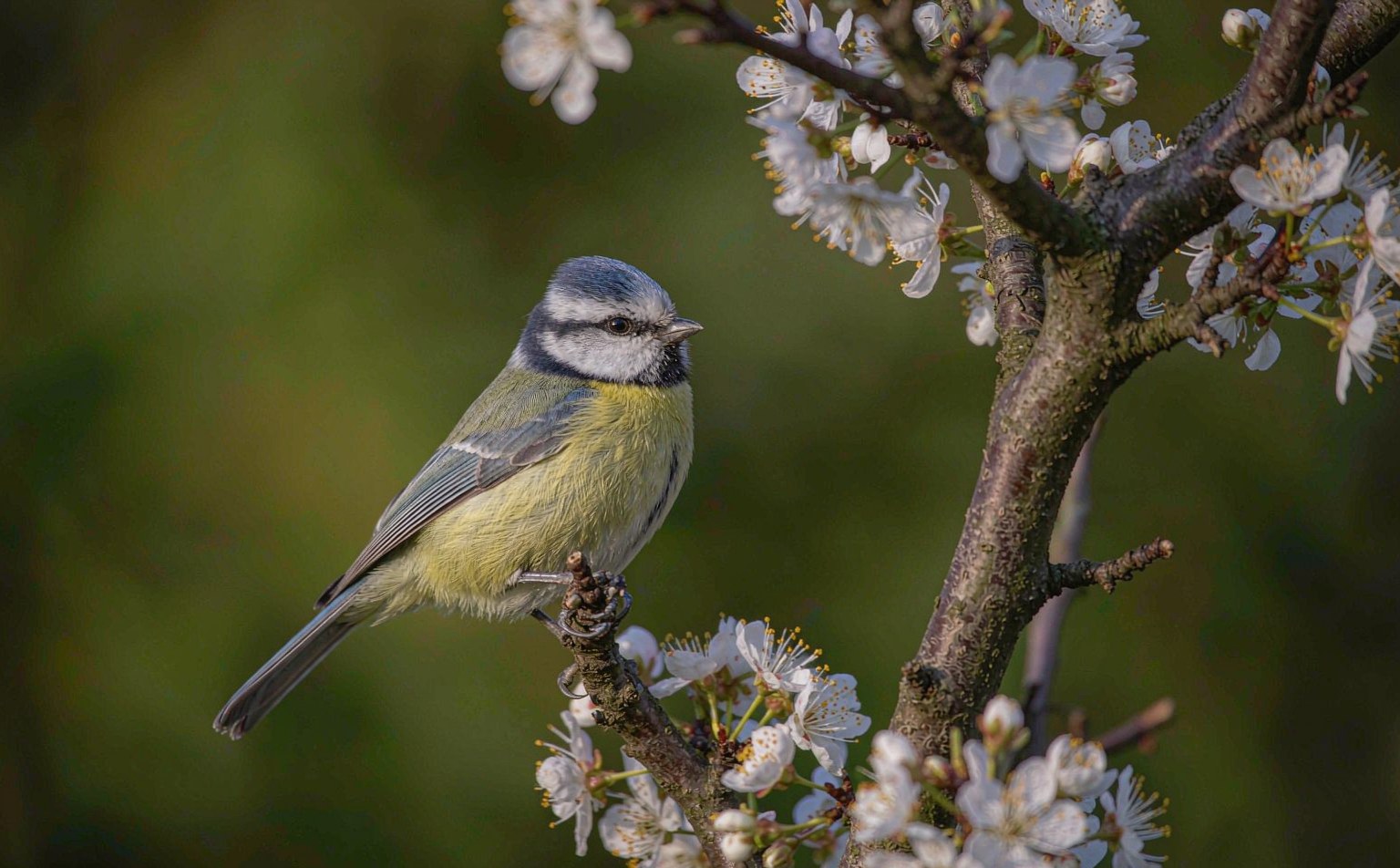
Cyanistes caeruleus | Blue Tit
Introduction
The Blue Tit (Cyanistes caeruleus) is one of the most familiar and colourful garden birds across Europe and western Asia. A small member of the tit family, it is instantly recognised by its azure crown, wings and tail set against a sunny yellow breast. Although diminutive, it is an energetic and adaptable forager that thrives in woodlands, orchards, parks and suburban gardens, where it readily visits peanut feeders and nest boxes. Its restless acrobatics among twigs and its bright, squeaky contact calls make it a favourite of birdwatchers and casual observers alike.
Few birds are as closely associated with the changing seasons of the European garden. Blue Tits begin courtship in late winter, and by spring family parties of recently fledged young can be seen flitting through hedgerows. Their tolerance of human surroundings has allowed populations to remain robust even as some farmland birds have declined, and they are a regular feature of citizen-science garden bird counts.
Taxonomy
The Blue Tit was first formally described by the Swedish naturalist Carl Linnaeus in 1758, who placed it within the genus Parus. Modern classification assigns it to the genus Cyanistes, separated from the larger Great Tit and its relatives on the basis of plumage, vocalisations and genetic evidence. Several subspecies are recognised across its range, differing slightly in the intensity of the blue and yellow colouration.
Close relations include the Azure Tit of central Asia and, more distantly, the coal and crested tits of the Eurasian woodlands. Within the garden bird community the Blue Tit frequently associates with the Eurasian Robin and with members of the crow family such as the Eurasian Jay when foraging in mixed flocks during autumn and winter.
Physical Characteristics
The Blue Tit is a petite bird, measuring roughly 10.5 to 12 centimetres in length with a wingspan of about 17 to 20 centimetres and a body mass of 9 to 12 grams. Its most striking feature is the royal-blue cap and nape, bordered by a white forehead and a narrow black line running through the eye. The upperparts are olive-green, while the wings and tail are a vivid blue with pale bars. The underparts are lemon-yellow, fading to white on the belly, and the legs are bluish-grey.
A distinguishing mark is the small black chin and bib beneath the bill, which contrasts with the blue-tinged cheeks. The bill is short, slender and dark, well suited to picking insects from crevices. Juveniles are duller than adults, with a more muted yellow breast and a brownish, rather than blue, crown; they acquire full adult plumage after their first moult. The species shows little sexual dimorphism, though females may display slightly less saturated blue on the crown.
Habitat
Blue Tits occupy a remarkably broad range of wooded and semi-open habitats. Deciduous and mixed woodlands, coppices, hedgerows, orchards and tree-lined avenues all provide suitable nesting and feeding opportunities. In human-dominated landscapes they have become equally at home in gardens, churchyards, school grounds and city parks, provided there is a supply of trees, shrubs and supplementary food.
They are largely resident across most of their range, with only northern and eastern populations undertaking limited migratory movements in harsh winters. The availability of nest cavities is a key factor in habitat quality; where natural holes are scarce, the species readily adopts nest boxes, which has made it one of the most successful garden-breeding birds in Europe.
Diet
The Blue Tit is primarily insectivorous, particularly during the breeding season when growing chicks demand a protein-rich supply of caterpillars and other invertebrates. Parents work tirelessly to gather moth larvae, aphids, spiders and small beetles, frequently targeting the leaf-eating caterpillars of oak, birch and fruit trees. This diet makes the species a welcome ally to gardeners and orchardists, as it helps suppress pest populations.
Outside the breeding season the diet broadens to include seeds, nuts and fruits. At feeders Blue Tits take peanuts, sunflower hearts and suet, often carrying a single fragment away to hammer open on a perch. They are adept at hanging upside down from thin twigs and feeder meshes, a behaviour that lets them exploit food sources inaccessible to heavier birds.
Reproduction
Breeding begins in April, though paired birds start inspecting nest sites in late winter. The Blue Tit is a cavity nester, laying its clutch of typically seven to twelve eggs in a hole in a tree, wall or nest box, which the female lines with moss, feathers, hair and plant down. Only the female incubates, doing so for about thirteen to fifteen days while the male feeds her.
Once hatched, the altricial chicks are brooded and fed by both parents, and they fledge roughly eighteen to twenty-one days after hatching. A single brood is normal, though a second attempt may follow if the first fails early. The demanding feeding schedule means a pair may deliver thousands of caterpillars to the nest each day, underlining the importance of abundant insect prey for breeding success.
Conservation
The Blue Tit is classified as a species of Least Concern by the IUCN, and its global population is considered large and stable. It benefits from widespread public enthusiasm for garden feeding and nest-box provision, and it has colonised urban and suburban habitats that suit its flexible ecology. In some regions mild winters and abundant supplementary food have supported local increases.
Nonetheless, the species is sensitive to the broad decline in insect abundance that affects many European ecosystems, since caterpillar shortages can reduce chick survival. The loss of traditional orchards and the intensive management of hedgerows also remove nesting and feeding opportunities. Maintaining mature trees, diverse shrub layers and chemical-free gardens helps secure the food base on which Blue Tit families depend.
Fun Facts
- A single Blue Tit pair may bring more than 1,000 caterpillars to the nest in a single day while raising chicks.
- The species can hang upside down from the finest twigs, thanks to its light weight and strong grip.
- Blue Tits learned to pierce the foil caps of milk bottles in postwar Britain to reach the cream, a behaviour that spread socially between birds.
- Their brilliant blue feathers are not pigmented blue but produced by light-scattering nanostructures in the barbs.
- In cold winters Blue Tits fluff up their feathers and roost communally in nest boxes to conserve heat.