 By st20113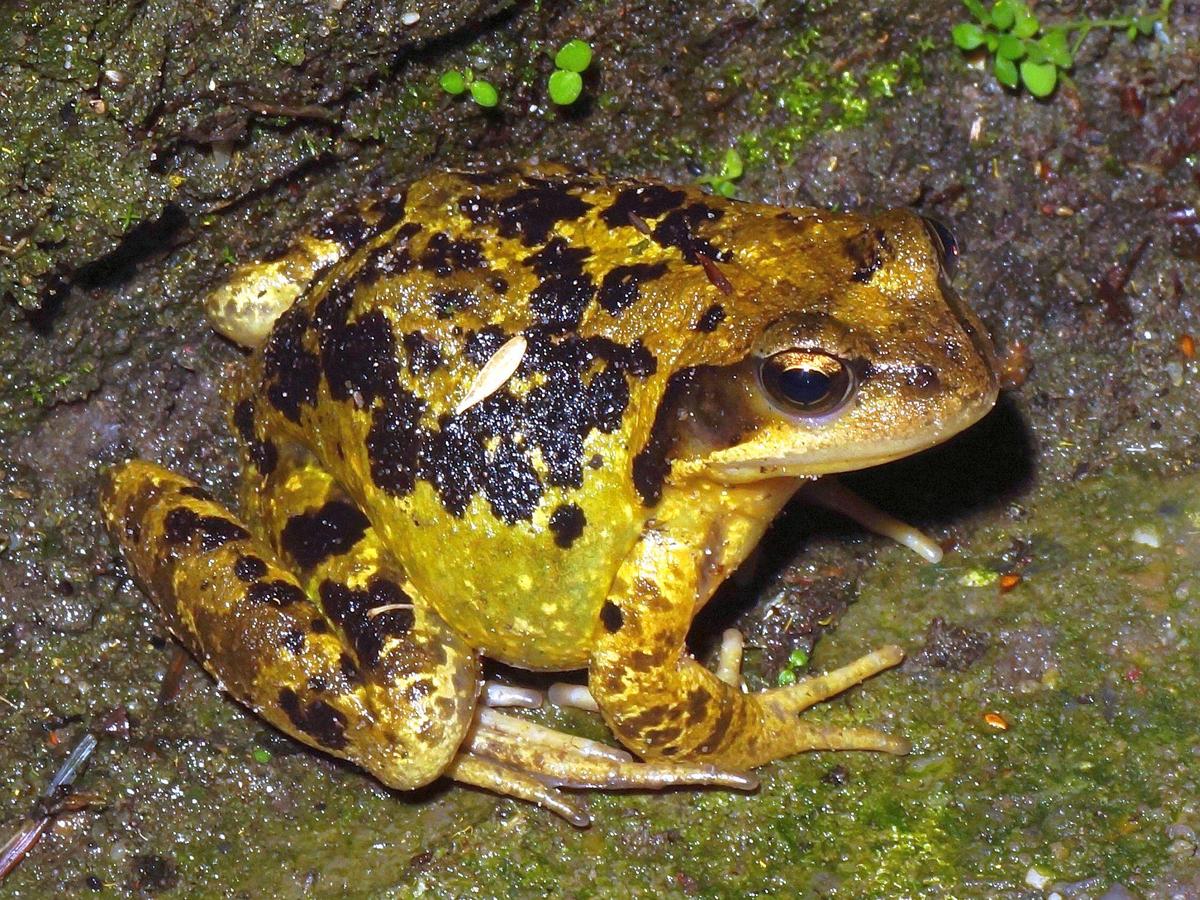
Introduction
The common frog (Rana temporaria) is a familiar amphibian of ponds, gardens, woodlands, and moist grasslands across Europe. Adults measure 6 to 9 centimeters and are usually olive-green or brown with dark spots and a pale belly, though color varies widely. Unlike toads, they have smooth, moist skin and long hind legs built for jumping. Common frogs spend much of the year on land in damp vegetation, returning to water only to breed in early spring. They are among the most widespread amphibians in Europe and a favorite subject of children’s pond dipping.
Taxonomy
The common frog belongs to the family Ranidae, the true frogs, a large group of strong-jumping amphibians found on every continent except Antarctica. Its scientific name Rana temporaria means “temporary frog,” referring to its brief annual appearance in breeding ponds. The species was described by Linnaeus in 1758. It is distinct from the red fox, which may eat it, though the two share damp woodland edges. Several regional forms exist, and some mountain populations show unusual color phases. Genetic studies place it among the brown frogs of Eurasia, a group that has diversified across Europe as forests and glaciers shifted over millions of years.
Physical Characteristics
Common frogs have a slender body, large protruding eyes with horizontal pupils, and powerful hind limbs folded in a characteristic “M” shape. Their skin is smooth and damp, helping them breathe through it when in water or wet grass. A dark patch behind each eye and a pair of raised ridges running back from the eyes help identify them. Females are larger than males, especially when full of eggs. The long, muscular back legs enable leaps of several body lengths to escape predators. Their toes are partially webbed for swimming. Color ranges from yellow and red through olive to almost black, often matching local backgrounds for camouflage. A slimy mucus layer keeps the skin from drying out on land.
Habitat
Common frogs use two habitats through the year: terrestrial foraging grounds such as woodlands, gardens, meadows, and hedgerows, and aquatic breeding sites like ponds, ditches, and slow streams. They need damp, shady cover by day and open water in spring. They often travel hundreds of meters from ponds to summer feeding areas, navigating back to the same breeding pool each year. Wetland margins rich in insects support both frogs and the amphibians they compete with. They avoid fast, deep, or fish-filled water where tadpoles are easily eaten.
Diet
Common frogs are opportunistic carnivores that eat almost any moving invertebrate they can swallow: flies, slugs, worms, beetles, spiders, and caterpillars. They hunt by sitting still and flicking out a long, sticky tongue to capture prey. Tadpoles are vegetarians, grazing on algae and rotting plant matter in the pond. Adults may also take small pink froglets or tiny fish if the chance arises. Because they feed on pest insects and slugs, frogs are valued by gardeners. Their appetite rises in warm, humid weather and drops in dry or cold conditions. A single frog can consume hundreds of insects during a single active season, helping control nuisance populations.
Reproduction
Breeding begins in late winter or early spring when frogs return to ponds, often while ice still lingers at the edges. Females lay clumps of gel-covered eggs, called frogspawn, attached to underwater vegetation, and a single female may release more than a thousand eggs. Males grasp females in a mating embrace and fertilize the eggs externally. Tadpoles hatch within weeks and metamorphose into tiny froglets by mid-summer after losing their tails and growing legs. Most adults breed for the first time at two or three years of age. Because so many eggs and tadpoles are lost to predators and drying ponds, high output is the species’ survival strategy. Adults then disperse back to land.
Conservation
The common frog remains widespread and is classified as Least Concern, but it has declined locally because of pond loss, pollution, road deaths during migration, and the introduction of fish that eat tadpoles. Creating and protecting garden and farmland ponds, avoiding pesticide use near water, and building wildlife tunnels under roads all help. Because amphibians breathe through their skin, they are highly sensitive to contaminants, making them valuable indicators of environmental health. In some regions “toad patrols” help frogs and toads cross roads safely during spring migrations. Preserving connected damp habitats is key to keeping populations stable.
Fun Facts
A common frog can leap more than twenty times its own body length in a single jump. It breathes partly through its skin, which is why the skin must stay moist. Frogspawn jelly swells in water, protecting the developing eggs. Some frogs can survive being frozen solid by producing natural antifreeze in their cells. Each frog returns to the same pond where it was born to breed. A tadpole can grow from a speck of jelly to a legged froglet in just a few months.
[…] reptiles, which is why they are common in parks and allotments alongside amphibians such as the Common Frog, sharing the cool, moist microhabitats that both need to survive. A single garden can host several […]
[…] frog belongs to the family Hylidae, the tree frogs, within the genus Hyla. It is distinct from the common frog, a true frog of the genus Rana, though both share ponds and damp meadows. Its rounded body, long […]
[…] the fire-bellied toads, within the genus Bombina. It is related to but distinct from the common frog, which occupies many of the same damp habitats. Unlike typical frogs, bombinas have a more rounded […]
[…] to challenging environments, from high-altitude foraging to seasonal hibernation or migration. the common frog, the smooth newt, and the grass snake frequently coexist with the pelophylax cambiensis across […]
[…] shares still water with the larvae of the Common Frog and is hunted at the margin by the Grass Snake. Above the surface it may fall prey to the Emperor […]
[…] shares the surface with other predators and prey, and its young develop alongside the larvae of the Common Frog. Adults are also found where the Smooth Newt and the Common Toad breed, feeding on the same small […]
[…] shares its wet world with the larvae of the Common Frog and is hunted along the margin by the Grass Snake. Above the water it may be taken by the Common […]
[…] nymphs share the river bed with the larvae of the Common Frog in connected waters and are preyed upon at the surface by the Grass Snake and by the Large Red […]
[…] shares the surface with the Common Frog in pond margins and overlaps in habitat with the Smooth Newt, whose larvae develop in the same […]
[…] shares ponds with the larvae of the Common Frog and with the Great Crested Newt, and where the two coexist the boatman may take tadpoles and newt […]