 By st20113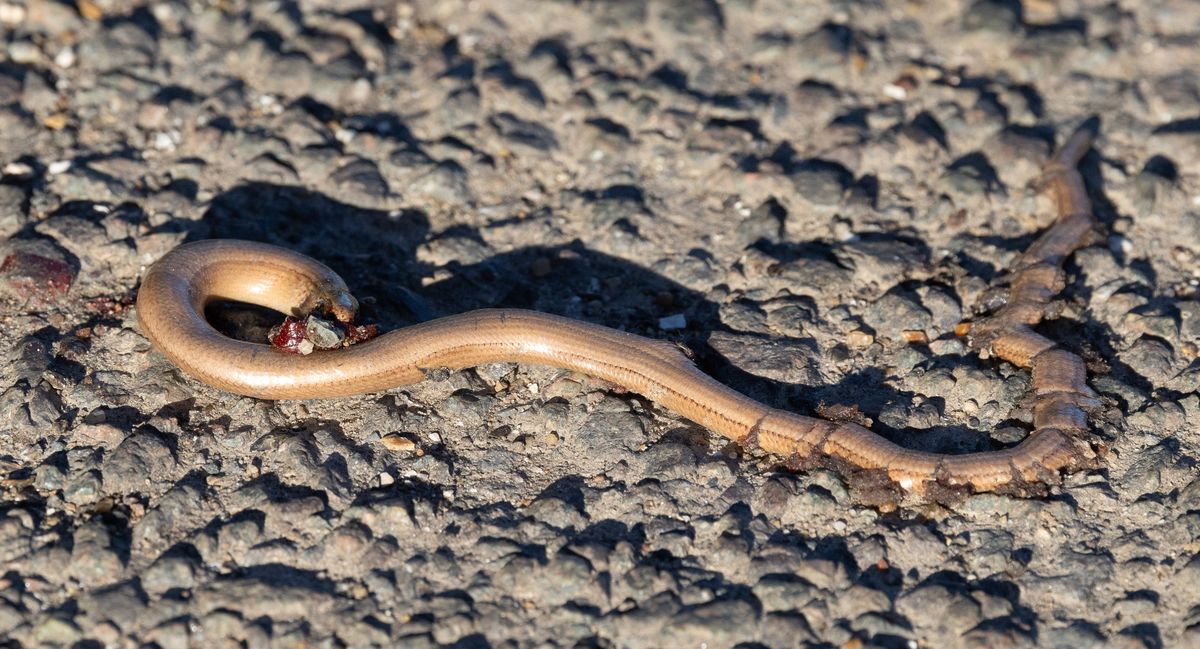
Introduction
The Slow Worm (Anguis fragilis) is a legless lizard that is often mistaken for a snake, yet it is neither. Found across Europe and parts of Britain, this harmless creature belongs to a different branch of the reptile family tree. Despite its snakelike shape, the slow worm shares more with lizards than serpents, including eyelids, a detachable tail, and the ability to hear ground vibrations. Gardeners generally welcome it as a friend that devours pest slugs, and it has become a quiet symbol of wildlife-friendly gardening.
Taxonomy
Slow worms are members of the family Anguidae, the glass lizards and their relatives. Described by Linnaeus in 1758, Anguis fragilis is the only species in its genus in Europe. Although it lacks limbs, its skeleton still carries tiny remnants of pelvis and shoulder girdle, a ghostly echo of legged ancestors. Genetic studies place it firmly among lizards rather than snakes, closer to the burrowing glass lizards of southern Europe.
Physical Characteristics
Slow worms reach 30 to 50 centimeters in length and have smooth, shiny, bronze or grey skin with a metallic sheen. Males are usually smaller and more uniform in color, sometimes with blue spots, while females are larger and may show a dark stripe along the spine. The head is rounded and blunt, and the eyes have movable eyelids, unlike a snake’s fixed, lidless gaze. A defining trait is the fragile tail, which snaps off easily when grabbed and later regrows, distracting predators long enough for escape.
Habitat
These reptiles prefer damp, sunny grassland, woodland edges, hedgerows, and especially garden compost heaps where warmth and prey abound. They are shy, spending much of the day hidden under stones, logs, or sheets of metal, emerging to bask in the morning sun. Slow worms tolerate human landscapes better than most reptiles, which is why they are common in parks and allotments alongside amphibians such as the Common Frog, sharing the cool, moist microhabitats that both need to survive. A single garden can host several individuals that return to the same refuge sites year after year, making them surprisingly settled neighbors for patient observers.
Diet
Slow worms are specialist predators of slow, soft-bodied prey. Slugs and snails make up the bulk of the diet, with earthworms, insects, and spiders taken as well. They use their small teeth to grip rather than crush, swallowing prey whole. Because they control slug populations, they are valued by gardeners, and many people build refuges to encourage them. Occasionally they compete with the Hedgehog for the same invertebrate food, though the two rarely meet because they are active at different times of day.
Reproduction
Unusually for reptiles, slow worms are ovoviviparous: the female retains eggs inside her body, giving birth to fully formed live young in late summer. A litter of six to twelve is typical. The babies are tiny, bright silver, and independent from birth. This strategy protects the developing embryos from cool, damp weather that would threaten external eggs, an adaptation to the temperate climates where slow worms live across the continent.
Conservation
Although widespread and not globally threatened, slow worms are protected by law in many countries, and it is illegal to kill or capture them. Local declines follow the loss of rough grassland, pesticides, and the tidying of gardens. Simple measures like leaving log piles, keeping compost heaps, and avoiding chemicals help populations persist in the modern landscape and even in dense city suburbs.
Fun Facts
1. The name fragilis refers to the tail that breaks off when threatened. 2. Slow worms can live more than twenty years, among the longest-lived lizards. 3. They can shed and regrow their tail multiple times. 4. Despite the name, they move quite briskly when alarmed and can vanish into a burrow in seconds. 5. Their eyelids blink, a clear sign they are lizards, not snakes, and they can even shed the skin of their eyes along with the rest of the body.