 By st20113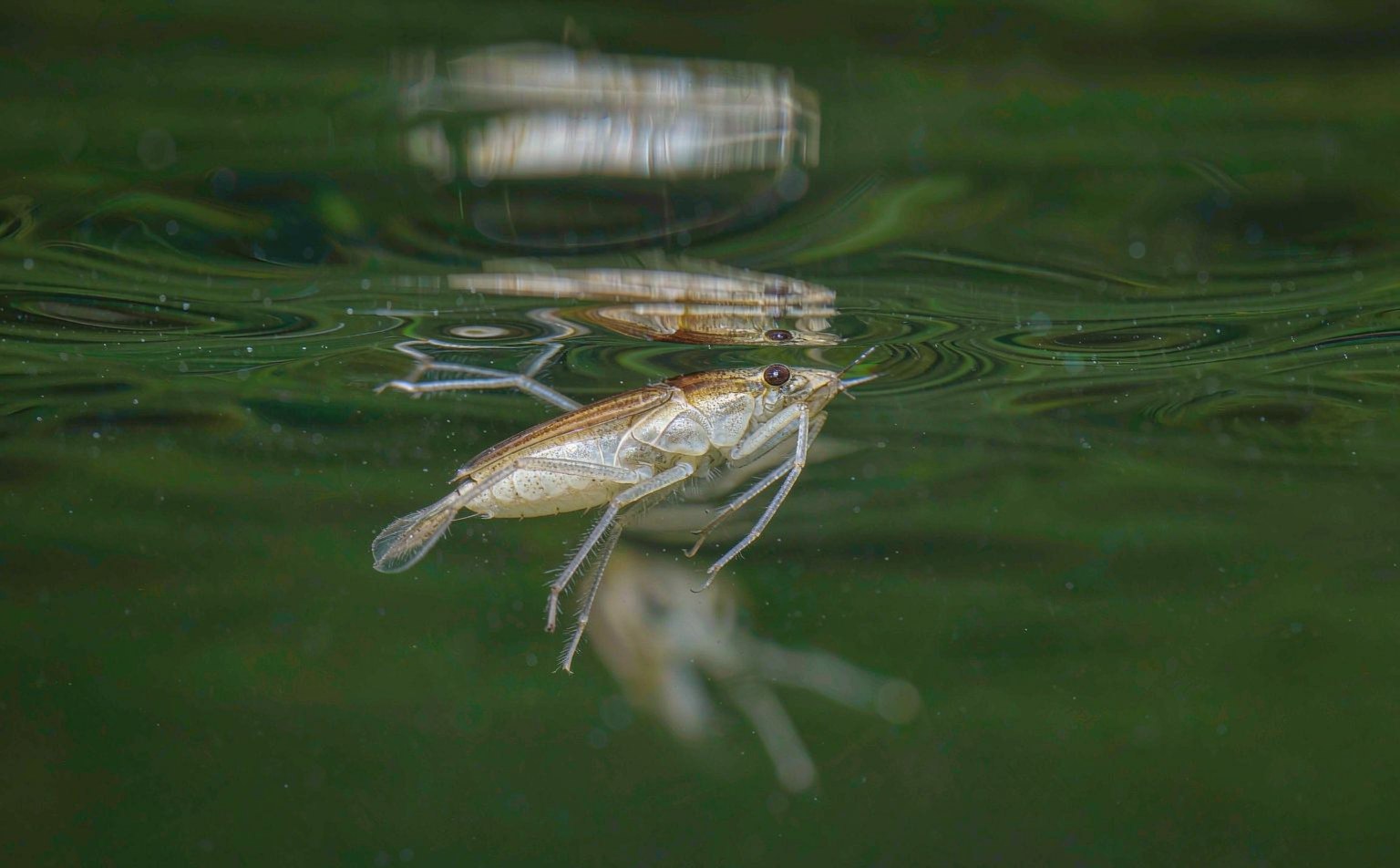
Notonecta glauca | Water Boatman
Introduction
The Water Boatman (Notonecta glauca), often called the common backswimmer, is a pale, boat-shaped bug that lives upside down just beneath the surface of ponds and slow rivers. With its long, oar-like hind legs it rows through the water with a characteristic back-down posture, hunting smaller creatures and even small fish fry. Despite the friendly name, it is a capable predator, not the harmless plant-eater its relative the lesser water boatman is often mistaken for.
A creature of the open water rather than the surface film, the Water Boatman hangs suspended below the skin of the pond, its dark eyes peering upward for shadows of prey. Its ability to strand a bubble of air against its body lets it stay submerged for long periods, a neat adaptation to a life spent mostly underwater.
Taxonomy
The Water Boatman was described by Carl Linnaeus in 1758 and placed in the genus Notonecta, from the Greek for “back swimmer,” within the family Notonectidae. It is one of several European backswimmers, distinguished by its size, greyish back and the strong keel of its underside. Like the Pond Skater it is a true bug of the order Hemiptera.
It shares ponds with the larvae of the Common Frog and with the Great Crested Newt, and where the two coexist the boatman may take tadpoles and newt larvae as well as the small invertebrates it prefers. It is also found in the same waters as the Grass Snake, which hunts at the pond edge.
Physical Characteristics
The Water Boatman reaches 13 to 16 millimetres in length. Its body is elongated and convex underneath, flattened and pale grey or greenish above, giving a boat-like silhouette. The most obvious features are the greatly enlarged hind legs, fringed with hairs and used as paddles, while the front legs are short and built for seizing prey. The head carries large, forward-pointing eyes and a short beak.
The underside is keeled and often darker, and the insect carries a silvery bubble of air trapped among hairs on its body, making it look dusted with silver when submerged. This air supply is replenished at the surface and allows the bug to breathe while it hunts below. Nymphs resemble the adult but lack wings and the full leg development.
Habitat
Water Boatmen inhabit a wide range of still and slow fresh waters: ponds, lakes, canals, reservoirs and gently flowing rivers. They prefer water with some vegetation and a healthy supply of small prey, and they tolerate slightly richer conditions better than the surface-dwelling Pond Skater. They are strong fliers and readily move between waters, especially at night.
They are most often seen in loose groups just under the surface, though they can dive deep when pursued. In winter they retreat to deeper, ice-free water or shelter among bankside mud and roots, becoming active again in spring.
Diet
The Water Boatman is an active predator and scavenger. It seizes tiny crustaceans, insect larvae, worms and even small tadpoles and fish fry with its front legs, then pierces them with its beak and injects digestive saliva before sucking out the liquified contents. It is bold for its size and will attack prey larger than itself.
It also feeds on dead and drowning animals, helping to clear the water of carrion. Its keen eyesight picks up the shadows of moving prey above it, and it strikes upward with speed. This predatory habit is why it should not be confused with the harmless algae-feeding lesser water boatman of the same family.
Reproduction
Mating takes place in the water in spring and summer. The female lays her eggs singly on the stems and leaves of submerged plants, often well below the surface. The nymphs that hatch pass through several instars, growing and molting in the water, and they hunt like the adults from an early stage.
A generation may develop within a few weeks in warm conditions, allowing several broods in a single season. The young climb to the surface to breathe and gradually acquire the air bubble and the adult form, joining the population that patrols the pond through summer and autumn.
Conservation
The Water Boatman is common and widespread, with no conservation concern. It benefits from a diversity of healthy fresh waters, including garden ponds, and acts as a useful part of the pond food web by controlling smaller invertebrates and recycling carrion. Like many aquatic insects it is sensitive to heavy pollution and oxygen depletion.
Pond creation, the control of nutrient and chemical runoff, and the retention of unmanaged marginal vegetation all support the species. Because it flies between waters, even a single good pond can help stock others nearby, linking wetland habitats across a landscape.
Fun Facts
- The Water Boatman swims upside down, paddling with its long hind legs like tiny oars.
- It carries a silver bubble of air on its body so it can breathe while hunting underwater.
- Despite the gentle name, it is a predator that can take tadpoles and small fry.
- Its bite on human skin can be sharply painful, though it is not dangerous.
- It flies at night, quietly colonising new ponds it has never visited before.