 By st20113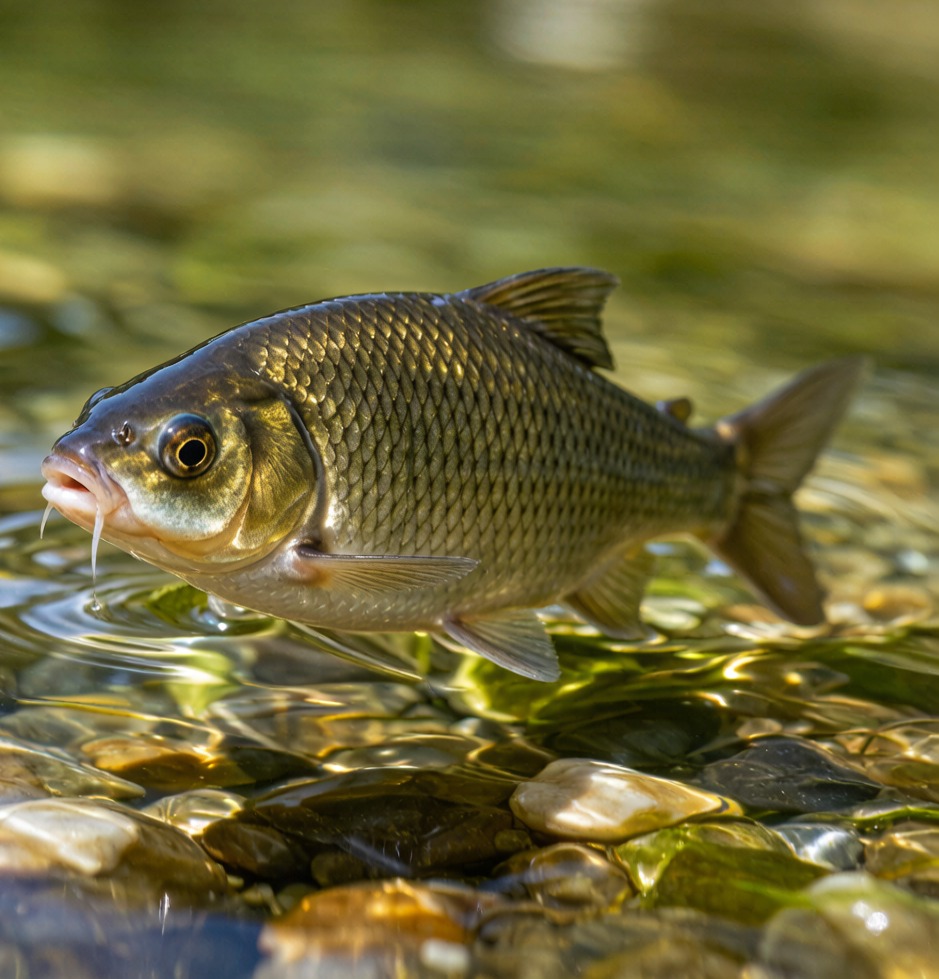
Introduction
The Tench (Tinca tinca), often called the doctor fish in European folklore, is a thick-bodied freshwater fish found in slow-moving and still waters across Europe and into Central Asia. Revered by anglers for its fighting ability and by naturalists for its unusual biology, the tench is one of the few fish species in which the skin produces an antifungal mucus historically believed to have healing properties, hence the doctor fish nickname. It is the sole living member of its genus Tinca and is traditionally farmed alongside the goldfish and the carp.
Taxonomy and Evolution
The Tench is the sole extant member of the genus Tinca within the family Cyprinidae, the carp and minnow family, making it only distantly related to other cyprinids such as carp and goldfish. The genus has existed since the Miocene epoch, with fossils found across Europe indicating a long evolutionary history. No subspecies are formally recognized, though significant morphological variation exists between populations from different river basins. The closest relatives are Balkan and Eurasian minnow groups. Its distinctiveness makes it a species of particular conservation interest within European freshwater ecology and fisheries management.
Physical Characteristics
The tench has a deep laterally compressed body covered in small deeply embedded scales that are difficult to remove, the origin of the phrase slippery as a tench. Its color ranges from dark olive-green to bronze on the back, transitioning to golden-yellow on the flanks and belly. The fins are rounded and dark, and the tail fin is broad and slightly forked. A distinctive feature is a single barbel at each corner of the mouth, similar to carp. Males can be distinguished by thickened pelvic fins that extend beyond the vent. Weights of 2 to 4 kg are typical, with the world record exceeding 7 kg.
Habitat and Distribution
Tench inhabit slow-moving rivers, canals, lakes, ponds, reservoirs, and gravel pits with abundant submerged vegetation and soft muddy bottoms. They prefer shallow vegetated water 1 to 3 m deep and are remarkably tolerant of low oxygen and high temperatures that would kill most other fish. This tolerance lets them survive in shallow weed-choked ponds that partly dry out in summer. Their range spans most of Europe from the British Isles east to the Ob River in Siberia, and from southern Scandinavia to the Mediterranean. They have been introduced to North America, South Africa, and Australia, sometimes alongside the goldfish in ornamental and food fisheries.
Diet and Feeding Behavior
Tench are bottom-feeding omnivores that root in soft mud with their barbels to locate food. Their diet includes aquatic insect larvae, small mollusks, crustaceans, detritus, and plant matter. They feed primarily at dawn and dusk, though in overcast conditions they may feed throughout the day. Their feeding stirs bottom sediments, increasing water turbidity and influencing the broader pond ecology. In winter, as temperatures drop below 10 degrees Celsius, tench become torpid and cease feeding, reducing metabolic rate to survive near-freezing water under ice. In summer they may gulp air at the surface to supplement oxygen in stagnant warm water.
Reproduction and Life Cycle
Spawning occurs from May to August when water temperature reaches 18 to 24 degrees Celsius. Males establish territories in shallow vegetated areas where females deposit adhesive eggs, up to 300,000 per female, among water plants. The eggs are small greenish and sticky, clustering in groups of 100 to 300. Hatching occurs after 3 to 8 days depending on temperature. Larvae initially attach to plants via a cement gland, absorbing the yolk sac over the first week before becoming free-swimming. Tench grow slowly but can live 15 to 20 years, with some reaching 25 years, comparable in longevity to the atlantic salmon.
Conservation Status
Listed as Least Concern globally, but pure tench populations have declined substantially in parts of Western Europe, particularly in Britain and the Low Countries, due to habitat loss, intensive agriculture, and pollution of lowland waterways. In Britain the tench is a Priority Species under the UK biodiversity framework. Genetic studies reveal that many British populations consist largely of hybrid tench carrying genes from introduced stock, complicating conservation. The species is also important in traditional carp fisheries in Central and Eastern Europe, where it is bred in polyculture with the goldfish and the carp for food and sport.
Fun Facts
The tench’s mucus was historically credited with healing powers, fishermen claiming wounds on other fish healed faster when tench were present, and some medieval texts recommended tench slime as a cure for human wounds. The scientific name Tinca tinca comes from the Latin tingere, meaning to dye, possibly referring to the golden-yellow color of some captive strains. In Germany a golden tench variety has been bred in ornamental fisheries since at least the 15th century. Tench are among the few fish that can survive in water with almost no oxygen by respiring through their skin, and they can breathe air directly at the surface, a remarkable adaptation for stagnant warm water.
[…] from horsehairs in pond water. In lowland rivers the European eel often shares its habitat with the tench, and both species are vulnerable to predation by the red fox when moving through connected […]
[…] red iris of the eye. The mouth is terminal and slightly upturned, adapted for surface feeding. The tench shares similar still-water habitats but is more […]
[…] belly white. The species has a small inferior mouth and a keeled belly behind the pelvic fins. The tench shares still waters but is olive and […]
[…] the tench and the northern pike, it is a cornerstone of European freshwater ecology and […]