 By st20113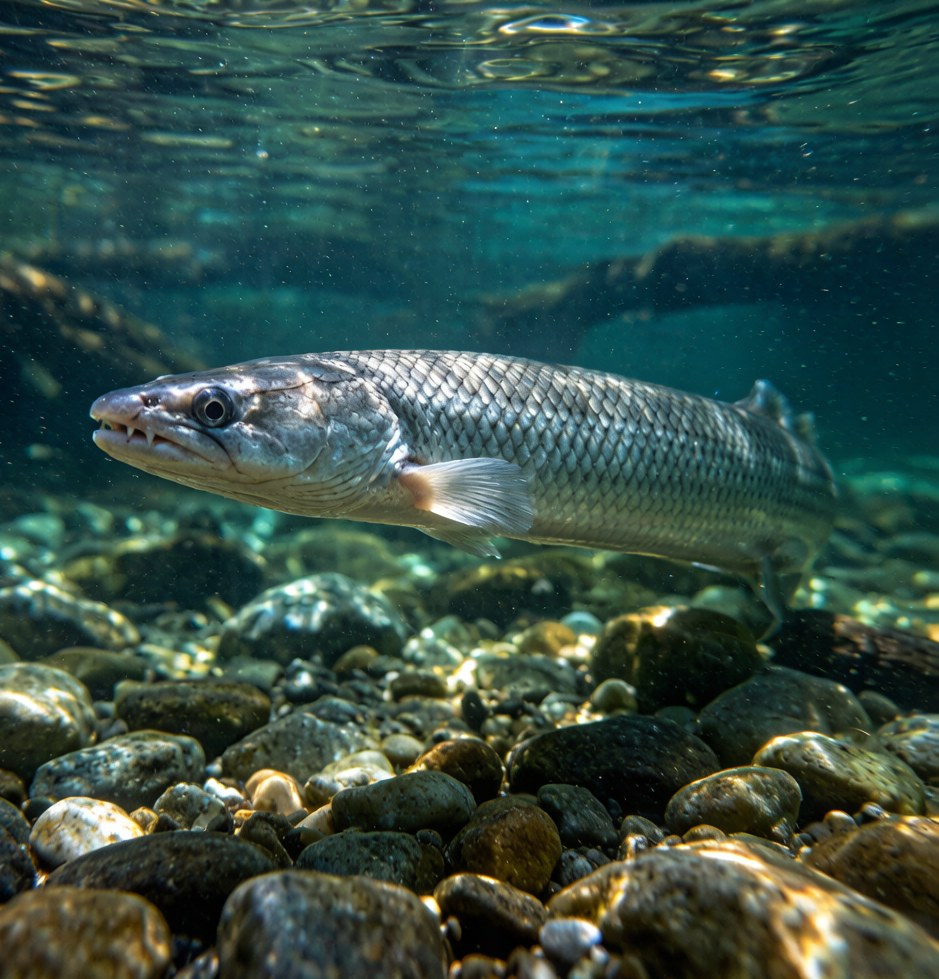
Introduction
The European Eel (Anguilla anguilla) is one of the most extraordinary fish in the world, with a life cycle that remains one of the greatest mysteries of the natural world. Born in the depths of the Sargasso Sea, a vast expanse of seaweed in the western Atlantic Ocean, it embarks on an epic multi-year journey across the Atlantic to reach European freshwater rivers and lakes, where it spends most of its adult life before making the incredible return migration to its oceanic
Taxonomy
Scientifically classified as Anguilla anguilla within the family Anguillidae, the family of freshwater eels, the European Eel belongs to the order Anguilliformes, the order of true eels. The genus Anguilla contains about 20 species of freshwater eels found worldwide, most of which share the remarkable catadromous life cycle involving an oceanic spawning migration. Recent genetic studies have revealed significant population structure across the European range, with distinct populations returning to rivers in different parts of Europe. The European Eel’s complex life cycle
Physical Characteristics
The European Eel displays one of the most dramatic metamorphoses of any fish species across its life cycle, transforming through five distinct life stages with strikingly different appearances. Adults have an elongated, snake-like body that can reach 60 to 150 cm in length and weigh up to 6 kg, with females generally larger than males. They have a small, pointed head with protruding lower jaw, and small eyes positioned laterally on the head that are larger in silver eels preparing for their
Habitat
European Eels occupy an extraordinary diversity of freshwater and brackish habitats across their continental range, from rivers, streams, lakes, ponds, canals and reservoirs to estuaries from the Mediterranean to Scandinavia. Yellow eels are found in all types of freshwater bodies, often burrowing into soft sediments or hiding among submerged roots and dense aquatic vegetation. They are remarkably tolerant of low oxygen levels and can survive in waters that would be uninhabitable for most other fish species. European Eels can also cross land
Diet
The Swordfish (swordfish-xiphias-gladius) is one of the fastest and most powerful marine predators, sharing with the European Eel a role as an apex predator in its respective habitat. Yellow eels are opportunistic predators with a diet that shifts with size, age and season. Small eels feed primarily on aquatic invertebrates including insect larvae, crustaceans and molluscs, while larger individuals become increasingly piscivorous, taking fish such as cyprinids, perch, roach and trout. They are primarily nocturnal hunters that use their acute sense of
Reproduction
The reproductive biology of the European Eel remains one of the great unsolved mysteries of the natural world. Adults undergo dramatic physiological changes as they prepare for their oceanic spawning migration, with eyes enlarging, body colour changing to silvery white, and the digestive system degenerating completely so the eels do not feed during the migration. The exact destination of spawning was only confirmed in the twentieth century when leptocephalus larvae were discovered in the Sargasso Sea. The larvae drift on ocean currents
Conservation
The European Eel is classified as Critically Endangered by the IUCN with population declines of more than 50 percent over recent decades, making it one of the most threatened fish species in Europe. The causes of decline are multiple: overfishing of glass eels and yellow eels, habitat loss including dams that block migration routes, pollution of freshwater and marine habitats, oceanic changes affecting larval survival, and parasite infection. Conservation measures including restocking programmes, fishing quotas, habitat restoration and the installation of fish
Fun Facts
The European Eel can survive out of water for extended periods by breathing through its skin, allowing it to cross land during wet nights. Its life cycle involves one of the longest migrations of any freshwater fish species, with individuals potentially travelling over 5,000 kilometres from European rivers to the Sargasso Sea. In some countries, eels have been an important food fish for centuries, and traditional eel fisheries have shaped the cultural landscape of riversides across Europe. Eels have featured in folklore,
[…] The mouth is terminal with thick lips, and the fins are grayish with reddish or orange tinges. The European eel represents a very different fish species that may occur in the same river […]
[…] to challenging environments, from high-altitude foraging to seasonal hibernation or migration. the European eel, the Northern pike, and the common roach frequently coexist with the phoxinus phoxinus across […]
[…] share this trait with the freshwater eels of the genus Anguilla. One of them is the European eel Anguilla anguilla. Its own long swim into the Sargasso Sea to spawn is remarkable. Its fall over the last 4 decades […]