 By st20113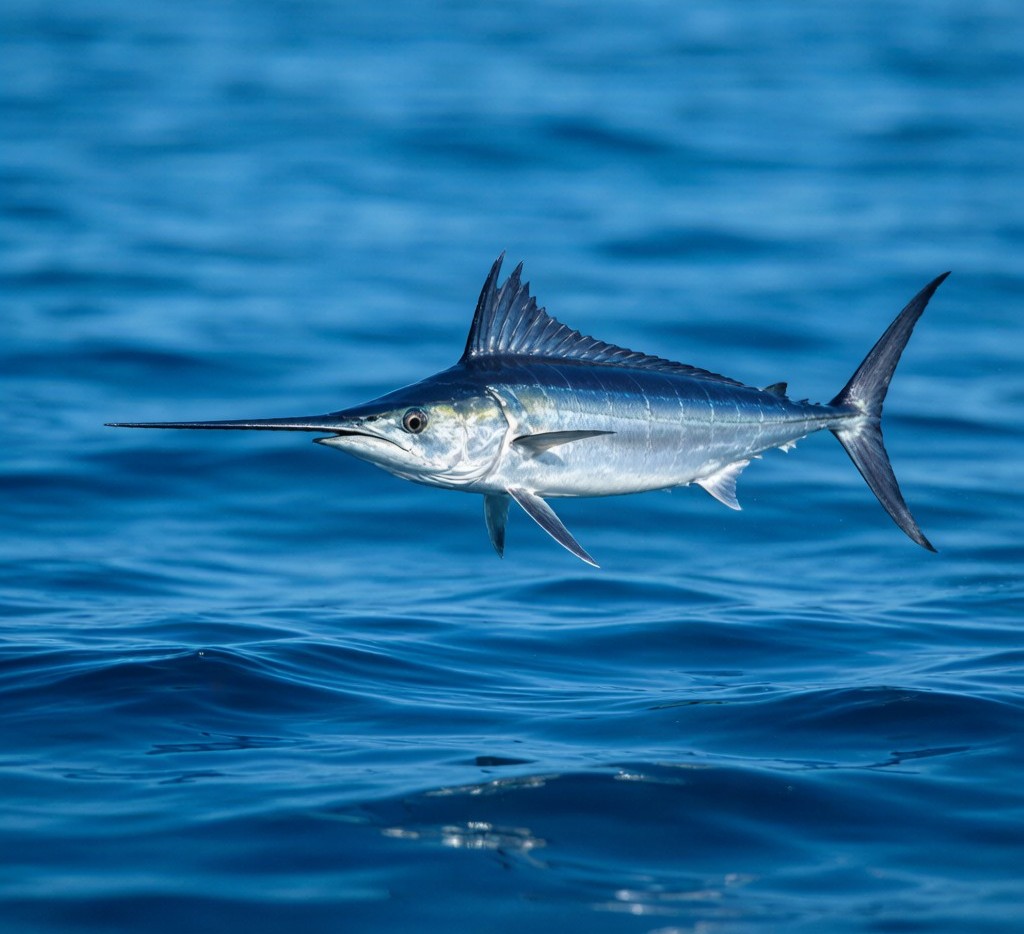
Introduction
The swordfish (Xiphias gladius) is a large, highly migratory predatory fish found in tropical and temperate oceans worldwide. Named for the elongated, flat bill that extends from its upper jaw, the swordfish is among the fastest swimmers in the sea, capable of bursts exceeding 80 kilometres per hour. A prized commercial and recreational species, it undertakes vast seasonal migrations across ocean basins in pursuit of prey and favourable temperatures. Its streamlined body and heat-exchanging physiology allow it to hunt both near the surface and in cool deep waters. tuna great white shark
Taxonomy
The swordfish is the sole living member of the family Xiphiidae, order Istiophoriformes, within the perch-like fishes. The species Xiphias gladius was described by Linnaeus in 1758. Its closest relatives are the marlins and sailfish of the family Istiophoridae, together forming the billfishes. The genus name Xiphias derives from the Greek for “sword,” referring to the distinctive rostrum. Genetic and fossil evidence indicates billfishes evolved their elongated bills independently from sawfish and other rostrate fishes.
Physical Characteristics
Swordfish are robust, elongated fish with a rounded body, a crescent-shaped tail, and the signature long, flat sword-like bill. Adults typically reach 1.5 to 3 metres and 50 to 320 kilograms, with exceptional individuals exceeding 4 metres. They are dark blue-grey above fading to silvery-white below, providing countershading camouflage. A remarkable feature is their ability to warm the brain and eyes using specialised heater tissue, allowing acute vision in cold water. Unlike related billfishes, adult swordfish lack pelvic fins and the young lose their dorsal and anal fin spines with age, developing a smoother profile.
Habitat
Swordfish occupy the epipelagic and mesopelagic zones of all major oceans, from warm equatorial waters to temperate and even sub-Arctic seas. They prefer temperatures between roughly 18 and 27 degrees Celsius but can dive to depths exceeding 600 metres where water is much colder, aided by their heating physiology. They are strongly migratory, moving seasonally to track warm currents and prey aggregations. Individuals may cross entire ocean basins, and populations mix across international waters. They spend daylight hours in deeper, cooler layers and rise toward the surface at night to feed.
Diet
Swordfish are apex predators that feed mainly on mid-water and surface schooling fishes such as mackerel, hake, and lanternfish, supplemented by squid and crustaceans. They use their bill to slash and stun prey, injuring or killing before ingesting it whole. Hunting occurs primarily at night when prey migrates near the surface, though they also take deep-dwelling squid during daytime descents. Their high metabolic rate demands substantial food intake, and their excellent vision in dim light supports efficient foraging. Swordfish are themselves preyed upon by large sharks, orcas, and humans.
Reproduction
Swordfish are externally fertilising, broadcast spawners. Spawning occurs in warm waters, with major nursery areas in the Caribbean, Mediterranean, and Pacific. Females are highly fecund, releasing millions of eggs per season that drift in the plankton and hatch into larvae possessing a small temporary bill. Growth is rapid; young swordfish can reach several kilograms within their first year. They mature at around three to four years, and individuals may live up to nine years or more. Because they mature relatively quickly and spawn prolifically, populations can recover from depletion if fishing pressure is reduced.
Conservation
Swordfish were historically overexploited by longline fisheries, but concerted international management since the 1990s has allowed several stocks to recover. The IUCN currently assesses the global population as Least Concern, though regional assessments vary and some fisheries remain a concern. Bycatch of seabirds, turtles, and sharks in longlines is a continuing issue, addressed through mitigation measures such as circle hooks and seabird deterrents. Sustainable certification and quota systems help guide consumers toward responsibly caught fish, supporting continued recovery.
Fun Facts
A swordfish’s bill is not used to spear prey but to slash and incapacitate schooling fish, increasing hunting efficiency. They possess special heater organs near the eyes and brain that can raise temperature by as much as 10 to 15 degrees, sharpening vision in cold depths. Swordfish are among the fastest fish in the ocean, with burst speeds estimated above 80 kilometres per hour. Their larvae are bizarre, with a long filament-like bill and spiny fins that later disappear as they mature. Tagging studies have shown individual swordfish migrating thousands of kilometres between feeding and spawning grounds across open ocean.
[…] The yellowfin tuna (Thunnus albacares) is a large, fast-swimming predatory fish of tropical and subtropical oceans, prized worldwide for its firm, flavourful flesh and famed as a premier game fish. Recognisable by its long, bright-yellow finlets and streamlined metallic-blue body, it forms large schools often associated with dolphins and other tunas. A highly migratory species, it undertakes vast movements across ocean basins in pursuit of prey. Its commercial importance has led to intense fishing pressure, making careful management essential for the species’ future, alongside other ocean predators such as the swordfish. […]
[…] Swordfish (swordfish-xiphias-gladius) is one of the fastest and most powerful marine predators, sharing with […]