 By Iris
Ceiba pentandra | Kapok Tree
Species Profile · Malvaceae
Kapok Tree
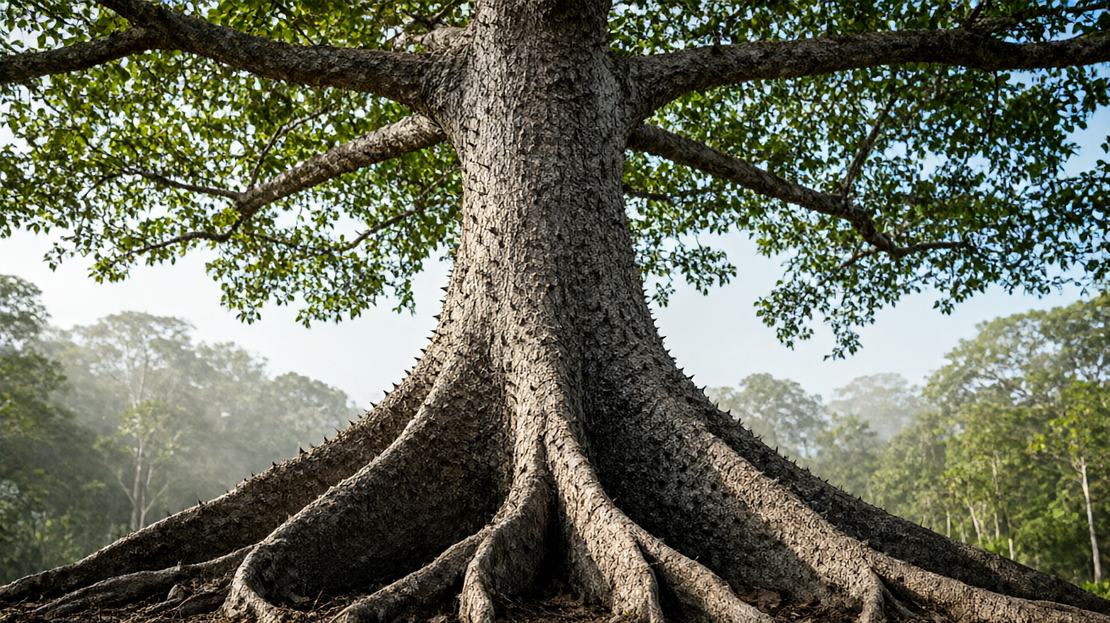
A tree rises above the rainforest canopy and carries its crown into full sun.
Least Concern
Height
Buttress
Fibre
Pollination
Range
Rating
The Kapok Tree
A crown above the canopy
A tree rises above the rainforest canopy and carries its crown into full sun. Its trunk is smooth, and huge buttress roots spread from the base. Some individuals pass 70 m.
It grows across the tropics, from Mexico to West Africa. Because the wood is soft and the fibre is valuable, people have moved it far beyond its native range, and it now grows wild in Africa. It is one of the largest trees in the Americas.
Family tree
Malvaceae, and a giant among mallow
Its proper name is Ceiba pentandra, and it belongs to the mallow family. Malvaceae now holds the tree, though older books place it with the bombax group. A Grandidier’s Baobab shares the tropical giant habit, though it stores water rather than reaching for light.
Both trees tower over their neighbours, and both carry a place in local belief. A Common Fig shows another tropical strategy, since it fruits while staying small. Two forms exist, and the American one differs from the African one.
Buttress roots
How to tell one
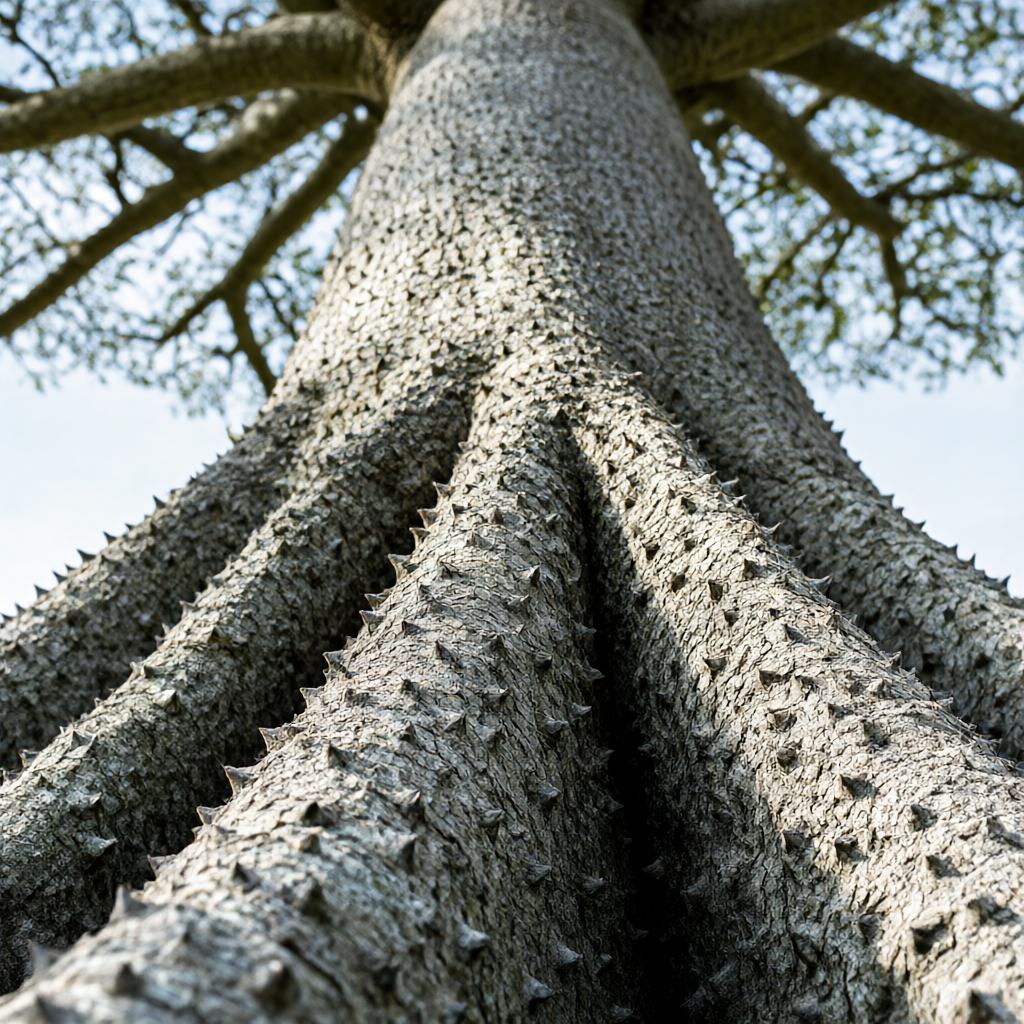
Height runs 40 to 70 m, and the crown spreads very wide. Buttress roots can reach 2 m above the soil, and they hold a trunk that would otherwise fall in a storm. Its trunk is grey and smooth when young, then it grows spines with age. Leaves are palmate, with five to nine leaflets.
Because the tree drops its leaves in the dry season, the crown opens and the forest floor brightens for a few weeks. Creamy white flowers smell of milk. Its fruit is a pod filled with silky fibre.
1
2
3
Gaps and river edges
Where it lives
Lowland tropical forest holds the species, especially near rivers. Its range covers Central America, the Caribbean and northern South America. It also grows wild across West Africa. Because the seed travels on the wind, the tree reaches gaps and cleared ground easily.
Seasonal forest suits it, and dry forest keeps it smaller. Farmers leave large trees standing in fields, so it survives outside reserves. It stays below about 1,000 m.
Sunlight, not prey
What it eats
The tree makes its own food, and it takes water and minerals from the soil. Because root fungi extend the reach of the roots, the tree can gather minerals in poor soil. Nothing is eaten, and nothing is caught.
Its leaves feed many insects, though that causes no harm. Fallen leaves return nutrients to the ground.
Bats at night
The breeding cycle
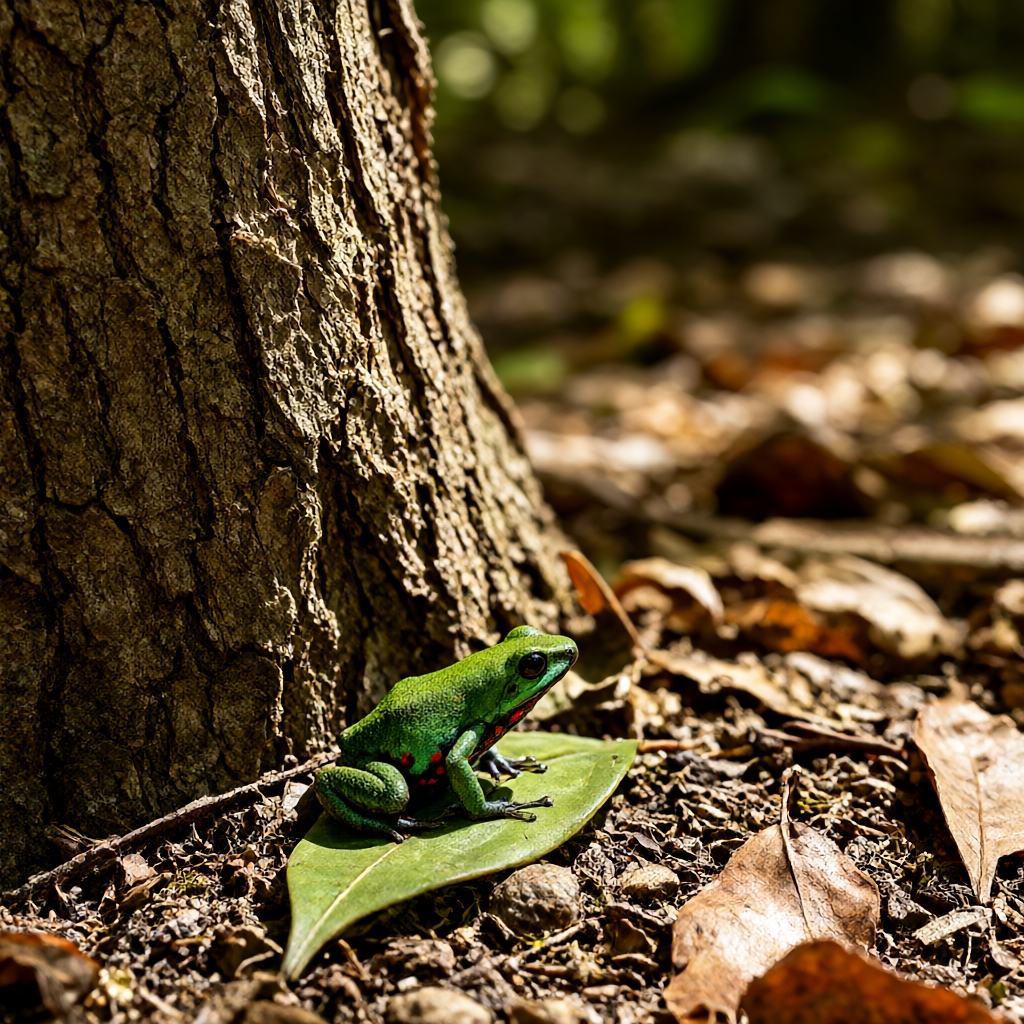
Flowers open at night and are pollinated by bats. Moths and bees visit as well. Because the flowers hang clear of the leaves, a bat can reach them in flight. A pod ripens over several weeks.
Its fibre loosens, and the wind carries the seed away. A single tree can release thousands of seeds in a season. Seedlings need light, so they wait in gaps.
Least Concern
Conservation
Red List status is Least Concern. Its range stays enormous and the population appears large. Because the tree is useful, people plant it far outside the native range. Logging takes the large stems, and the biggest trees are now scarce.
Clearing for pasture removes the forest around the survivors. Because a lone tree still produces seed, the species recovers well. Protected areas hold the largest remaining stands.
Side by side
How It Compares
| Trait | Kapok Tree | Grandidier’s Baobab |
|---|---|---|
| Family | Malvaceae | Malvaceae |
| Height | 40-70 m | up to 30 m |
| Trunk | smooth, spined with age | enormous, water storing |
| Pollination | bats at night | bats and moths |
| Range | Mexico to West Africa | Madagascar |
| Rating | Least Concern | Endangered |
Common misreadings
What People Get Wrong
- Not a tree of the closed canopy. It needs a gap. Seedlings wait for light, and the wind carries seed into clearings where the crown can reach full sun.
- Not a tree that fruits without help. Bats do the moving. Flowers open at night and hang clear of the leaves, so a bat can reach them in flight and carry pollen onward.
- Not a tree grown for its timber. The wood stays soft. Kapok sells as fibre rather than as lumber, which is why so many large trunks were left standing in fields.
Going further
Sources and Further Reading
Quick hits
Five things to remember
- The fibre from its pods is kapok, and it was once used in life jackets because it sheds water and stays light.
- Seed floss lets the wind carry a seed for hundreds of metres.
- In Maya belief the tree stands at the centre of the world, with its roots in the underworld.
- A single trunk can carry more than a thousand seed pods in a good year.
- Spines on an old trunk keep climbers and animals away from the bark.
[…] crayfish, making it a species of high conservation concern throughout its range alongside the atlantic salmon and other freshwater […]
[…] dive loggers show feeding dives are most frequent during daylight hours. The relationship with atlantic salmon is complex: while seals do prey on salmon the overall impact on populations is considered moderate […]
[…] for the species’ success across its European range, similar to adaptations seen in the Atlantic Salmon and other co-existing […]