 By st20113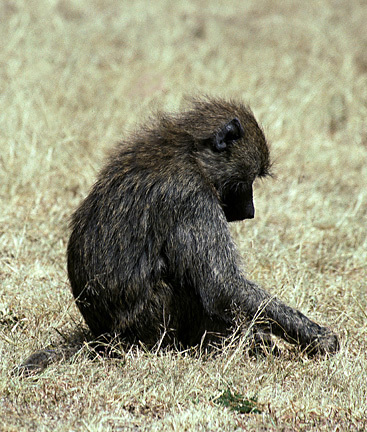
Introduction
The Olive Baboon (Papio anubis) is one of the most widespread and adaptable African primates, inhabiting a vast arc of savanna, woodland, and forest from Mali in the west to Tanzania in the east. Named for the greenish-olive tinge of its fur, this species is often the most commonly observed large mammal in the African bush. Its complex social structure, behavioral flexibility, and close genetic relationship to humans have made it one of the most intensively studied non-human primates in the world.
Taxonomy
Papio anubis belongs to the family Cercopithecidae (old-world monkeys) and the genus Papio, which encompasses all baboon species. The species name “anubis” references the ancient Egyptian jackal-headed god, a nod to the baboon’s dog-like facial profile. Olive Baboons are thought to result from past hybridization between Yellow and Anubis Baboons, with ongoing gene flow continuing to blur species boundaries in contact zones. They share a close taxonomic relationship with the chimpanzee and bonobo, both of which occupy overlapping ranges in central and eastern Africa.
Physical Characteristics
The Olive Baboon is one of the largest monkey species, with adult males weighing 19 to 30 kilograms and standing 50 to 75 centimeters tall, while females weigh 10 to 15 kilograms. Its coat is a grizzled olive-brown, produced by alternating light and dark bands on individual hairs. Adult males bear a prominent mane around the neck and shoulders that grows larger with age and social dominance. The hairless face ranges from dark grey to black, framed by the characteristic dog-like muzzle and forward-facing eyes that provide depth perception for fruit-picking and predator detection.
Habitat
Olive Baboons are found in diverse habitats across sub-Saharan Africa, including tropical rainforests, gallery forests, dry savannas, montane grasslands, and semi-desert regions. Their range extends from Senegal and Mali in the west through Nigeria, Cameroon, the Central African Republic, Sudan, Ethiopia, and Kenya to Tanzania. They demonstrate exceptional ecological flexibility, never straying far from water. Their adaptability rivals that of the gray wolf, which occupies a similarly broad ecological niche across the Northern Hemisphere.
Diet
The Olive Baboon is omnivorous, with fruit constituting the largest portion of the diet when available, supplemented by seeds, leaves, flowers, bark, roots, and tubers. Animal prey — including insects, small vertebrates such as rodents and hares, bird eggs, and occasionally young antelopes — provides essential protein. In areas bordering human agriculture, they readily exploit cultivated crops, particularly maize and sorghum. Their diet shifts dramatically between wet and dry seasons, from energy-rich fruits to tougher fibrous vegetation in lean periods.
Reproduction
Olive Baboons live in multi-male, multi-female groups of 20 to 100 individuals, sometimes up to 200. Females form stable matrilineal hierarchies, while males transfer between groups upon reaching sexual maturity at 6 to 8 years. Mating is not strictly seasonal; females signal fertility through sexual swelling and may mate with multiple males per cycle. Gestation lasts approximately 180 days, producing a single infant with dark natal fur. Infants are highly dependent and carried ventrally by the mother for several weeks before beginning independent exploration.
Conservation
The Olive Baboon is classified as Least Concern by the IUCN, reflecting its wide distribution and large populations. However, localized threats include habitat destruction for agriculture and infrastructure, bushmeat hunting, and persecution as an agricultural pest. Conservation efforts that protect large, connected habitat corridors are essential to long-term population viability across Africa.
Fun Facts
Olive Baboons are among the most socially intelligent of all non-human primates. Field studies have documented strategic alliance formation, reconciliation after conflicts, and mourning behavior following group member deaths — behaviors also observed in the lion, another highly social African mammal. In captivity, Olive Baboons have demonstrated tool use, problem-solving, and understanding of basic numerical concepts.
Studies of Olive Baboon cognition have contributed significantly to our understanding of primate intelligence, social learning, and the evolutionary origins of human decision-making and empathy.
Their vocal repertoire, which includes distinct alarm calls for different predator types, further demonstrates the sophistication of their communication and their remarkable awareness of the risks in their environment.