 By Iris
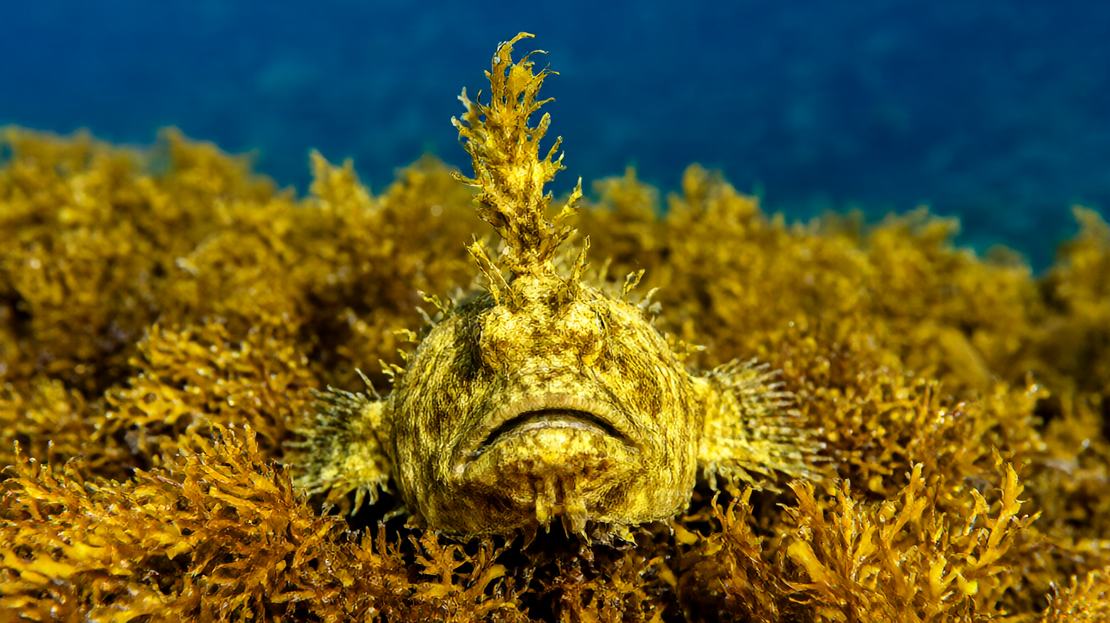
Histrio histrio | Sargassumfish
Species Profile · Antennariidae
Sargassumfish
A lumpy fish hangs in a raft of floating weed.
Least Concern
Length
Weight
Skin
Mouth
Habitat
Rating
The Sargassumfish
A fish made of seaweed
A lumpy fish hangs in a raft of floating weed. Fleshy flaps cover the skin, and they match the seaweed. The sargassumfish lives its whole life in that tangle.
Because the weed drifts with the current, the fish travels without swimming. It rarely leaves the raft. Nothing about the animal looks like a fish at first glance.
Family tree
Antennariidae, frogfish and their lures
Its proper name is Histrio histrio, and it belongs to the frogfish family. Antennariidae holds about 50 species, and most of them live on reefs or on the bottom. A Anglerfish shares the lure and the huge mouth, though it hunts in deep water.
Both groups ambush prey rather than chase it. The sargassumfish is the only member of its genus. Close relatives sit on reefs, so the floating life came later.
Flaps, not scales
How to tell one
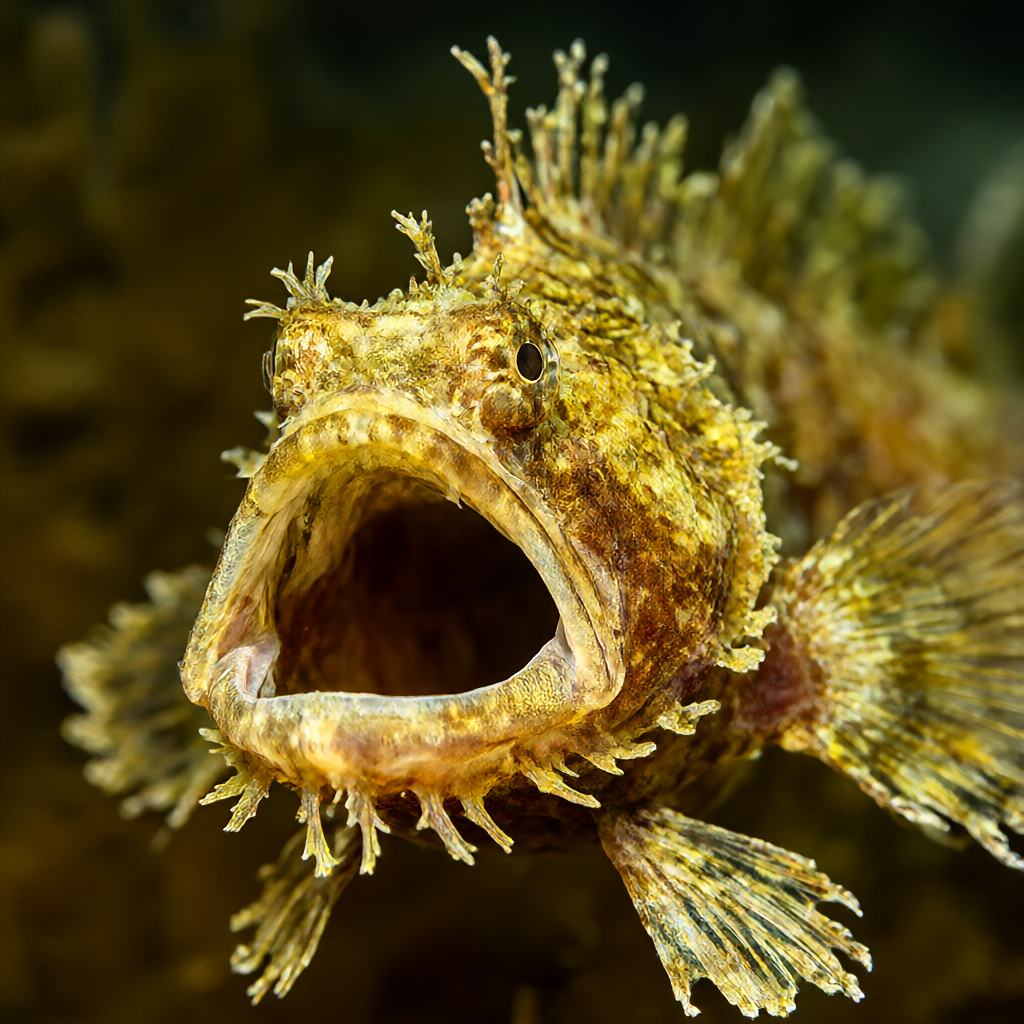
Length runs to about 20 cm. Weight stays under 300 g. A flat body carries small spines and fleshy flaps. Its colour shifts with the weed, from yellow-brown to olive.
Because the flaps break up the outline, the fish reads as part of the raft rather than as prey. The pectoral fins work like hands, and the fish uses them to climb through the weed. The gill openings sit behind the pectoral fins, which hides them.
1
2
3
A raft, not a reef
Where it lives
Floating Sargassum rafts in warm seas hold the species. Atlantic, Pacific and Indian waters all hold it. The weed gathers in gyres, and the fish goes where the gyre goes. Because the raft offers both cover and food, the animal never needs the seabed at any stage of its life.
Storm winds tear rafts apart, and the fish then strands on beaches. Young fish live in shallower weed near the shore. It stays near the surface, usually within the top few metres.
Whatever drifts past
What it eats
Small fish make up most of the food. Shrimp and crabs add a share. Because the fish waits in the weed, it takes whatever drifts past. Its mouth can open wider than its body, so it swallows prey almost its own size in a single strike.
Feeding works by suction, and the strike is too fast to follow. Cannibalism is common, since a larger fish will eat a smaller one. No plant food is taken at all.
Eggs in a jelly mass
The breeding cycle
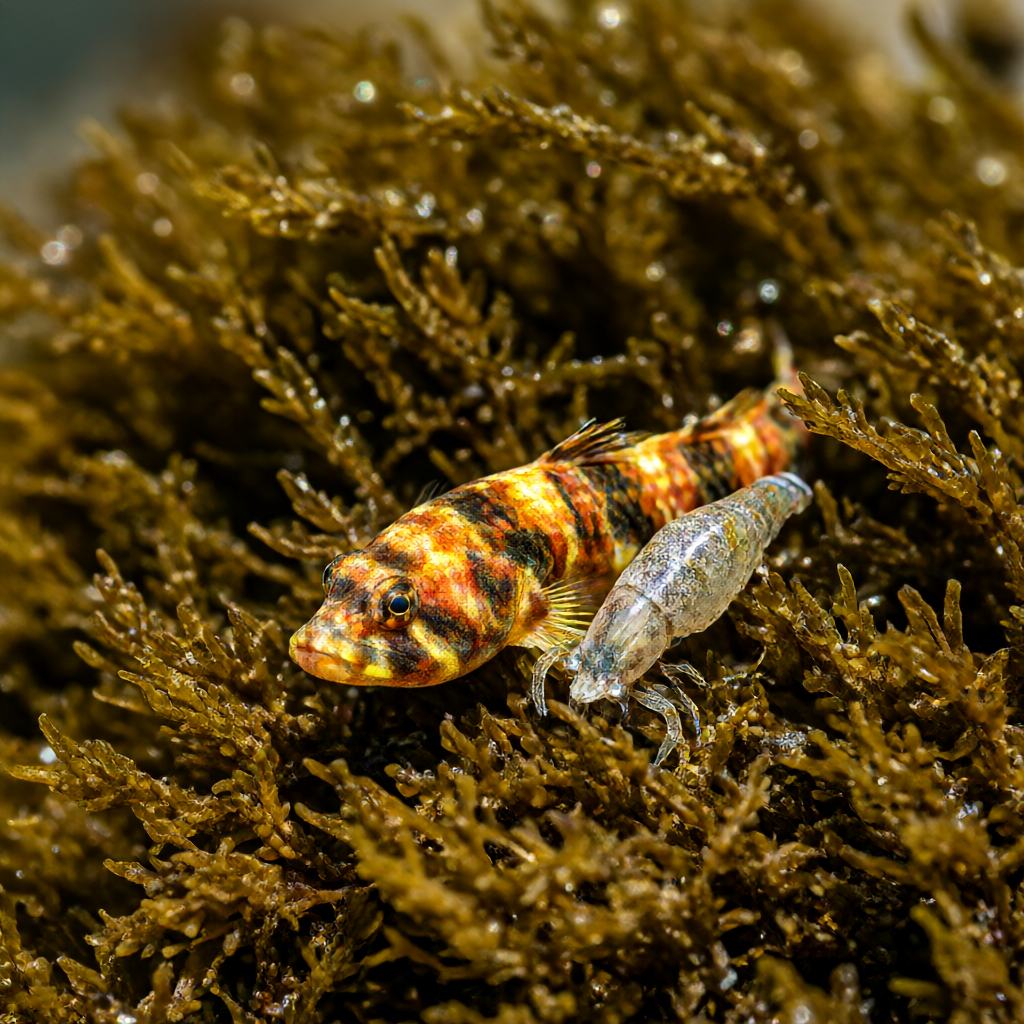
Eggs are laid in floating masses among the weed. A female may release thousands at once. Because the eggs drift with the raft, the young stay in the same habitat. Larvae carry small flaps from an early stage.
Nothing is known about courtship. Nothing is recorded about parental care. The young grow fast, since the raft offers little shelter from predators.
Least Concern
Conservation
Red List status is Least Concern. That range stays enormous, so the species is not at immediate risk. Because the animal depends on floating weed, it follows the health of that weed.
Plastic gathers in the same gyres, and the rafts now carry debris. Fishing nets take a number when they sweep the surface. Hurricanes destroy local rafts, though the fish recovers from nearby populations.
Surveys are sparse, since the open ocean is hard to sample. Nothing suggests a rapid decline.
Side by side
How It Compares
| Trait | Sargassumfish | Red-lipped Batfish |
|---|---|---|
| Family | Antennariidae | Ogcocephalidae |
| Habitat | floating weed | open seabed |
| Skin | leafy flaps | rough with spines |
| Movement | climbs with its fins | walks on its fins |
| Range | warm oceans | Galápagos only |
| Rating | Least Concern | Data Deficient |
Common misreadings
What People Get Wrong
- Not a fish of the reef. The raft is home. Weed floats in open water, and the animal spends its whole life inside a tangle that drifts with the current.
- Not a species that needs the seabed. It never settles. Cover and food both come from the raft, so the fish can pass every stage without touching sand or rock.
- Not a picky feeder. Anything in reach goes down. The mouth opens wider than the body, and a meal close to its own size takes hours to digest.
Going further
Sources and Further Reading
Quick hits
Five things to remember
- The fish can change colour over days, and it matches the weed it sits on.
- It climbs through the tangle with its fins rather than swimming, and it rarely moves more than a metre.
- A sargassumfish can swallow prey nearly as large as itself, and the meal takes hours to digest.
- The weed raft carries shrimp, crabs and young fish, so the predator never runs out of food.
- Eggs float in a jelly mass, and the mass stays inside the raft.
[…] distant relative is the much larger Great White Shark. Both are cartilaginous fishes. Their skeletons are made of soft cartilage, not bone. But the two […]
[…] shark family. This family is Lamnidae. It is in the order Lamniformes. Its famous kin include the Great White Shark. They also include the shortfin mako and longfin mako. All of them have a spindle-shaped […]