 By st20113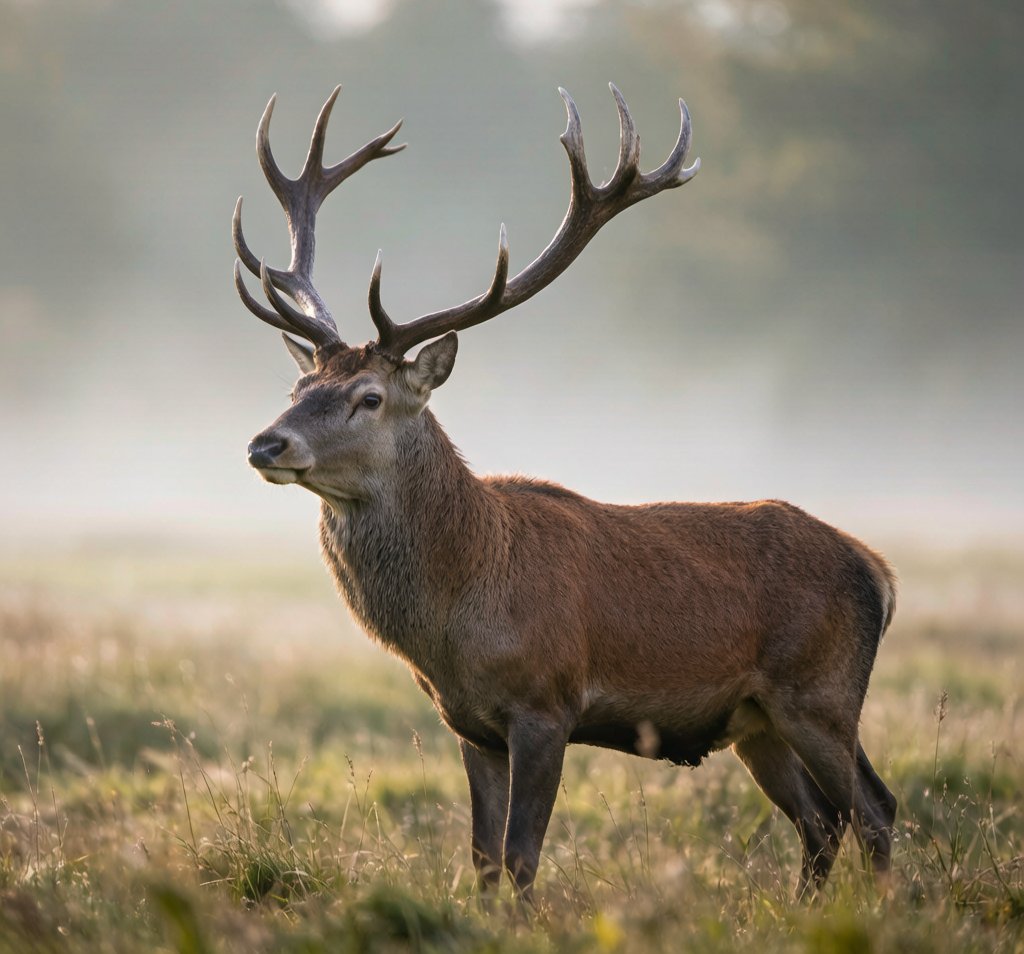
Introduction
The red deer (Cervus elaphus) is one of the largest and most widespread deer species in the world, native to much of Europe, the Caucasus, Anatolia, Iran, and parts of North Africa. A majestic ruminant of forests, grasslands, and mountainous regions, it has been admired and hunted by humans for thousands of years. Introduced populations also thrive in New Zealand, Australia, Argentina, and the United States. The species is highly adaptable and forms the ancestor of several farmed and feral red deer populations used for venison.
Taxonomy
Red deer belong to the family Cervidae and the genus Cervus. Historically, the closely related wapiti or elk of North America and East Asia was classified as a subspecies of red deer, but many authorities now treat it as a separate species, Cervus canadensis. Several subspecies of red deer are recognized across its range, varying in size and antler form. Genetic studies show deep divergence between western Eurasian and North African populations, and the species complex continues to be refined by taxonomists.
Physical Characteristics
Adult male red deer, known as stags, are substantially larger than females, called hinds. Stags typically stand about 110 to 130 centimeters at the shoulder and weigh between 160 and 240 kilograms, while hinds weigh 90 to 150 kilograms. The coat is reddish brown in summer and grayish brown in winter, with a pale rump patch. Mature stags grow impressive branching antlers that are shed and regrown each year, with the number of points indicating age and condition rather than strict species identity. A short tail and slender legs complete the typical deer silhouette.
Habitat
Red deer occupy a remarkable range of habitats, from open moorland and grassland to deciduous and coniferous woodland and alpine meadows. In Scotland and the Scottish Highlands they roam open hillsides, while in central Europe they favor mixed forests with clearings. They are most active at dawn and dusk and seek dense cover during the day. Across their range they share the landscape with other large mammals such as the brown bear, which occasionally predates vulnerable calves.
Diet
As ruminant herbivores, red deer browse and graze on a wide variety of plant material. In summer they feed on grasses, herbs, leaves, and shoots, while in winter they rely more on woody browse such as heather, bilberry, and tree bark. Their four-chambered stomach allows them to ferment tough cellulose and extract nutrients from low-quality forage. Like the opportunistic red fox, they adjust their feeding habits seasonally, though deer remain strictly vegetarian.
Reproduction
The breeding season, known as the rut, occurs in autumn. Stags compete for access to groups of hinds using roaring calls, parallel walks, and physical clashes of their antlers. Dominant males establish harems and mate with multiple females. After a gestation of about 233 days, a single calf is usually born in late spring or early summer. The spotted calf hides in vegetation for its first weeks. Predators such as the gray wolf and wild boar may take young or weak individuals, influencing herd movement patterns.
Conservation
Red deer are classified as Least Concern by the IUCN, with stable or increasing populations across much of their native range. They benefit from legal protection, managed hunting, and the creation of protected forests and national parks. In some regions, however, overabundant deer cause significant damage to woodland regeneration and agriculture, requiring active population control. Reintroduction and translocation programs have restored deer to areas where they had been eliminated.
Fun Facts
A roaring stag can be heard more than a kilometer away during the rut. Red deer antlers can grow at a rate of 2.5 centimeters per day, among the fastest-growing tissues in the animal kingdom. The species was one of the first animals to be domesticated for farming, and today millions are raised worldwide for meat. Calves lose their white spots within a few weeks of birth, blending into the forest for protection.
[…] and Asia. The genus Alces is distinct from Cervus, setting the moose apart from the elk and the red deer. Among North American megafauna, the moose shares its range with the American bison and the river […]
[…] Red Deer (cervus-elaphus-red-deer) is the largest and most abundant competitor with the Roe Deer for […]
[…] Red Deer (cervus-elaphus-red-deer) is the most abundant large herbivore sharing the primeval forests of […]
[…] Across much of Central and Western Europe, the species has declined dramatically over the past century. Populations in Scotland, Germany, and France have become small and fragmented, and several national populations are now considered critically endangered. Conservation programs across the continent aim to restore both the bird and the mature forests on which it depends. For more information on another iconic European forest species, see the red deer. […]