 By st20113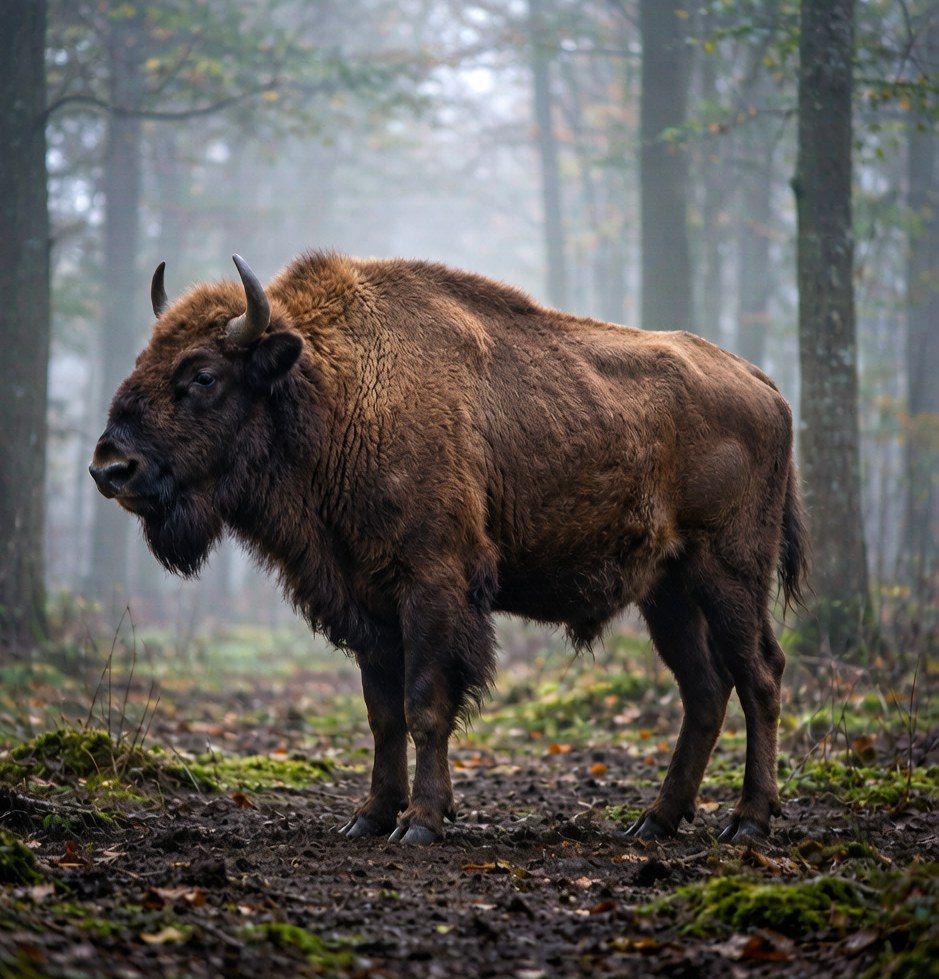
Introduction
The European Bison (Bison bonasus), also known as the wisent, stands as Europe’s heaviest wild animal and one of the continent’s most iconic megafauna species. Once widespread across the grasslands and woodlands of Europe, it was driven to the brink of extinction in the early twentieth century when the last wild population in the Bialowieza Forest was reduced to just 48 individuals. Through one of the most remarkable conservation success stories of the modern era, this magnificent species has been brought back
Taxonomy
Scientifically classified as Bison bonasus within the family Bovidae, the European Bison belongs to the order Artiodactyla, the group of even-toed ungulates. It is closely related to the American Bison (Bison bison) but is genetically distinct, having evolved as a separate species in European woodlands over hundreds of thousands of years. The species is placed in the genus Bison alongside the American Bison and the wisent of the Caucasus mountains, a subspecies (Bison bonasus caucasicus) that remains critically endangered. The European Bison
Physical Characteristics
Adult male European Bisons, known as bulls, can weigh up to 900 kg and stand 1.8 to 2.1 metres at the shoulder, making them the heaviest land animals in Europe. They have a distinctive hump over their front shoulders composed of dense musculature that supports their large head, a shaggy dark-brown coat that grows significantly longer and thicker in winter, and a pale beard beneath the chin. Cows are smaller and more slender, typically weighing 400 to 600 kg. Both sexes have
Habitat
The Red Deer (cervus-elaphus-red-deer) is the most abundant large herbivore sharing the primeval forests of Central and Eastern Europe with the European Bison. European Bisons are primarily found in deciduous and mixed forests, with a strong preference for areas that combine open meadows, forest clearings and pastures with access to water for drinking. Herds follow traditional grazing routes through forest habitats, and they are capable of moving considerable distances each day, sometimes covering five to ten kilometres in their daily wanderings. The
Diet
As a grazing herbivore, the European Bison feeds predominantly on grasses, sedges and herbs during the growing season, switching to a diet of bark, twigs, buds and conifer needles in winter when ground vegetation is buried under snow. Like other large ruminants, it plays an important role in maintaining grassland and open woodland habitats through its grazing activity, preventing the encroachment of scrub and maintaining the mosaic of open and forested habitats that many other species depend on. Water is essential for
Reproduction
European Bisons are polygynous, with dominant bulls mating with multiple cows within their territory during the late summer breeding season, typically from August through October. After a long gestation of approximately 264 days, a single calf is born in spring, typically in May or June, when food is most abundant and environmental conditions are most favourable for calf survival. Calves are born with a reddish-brown coat and are able to stand and walk within hours of birth, demonstrating the highly precocial nature
Conservation
Listed as Near Threatened by the IUCN, the European Bison has made one of the most remarkable recoveries of any species in modern conservation history, bouncing back from a low point of approximately 1,800 individuals in the early twentieth century to over 7,000 individuals today. Key threats include habitat fragmentation and isolation of subpopulations, genetic bottlenecking due to the small founding population from which all modern European Bisons descend, and collisions with vehicles on the roads that now criss-cross much of their
Fun Facts
European Bisons are powerful swimmers and have been observed crossing wide rivers and lakes with apparent ease, despite their massive bulk. During the rut, dominant bulls engage in spectacular clashes, charging at each other at speeds of up to 50 kilometres per hour with their massive heads lowered, the impact audible from a considerable distance. They engage in head-rubbing behaviour where they press their horns against tree trunks and branches, which may serve multiple functions including horn conditioning and territorial scent marking. The European Bison featured prominently in the cave paintings of Ice Age Europe dating back over 20,000 years.