 By st20113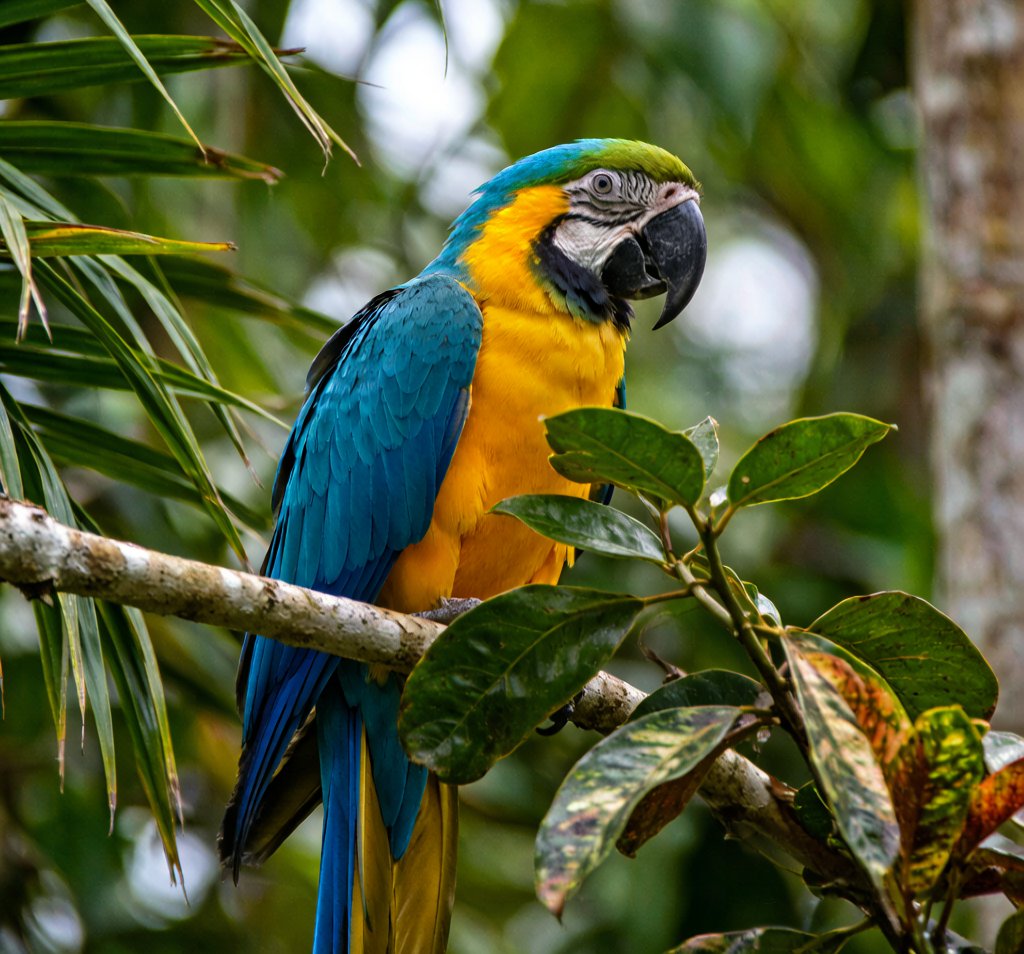
Introduction
The blue-and-yellow macaw (Ara ararauna) is one of the most visually spectacular birds on the planet—a living work of art dressed in cobalt blue, brilliant gold, and stark black that has inspired travelers for centuries. Found in the tropical forests and savannas of northern South America, this magnificent parrot soars through the Amazon canopy with long streaming tails and loud, far-carrying calls that are as iconic to the region as the howler monkey’s roar. Beyond its stunning appearance, the blue-and-yellow macaw plays a critical ecological role as a seed disperser and is culturally significant to indigenous Amazonian peoples. Its combination of beauty, intelligence, and social complexity has made it one of the most sought-after birds in the global pet trade—ironically, one of the very threats that imperils its wild populations.
Taxonomy
Ara ararauna belongs to the family Psittacidae, the true parrots, within the order Psittaciformes. The species was first formally described by Carl Linnaeus in 1758, making it one of the first parrot species to receive a scientific name. The genus name Ara is derived from the indigenous Tupi word for the bird, and the common name accurately describes its two-tone coloration. Two subspecies are recognized: A. a. ararauna of the Amazon Basin and A. a. azul of eastern Panama, though vocal and genetic differences have led some researchers to treat the latter as a separate species.
Physical Characteristics
The blue-and-yellow macaw is one of the largest flying parrots, with a body length of 76–86 cm and a wingspan exceeding 110 cm. Its upper parts are rich cobalt blue from crown to wings and lower back, while the underparts are brilliant golden yellow, separated by a green forehead stripe. A distinctive black chin patch frames the face. The bare facial patch has horizontal lines of small dark feathers—a feature shared by all macaws. Like the African elephant, which uses its trunk with remarkable precision, the macaw’s hooked beak and muscular tongue work in concert as a precision tool for cracking the hardest tropical nuts, including Brazil nuts. Its long, pointed tail can measure up to 50 cm alone.
Habitat
The blue-and-yellow macaw inhabits tropical rainforests, seasonally flooded forests, and savannas of northern South America, from Panama through Colombia, Venezuela, Brazil, Bolivia, Paraguay, and the Guianas. Within the Amazon Basin, it shows a strong preference for forest edges and river corridors, where large emergent trees provide both feeding resources and nesting sites. Clay licks—exposed riverbank cliffs rich in mineral salts—are critical features of macaw habitat, where birds gather to consume clay that neutralizes dietary toxins from seeds and nuts. The species requires large, old-growth trees with suitable hollows for nesting, making it vulnerable to selective logging. Its range overlaps with that of the jaguar in many areas, and this large cat represents a natural predator threat to eggs and nestlings.
Diet
The blue-and-yellow macaw’s diet is almost entirely vegetarian, centered on seeds, nuts, fruits, and vegetable matter. Brazil nuts, palm nuts, and seeds from numerous tree species form the core of its nutrition. Like the brown bear, which uses its powerful bite to access hard-shelled foods, the macaw’s hooked beak and strong neck muscles allow it to crack the hardest tropical nuts with ease. Social feeding is pronounced—birds forage in pairs or family groups, calling frequently as they move through the canopy. Clay lick behavior is essential, as many consumed seeds contain alkaloids and tannins that clay neutralizes.
Reproduction
Blue-and-yellow macaws form monogamous, lifelong pair bonds, with both parents sharing all nesting and chick-rearing duties. They nest exclusively in large tree hollows, typically in emergent rainforest trees such as the kapok. The female lays 1–3 eggs on wood dust at the cavity bottom, and she alone incubates for approximately 27 days while the male feeds her. Both parents regurgitate food for hatchlings, which remain in the nest for 90–100 days—an exceptionally long nesting period that makes chicks highly vulnerable to predation. Young macaws stay with their parents for one to two years after fledging, learning essential foraging and social skills before dispersing to find mates. Pairs typically raise young only every two to three years due to the demands of this long cycle.
Conservation
The blue-and-yellow macaw is listed as a species of Least Concern, with populations estimated at several hundred thousand individuals across its extensive range. However, significant threats persist. Deforestation and habitat fragmentation reduce nesting tree availability. The illegal pet trade has historically targeted this species heavily, with chicks removed from nests—a practice both ecologically destructive and prohibited under CITES Appendix II. In areas where clay lick habitat is threatened by mining or river engineering, macaw populations have declined measurably. Like the bald eagle, which has benefited from decades of dedicated conservation effort, macaws can recover when key habitats are protected and illegal trade is suppressed.
Fun Facts
Blue-and-yellow macaws are among the most socially complex birds, forming deeply bonded pairs that spend hours mutually preening, playing, and vocalizing together. Their calls are among the loudest of any parrot—audible from several kilometers away—and each bird’s voice has a distinctive quality that allows mates to recognize each other in dense forest. In the wild, macaws have been observed using stick tools to dislodge hard-to-reach food items. Clay lick gatherings at Peru’s Manu National Park draw visitors from around the world, who watch dozens of macaws consume clay in vibrant morning congregations. Like the red fox, macaws demonstrate remarkable adaptability in exploiting new food sources when opportunities arise.
[…] The toco toucan is found in central and eastern South America, from Bolivia and Brazil to Argentina and Paraguay. Unlike many toucans that live deep in dense rainforest, the toco toucan prefers open woodland, savanna, gallery forest along rivers, and forest edges. It is often seen perched in the tops of tall trees or flying in small groups across open country. The species has adapted well to human-modified landscapes and is frequently observed in orchards, parks, and gardens. Its range overlaps with many other South American birds and mammals, including the blue-and-yellow macaw. […]
[…] parents cooperate in feeding the chicks, which are entirely dependent on regurgitated insects. The blue-and-yellow macaw shares with the bee-eater a reliance on pair-bond cooperation for chick-rearing, with both parents […]
[…] lenses providing wide-angle vision essential for detecting prey and avoiding predators. Like the blue and yellow macaw, the green darner uses vivid coloration for species recognition and mate attraction. The wings are […]