 By st20113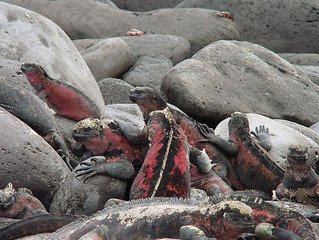
Introduction
The Galapagos Marine Iguana is the only lizard in the world that forages in the ocean. These unique reptiles are endemic to the Galapagos Islands of Ecuador. They dive into cold Pacific waters to eat algae and seaweed. Charles Darwin called them “imps of darkness” due to their unusual appearance.
Marine Iguanas have evolved remarkable adaptations for their marine lifestyle. They can dive over 20 meters deep and stay underwater for an hour. Special glands in their nostrils excrete excess salt from seawater. They are living examples of evolution in action on isolated islands.
Taxonomy
Marine Iguanas belong to the family Iguanidae. They are the sole members of the genus Amblyrhynchus. Their closest relatives are land iguanas of the genus Conolophus. These two groups diverged millions of years ago when ancestral iguanas colonized the islands.
Scientists recognize several subspecies across different islands. Each varies slightly in size and coloration. Green Iguana populations represent their distant mainland cousins. The Galapagos Giant Tortoise shares this island endemism.
Physical Characteristics
Marine Iguanas have flattened tails for efficient swimming. Their long, sharp claws grip rocks against crashing waves. They have laterally compressed bodies and dorsal spines running down their backs. Coloration varies from black and gray to red and green, depending on island and season.
Males are larger than females and can reach 1.5 meters in length. Some populations on different islands show distinct size variations. Their blunt snouts and specialized teeth are adapted for scraping algae from rocks. They are smaller than Green Anaconda but uniquely adapted to marine life.
Their dark coloration helps absorb heat from the sun after cold ocean swims. This is essential for these cold-blooded reptiles. Males develop brighter colors during breeding season to attract mates and intimidate rivals.
Habitat
Marine Iguanas are found on nearly all Galapagos Islands. They inhabit rocky coastlines where they can access the sea. They prefer areas with abundant underwater algae growth. These cold-blooded reptiles rely on sun-warmed rocks to raise their body temperature.
After feeding in cold ocean waters, they must bask to warm up. They often congregate in large groups on lava rocks. Their dark coloration absorbs heat efficiently from the equatorial sun. This unique habitat use separates them from terrestrial lizard species.
Diet
These herbivorous lizards eat almost exclusively marine algae. They graze on underwater rocks and in tidal pools. Some individuals dive deep to access algae beds. Larger iguanas can dive deeper and stay submerged longer than smaller ones.
During El Niño events, algae populations decline dramatically. Many iguanas starve during these periods of scarcity. They can actually shrink their bodies during food shortages. This remarkable ability helps them survive until conditions improve. Great White Shark sometimes preys on them when they swim offshore.
Reproduction
Breeding season varies by island but generally occurs during warm months. Males develop brighter colors to attract females during this time. They defend territories on land near prime nesting sites. Mating involves elaborate displays and sometimes combat between males.
Females dig burrows in sandy soil to lay eggs. They may travel inland to find suitable nesting areas. Clutches contain 1 to 6 eggs that incubate for about 3 months. Females guard nest sites for several days after laying. Hatchlings emerge and immediately face a gauntlet of predators.
Conservation
Marine Iguanas face several threats despite their remote location. Introduced predators like cats, dogs, and rats eat eggs and young iguanas. Oil spills pose significant risks to their marine food sources. Climate change and El Niño events cause periodic population crashes.
They are protected within the Galapagos National Park. Eradication of introduced species benefits iguana populations significantly. The Komodo Dragon also requires similar island protection measures. Monitoring programs track population health.
Fun Facts
Marine Iguanas can sneeze salt from their nostrils. Special glands filter excess salt from their blood. This is visible as white crust around their noses. They can shrink up to 20% of their body length during food shortages, then regrow when food returns.
They are excellent swimmers, using their tails like crocodiles for propulsion. Young iguanas often fall prey to hawks and herons along the coast. Adults have few natural predators besides sharks and orcas. They have been observed eating land plants during extreme droughts when marine algae is unavailable.