 By st20113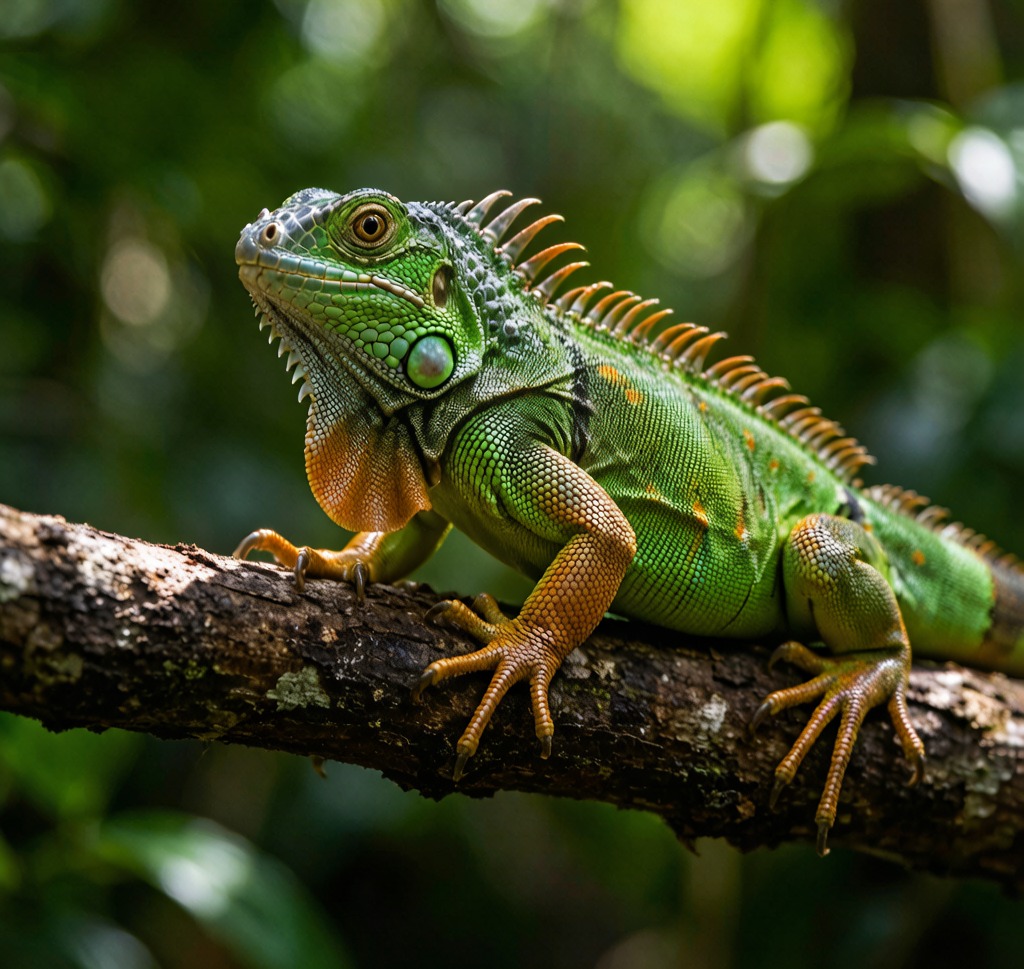
Introduction
The green iguana (Iguana iguana) is a large, arboreal lizard native to the tropical rainforests of Central America, South America, and the Caribbean islands. Also known as the common iguana or American iguana, it is one of the largest lizards in the Americas, capable of reaching lengths of 1.5 to 2 meters (5 to 7 feet). They are excellent climbers, spending most of their lives in the canopy.
Taxonomy and Classification
The green iguana belongs to the family Iguanidae, a diverse group of lizards found throughout the Americas. It is the most well-known of approximately 30 to 40 Iguana species. Green iguanas diverged from their marine and desert iguana relatives approximately 60 to 90 million years ago, during the Late Cretaceous period.
Physical Characteristics
Green iguanas have a robust, laterally compressed body with a long, tapering tail that makes up approximately half their total length. Adults typically measure 1.2 to 2 meters in total length and weigh 4 to 8 kg (9 to 18 lbs). Their most distinctive features are the row of pointed scales running from the neck to the base of the tail (the dorsal crest), the dewlap beneath the chin, and the large, round tympanic scale behind each eye.
Distribution and Habitat
Green iguanas are native to the lowland tropical rainforests of Central America, northern South America, and the Caribbean islands. They have been introduced to Florida, Hawaii, Texas, and parts of Southeast Asia through the pet trade. They are strictly arboreal — rarely descending to the ground except to lay eggs or move between trees during floods.
Diet
Green iguanas are strict herbivores, feeding exclusively on leaves, flowers, and fruits from trees and shrubs. This diet is unusual among large lizards, and iguanas have evolved specialized teeth and a fermentation chamber in their colon called the cecum to extract nutrients from fibrous plant material.
Conservation Status
In their native range, green iguanas are an important food source. They are listed as a species of Least Concern by the IUCN, though some island populations face localized threats from hunting and habitat loss.
[…] recognize several subspecies across different islands. Each varies slightly in size and coloration. Green Iguana populations represent their distant mainland cousins. The Galapagos Giant Tortoise shares this […]
[…] a suite of unique traits over approximately 90 million years. Their closest relatives include the green iguana and other iguanian […]