 By Iris
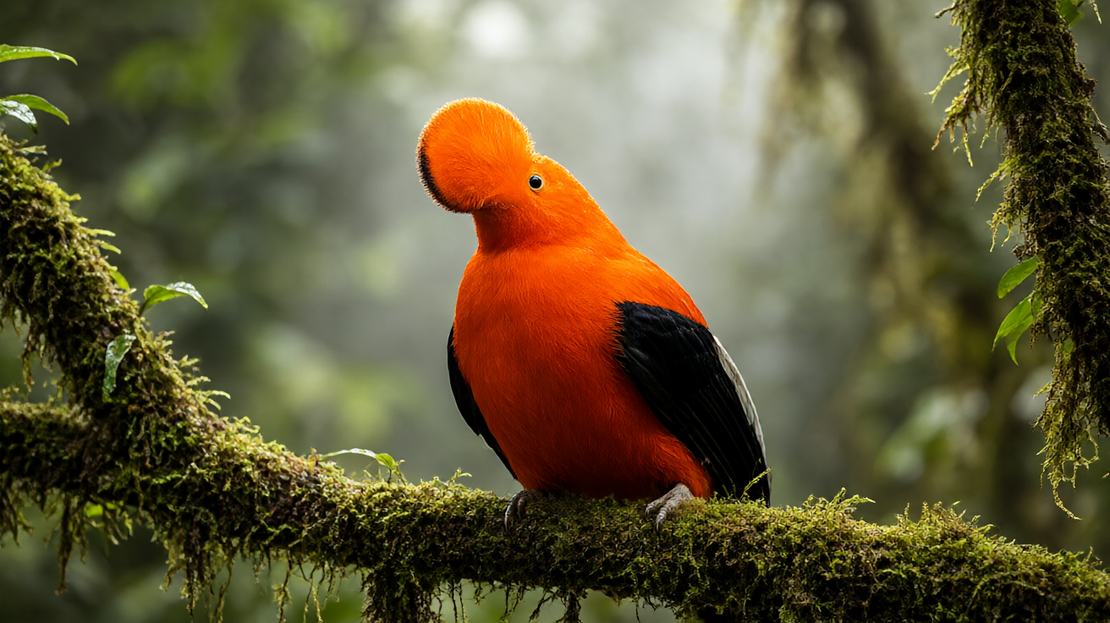
Rupicola peruvianus | Andean Cock-of-the-rock
Species Profile · Cotingidae
Andean Cock-of-the-rock
A male bird glows orange-red in the half light of a cloud forest.
Least Concern
Length
Weight
Crest
Clutch
Incubation
Rating
The Andean Cock-of-the-rock
A disc of orange feathers
A male bird glows orange-red in the half light of a cloud forest. Its crest spreads across the whole face like a flat disc. Few birds in the Andes carry that colour.
The Andean cock-of-the-rock is also the national bird of Peru. Since the male acts in groups, many orange shapes can appear at once. Visitors hear the birds long before they see them.
Family tree
Cotingidae, and a crest over the bill
Its proper name is Rupicola peruvianus, and it belongs to the cotinga family. Cotingidae holds fruit-eating birds found only in the tropics. Two major forms are named, and some authors treat them as separate species. A Raggiana Bird-of-paradise acts the same pattern from New Guinea, with males gathering to show.
Both lineages evolved extreme male colours, yet they sit in different groups. A Peacock reaches the same result with a fan of tail plumes. The resemblance is pure chance, since the birds share no recent kin.
A crest over the bill
How to tell one
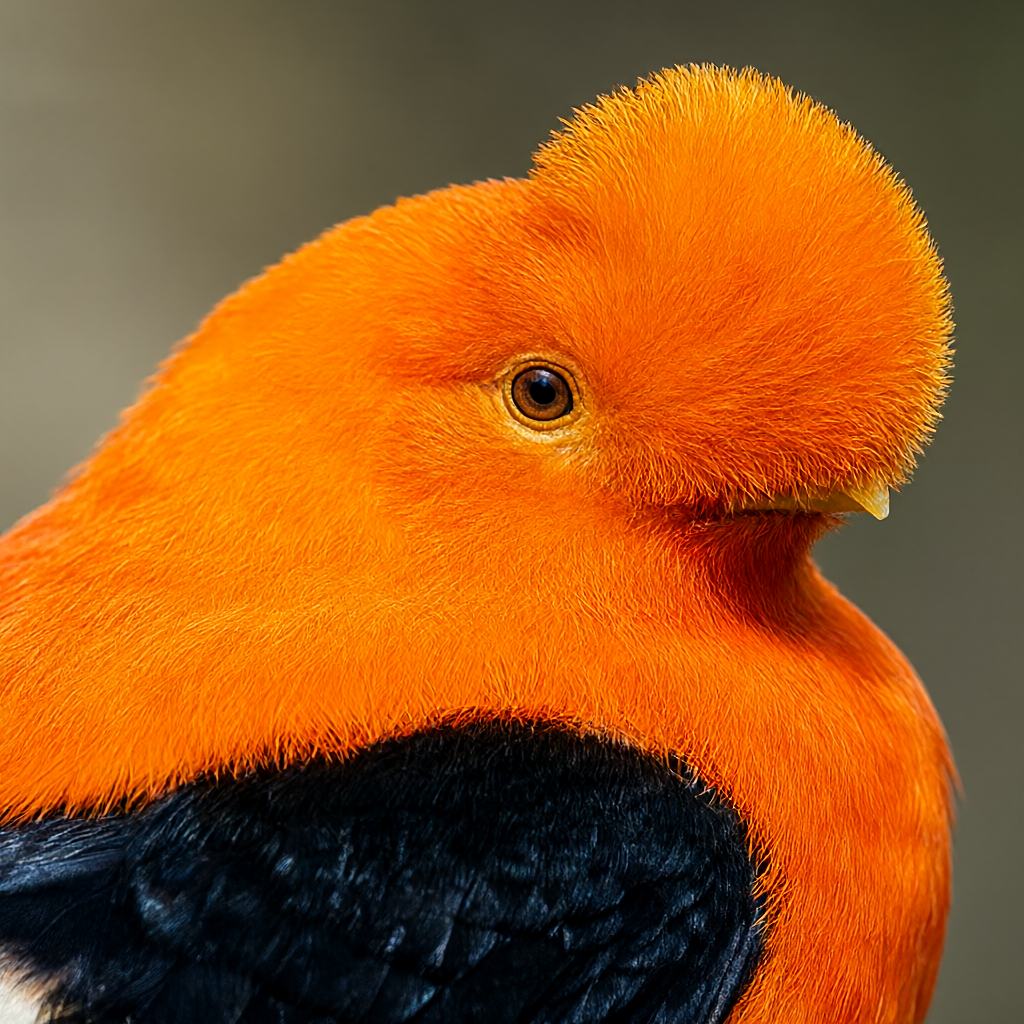
Males run 30 to 32 cm, and they weigh 200 to 230 g. Females stay smaller and duller, with brownish-orange colours. His crest is a disc of plumes that covers the bill from above.
Wings and tail are black with grey fringes. Its eye is red-orange, and the legs are dark. Since the crest covers the bill from above, the bird must tilt its head back to see what it is eating.
Females carry a smaller crest and a shorter tail. Wings are broad and rounded, which suits short flights under the canopy.
1
2
3
Rock beside water
Where it lives
Cloud forest along the eastern Andes holds the species. Its range runs from Colombia into Bolivia at 1,400 to 2,400 m. Steep ravines with streams matter most.
Since the bird nests on rock, it needs exposed stone near water. Moss-covered cliffs and gorge walls supply those sites. Where a stream cuts a narrow gully, many pairs may gather.
It avoids open slopes and second growth. Forest cover keeps the air cool and the rocks wet.
Fruit, swallowed whole
What it eats
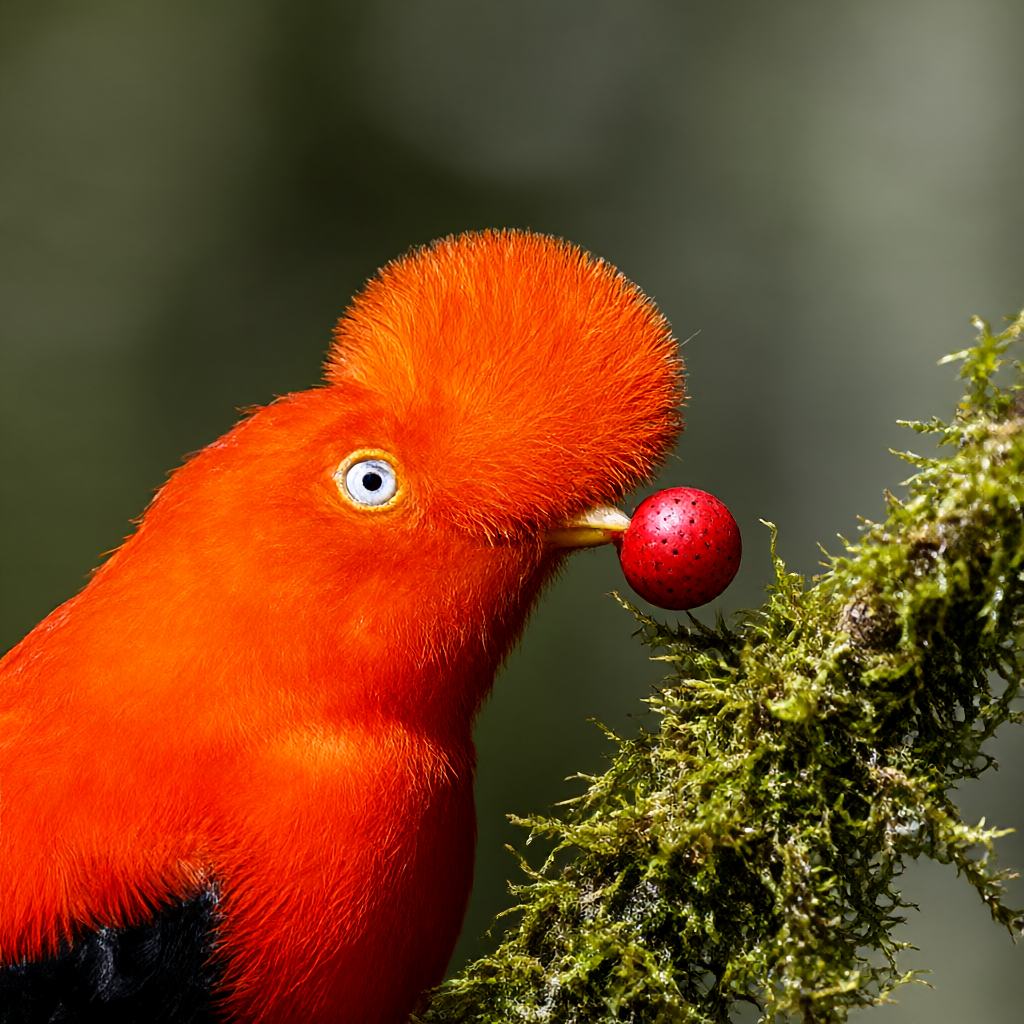
Fruit dominates the food, mostly berries from the laurel and melastome groups. Bugs add protein, mostly during the breeding season. Since the bird swallows fruit whole, it passes seeds intact. A single bird can move dozens of seeds in a morning, and some of those seeds land far from the parent tree.
That habit makes it a useful spreader for forest trees. It feeds in the mid-storey, though usually alone or in small groups. Nothing in the diet comes from the ground.
She builds alone
The breeding cycle
Males gather at a old site and show from low branches. Each bird bows, hops and calls with a harsh squawk. Females visit the lek, watch many males in turn, and then choose the one that acts from the lowest branch.
Since the male plays no further part, all the rearing falls to the female. She plasters mud and plant fibre onto a rock face, often behind a fall. Two eggs go into that cup.
Incubation lasts about 25 to 28 days. Chicks fledge within four weeks, though they stay near the nest for longer.
Least Concern
Conservation
Red List status is Least Concern. The species still occupies a long band of the Andes. Since it needs rock and water, it survives in steep country that farming cannot use.
Deforestation for pasture removes the forest around those cliffs, so a gorge that loses its cover loses its birds. Roads and dams flood some nest gorges. The bird is hunted in places for its plumes, though the volume stays small.
Tourism brings income, and some lodges now protect show sites. Numbers appear stable overall, though local declines are logged.
Side by side
How It Compares
| Trait | Andean Cock-of-the-rock | Raggiana Bird-of-paradise |
|---|---|---|
| Family | Cotingidae | Paradisaeidae |
| Display | lek on the forest floor | lek in tree crowns |
| Ornament | disc crest over the bill | fanned flank plumes |
| Nest | mud on a rock face | bowl in a fork |
| Range | Andes cloud forest | New Guinea lowland |
| Rating | Least Concern | Least Concern |
Common misreadings
What People Get Wrong
- Not a bird of paradise. Different family entirely. The two groups sit on separate branches of the songbird tree, so the crest and the lek evolved twice rather than once.
- Not a bird that nests in trees. Rock carries the nest. Mud and plant fibre go onto a cliff or a gorge wall, often behind falling water where no climbing hunter will follow.
- Not a species with a helpful male. He leaves after mating. Incubation and feeding fall to the female alone, and the male returns to the lek within days of the eggs being laid.
Going further
Sources and Further Reading
Quick hits
Five things to remember
- The male crest is made of modified plumes that stand upright, which makes the head look much larger than it is.
- Leks can hold up to forty males, and each one keeps a small fixed position on the forest floor.
- The nest is built from mud, and the female carries it in her beak one load at a time.
- A female never receives help with sitting or with feeding the chicks.
- The bird is called gallito de las rocas in Spanish, which means little rock rooster.