 By st20113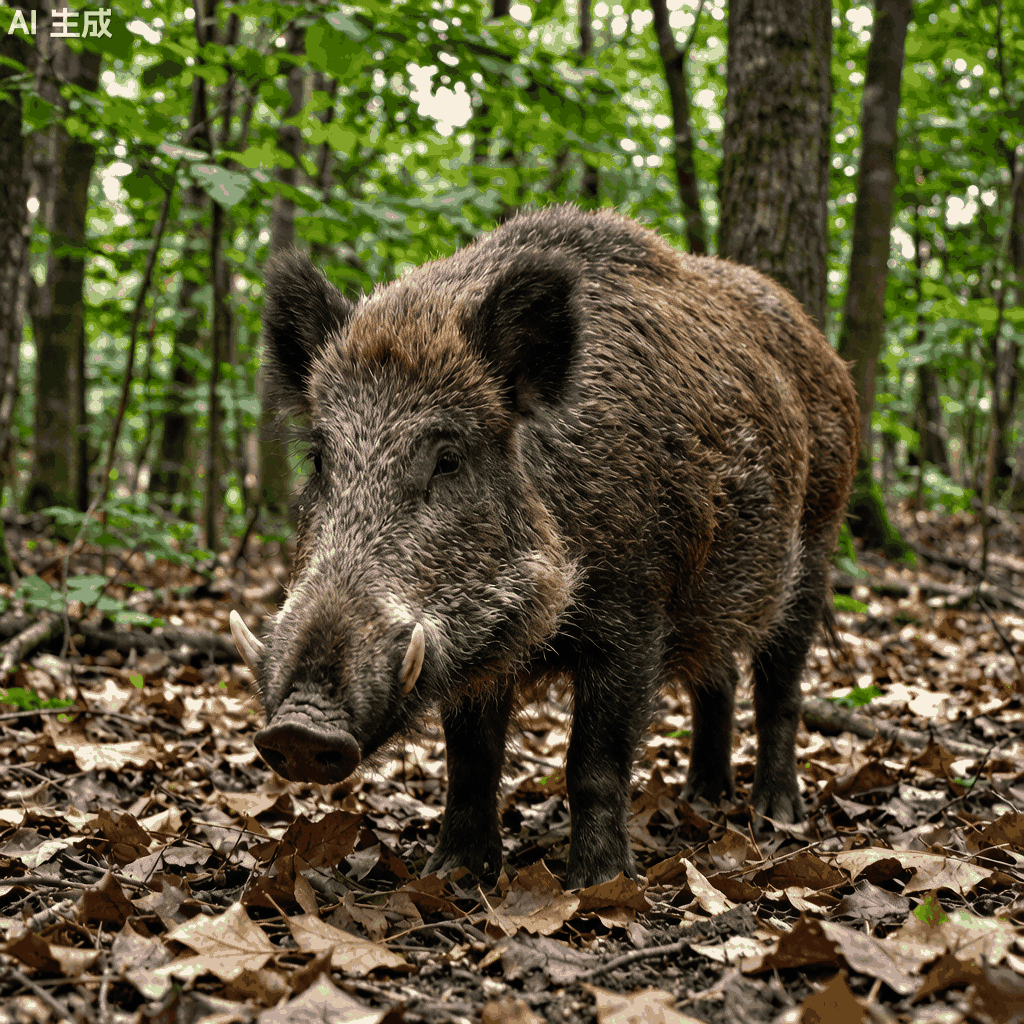
Introduction
The wild boar, Sus scrofa, is a hardy, wide-ranging pig that ranks among the most successful and widespread large mammals on the planet. As the ancestor of the domestic pig, it has shaped human history for thousands of years while remaining a formidable wild animal in its own right. Equally at home in dense forest, wetlands, and farmland, the wild boar is both a keystone species and, in many places, a contentious invasive pest. Its intelligence, adaptability, and reproductive capacity explain its remarkable persistence.
Taxonomy
Sus scrofa belongs to the family Suidae, the pigs and hogs, within the order Artiodactyla, the even-toed ungulates. It was first described by Carl Linnaeus in 1758 and encompasses a great diversity of subspecies across Eurasia and North Africa. The domestic pig is the same species, domesticated from wild boar lineages many millennia ago. Its broad genetic variation reflects the species’ ancient spread across continents and habitats.
Physical Characteristics
Wild boars are stout, barrel-bodied animals with short legs and a distinctive elongated snout used for rooting. Adults typically weigh between 50 and 90 kilograms, though large males, known as boars, can exceed 150 kilograms in favorable regions. The coat is coarse and bristly, usually grey-brown to black, with a mane of longer hair along the back. Mature males develop prominent tusks, which are continuously growing upper and lower canine teeth used in combat and defense.
Habitat
This species occupies an extraordinary range of habitats, from deciduous and coniferous forests to grasslands, scrub, wetlands, and agricultural mosaics. It requires access to water, cover, and food but tolerates cold mountains and warm subtropical lowlands alike. Wild boar avoid open ground favored by predators such as the gray wolf, preferring thickets where it can melt from sight. Its flexibility has enabled successful colonization of new continents through both natural spread and human introduction.
Diet
The wild boar is an omnivorous forager whose diet shifts dramatically with season and place. It consumes roots, tubers, acorns, nuts, fruits, fungi, insects, worms, small vertebrates, eggs, and carrion. Its powerful snout uproots soil in search of food, a behavior that reshapes the forest floor and aids some plants while damaging others. Like the opportunistic brown bear, it takes advantage of abundant seasonal windfalls such as mast crops.
Reproduction
Breeding can occur year-round in warm regions but is usually seasonal in temperate zones, with litters born in spring or summer. After a gestation of about 115 days, the sow delivers a litter of four to eight striped piglets in a hidden nest of grass and leaves. The stripes fade after a few months, and the young stay with the maternal sounder, a group of related females and offspring. Females can breed again within months, enabling rapid population growth when conditions are good.
Conservation
Wild boar are classified as Least Concern by the IUCN and are abundant across much of their native range. In many regions their numbers are increasing, aided by mild winters, agricultural food sources, and reduced hunting pressure. Where they are invasive, such as the Americas and Australia, they cause extensive agricultural and ecological damage. Management through regulated hunting and exclusion remains a persistent challenge for wildlife agencies worldwide.
Fun Facts
A wild boar’s sense of smell is so acute that it can detect buried truffles and roots several centimeters below the surface. Newborn piglets are born with a camouflaging striped coat that helps them hide from predators. Wild boars are surprisingly good swimmers and will cross rivers and even coastal straits to reach new territory. Despite their reputation, boars are highly social and communicate through a rich vocabulary of grunts and squeals.
[…] function properly. They practice coprophagy, eating certain feces to extract additional nutrients. Wild Boar feeding differs entirely from these herbivorous […]
[…] those prefer lower more humid habitats. They are often found near the European rabbit and the wild boar, whose burrows provide […]
[…] landscapes they are found in old terraces, stone walls, and overgrown field margins. The wild boar disturbs snakes from cover while foraging and whip snakes are frequently encountered in areas where […]
[…] of muscle. The species has powerful limbs, long claws adapted for digging, and a large skull. The wild boar is another large forest mammal but much […]