 By st20113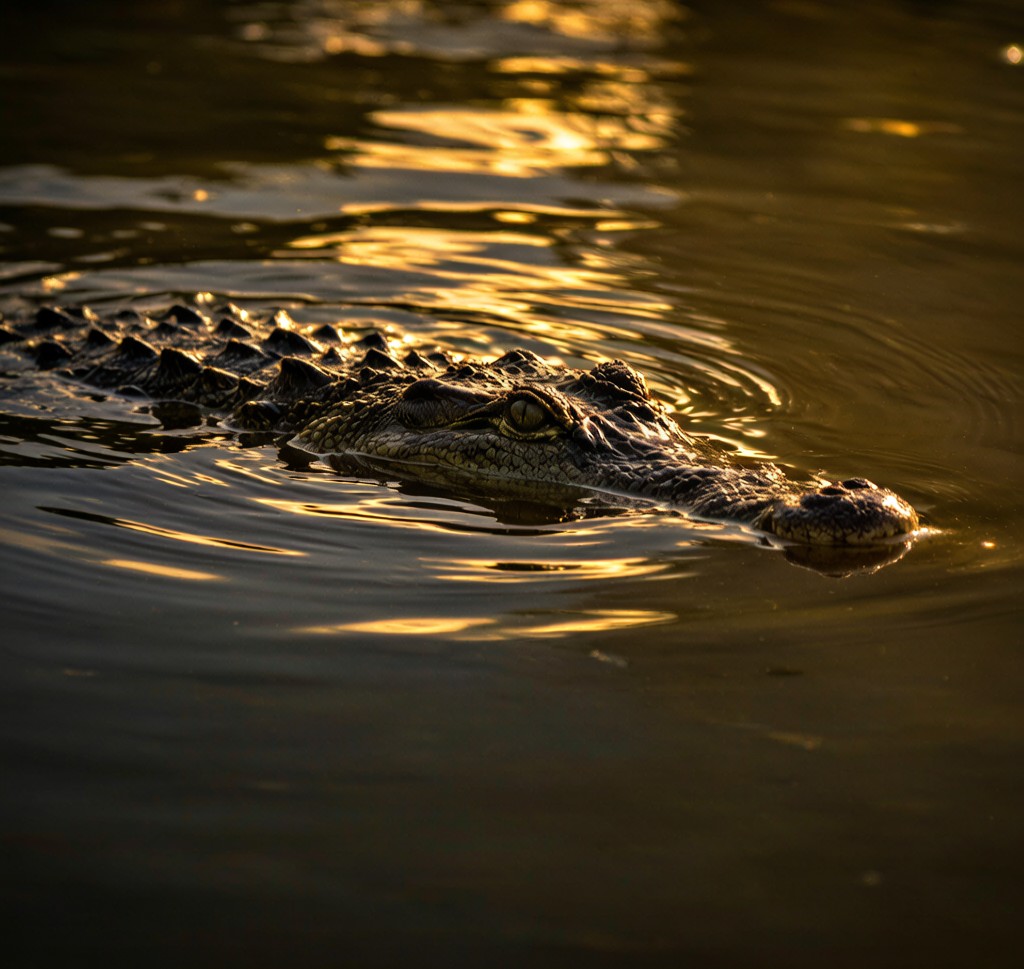
The Nile crocodile (Crocodylus niloticus) is the largest freshwater predator in Africa and one of the most powerful and ecologically significant reptiles on Earth. Reaching lengths of up to 6 metres and weights of over 1,000 kilograms in the largest individuals, this apex predator inhabits the rivers, lakes, marshes, and coastal estuaries of sub-Saharan Africa, as well as the Nile River system from Egypt to Uganda, and is responsible for far more human fatalities each year than any other African wildlife species. Despite this fearsome reputation, the Nile crocodile plays a critical ecological role as both a top predator that regulates fish and ungulate populations and as an ecosystem engineer whose basking behaviour, nest excavation, and遗体 nutrient transport sustain entire food webs in the riverine environments it dominates. The species has been revered and feared in equal measure throughout human history, featuring prominently in ancient Egyptian religion and mythology, where it was worshipped as the god Sobek and associated with fertility, military prowess, and the protective power of the Nile.
## Physical Characteristics
The Nile crocodile is the second-largest living reptile after the saltwater crocodile, with adult males typically measuring 3 to 5 metres in length and occasionally exceeding 5.5 to 6 metres, while females are generally smaller at 2.2 to 3.8 metres. Its body is heavily armoured with thick, bony osteoderm plates (scutes) embedded in the skin across the back and flanks, providing protection against both predators and abrasion from the rocky riverbeds on which it frequently rests. The head is elongated and triangular, dominated by powerful jaws lined with 64 to 68 sharp, conical teeth in the adult — the largest teeth measuring up to 5 centimetres in length in a large male. The bite force of the Nile crocodile is among the strongest of any living animal, estimated at 22,000 Newtons, capable of crushing the skull of a wildebeest in a single bite. The eyes, ears, and nostrils are positioned on top of the head, allowing the animal to remain almost entirely submerged while still monitoring its surroundings and breathing.
## Habitat and Distribution
The Nile crocodile is found throughout sub-Saharan Africa, inhabiting a wide variety of freshwater and brackish aquatic environments including the Nile River and its delta in Egypt, the great lakes of the Rift Valley (Victoria, Tanganyika, Malawi), major river systems such as the Niger, Congo, Zambezi, and Limpopo, coastal estuaries and mangrove swamps, and artificial reservoirs and irrigation canals. The species is largely absent from the Sahara and the arid regions of southern Africa but thrives in the equatorial rainforest belt where permanent water bodies are abundant. During the dry season, Nile crocodiles excavate burrows or wallows in which they aestivate, emerging when rains refill the waterways. They are highly vagile swimmers capable of traveling long distances — individuals tagged in the Rufiji River in Tanzania have been recorded moving as far as 1,200 kilometres downstream to the delta.
## Diet and Behavior
Juvenile and subadult Nile crocodiles feed primarily on insects, small fish, frogs, and crustaceans, but as they grow they progressively shift to larger prey including fish, turtles, birds, and small mammals. Adults are capable of taking very large prey including wildebeest, zebra, antelope, domestic livestock, and occasionally young hippos and giraffes, which they ambush at the water’s edge with explosive speed and drag underwater to drown. Nile crocodiles exhibit sophisticated cooperative hunting behaviour in some populations, particularly when hunting large migratory fish such as the catfish in African rivers, where groups of crocodiles coordinate to drive and trap fish against the riverbank before taking turns feeding. Female Nile crocodiles are attentive parents: after excavating a nest hole in sandy riverbank sediment and laying 25 to 95 eggs, the mother guards the nest throughout the approximately 90-day incubation period, assists hatchlings in breaking out of the egg, and then carries her young gently in her powerful jaws to the water, where she continues to protect them for several weeks or months.
## Conservation
The Nile crocodile is classified as Least Concern on the IUCN Red List, with a widespread and relatively stable population estimated at between 250,000 and 500,000 individuals across its African range. The species was heavily exploited during the mid-20th century for its skin, which drove dramatic population declines and local extinctions across much of its northern range, but has recovered significantly following the implementation of effective conservation measures, captive breeding programmes, and the establishment of well-enforced protected areas. Today, the primary threats include continued habitat loss and fragmentation, incidental killing by fishermen who view the crocodile as a nuisance competitor for fish, pollution of waterways with agricultural pesticides and industrial effluent, and human-crocodile conflict in areas where expanding human settlements increasingly encroach on crocodile habitat.
[…] Nile Crocodile (crocodylus-niloticus-nile-crocodile) is one of the largest and most formidable reptilian predators […]