 By Iris
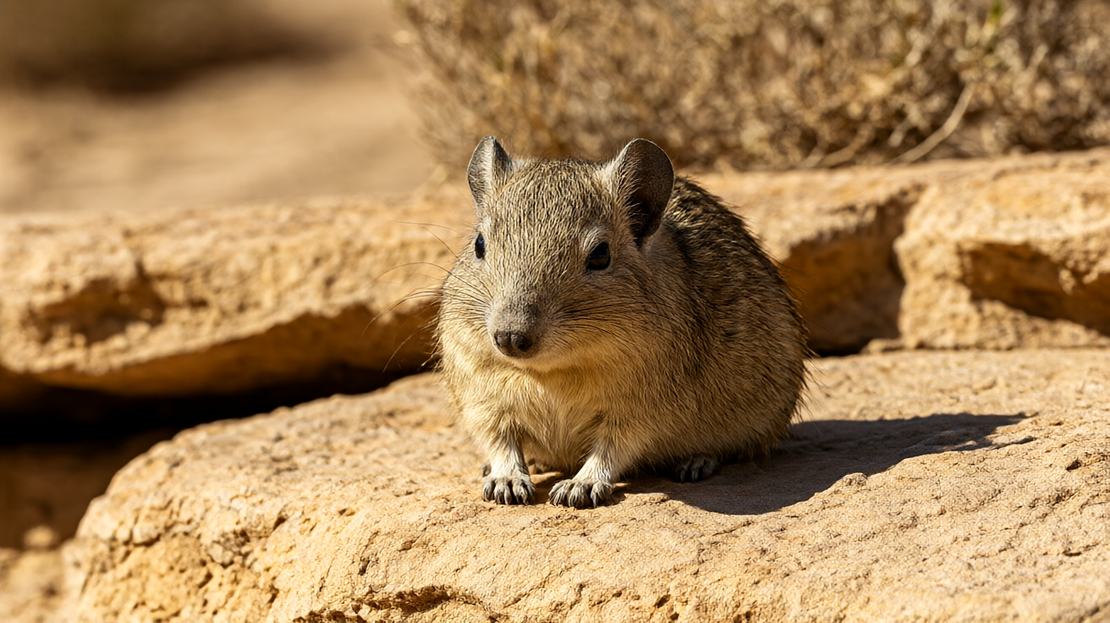
Ctenodactylus gundi | Common Gundi
Species Profile · Ctenodactylidae
Common Gundi
A round rodent sits on a rock ledge in North Africa.
Least Concern
Length
Tail
Weight
Toes
Litter
Rating
The Common Gundi
A comb on the toes
A round rodent sits on a rock ledge in North Africa. Its fur matches the rock almost exactly. That is the point.
Gundis live in cracks and never dig holes of their own. They are also called comb rats, because their toes carry stiff bristles. Those bristles work like a comb.
Because the animal lives in dry country, it gets nearly all its water from the plants it eats. Small, social and loud, it fills the cliffs of the Maghreb.
Family tree
Ctenodactylidae, gundis and nothing else
Its proper name is Ctenodactylus gundi, and it stands in a family of its own. Ctenodactylidae holds five living species, all confined to Africa. The closest cousins remain disputed, though most recent studies place the family near the Old World porcupines. A Rock Hyrax shares the same cliffs, even though it is not related at all.
Both animals are stocky, and both rely on rock cover instead of speed. Its teeth differ from the standard rodent set, since the chewing muscles attach in a different way. A Lesser Egyptian Jerboa lives in the same desert, yet it hops while the gundi walks.
Bristles, not claws
How to tell one
Adults measure 16 to 20 cm, and the tail adds only 3 to 5 cm. Weight runs 170 to 200 g. The coat is sandy above and paler below.
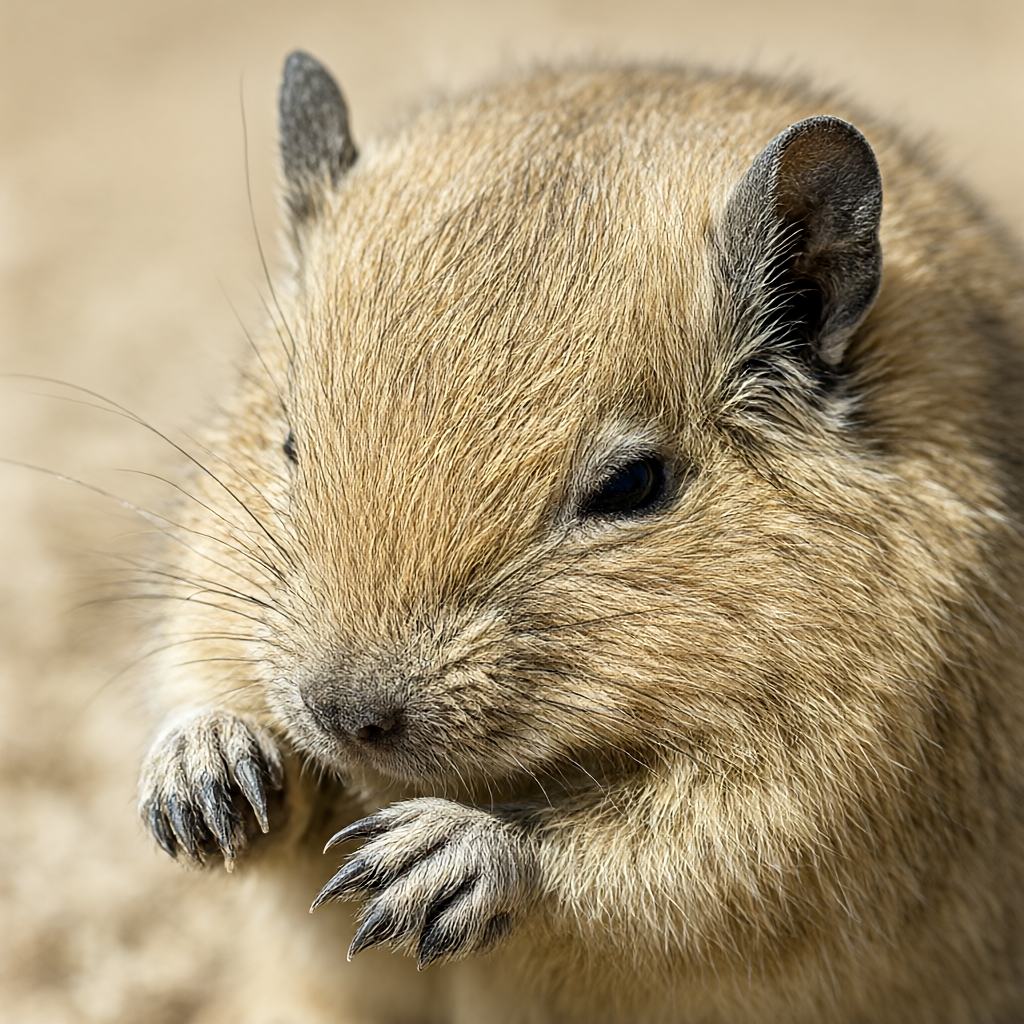
Each hind foot carries comb-like bristles along two toes. Because the animal grooms constantly, those bristles keep the fur free of dust. Its ears sit small and round against the skull.
The eyes bulge slightly, which helps in dim cracks. Females carry two pairs of teats, placed high on the flank.
1
2
3
Rock that already splits
Where it lives
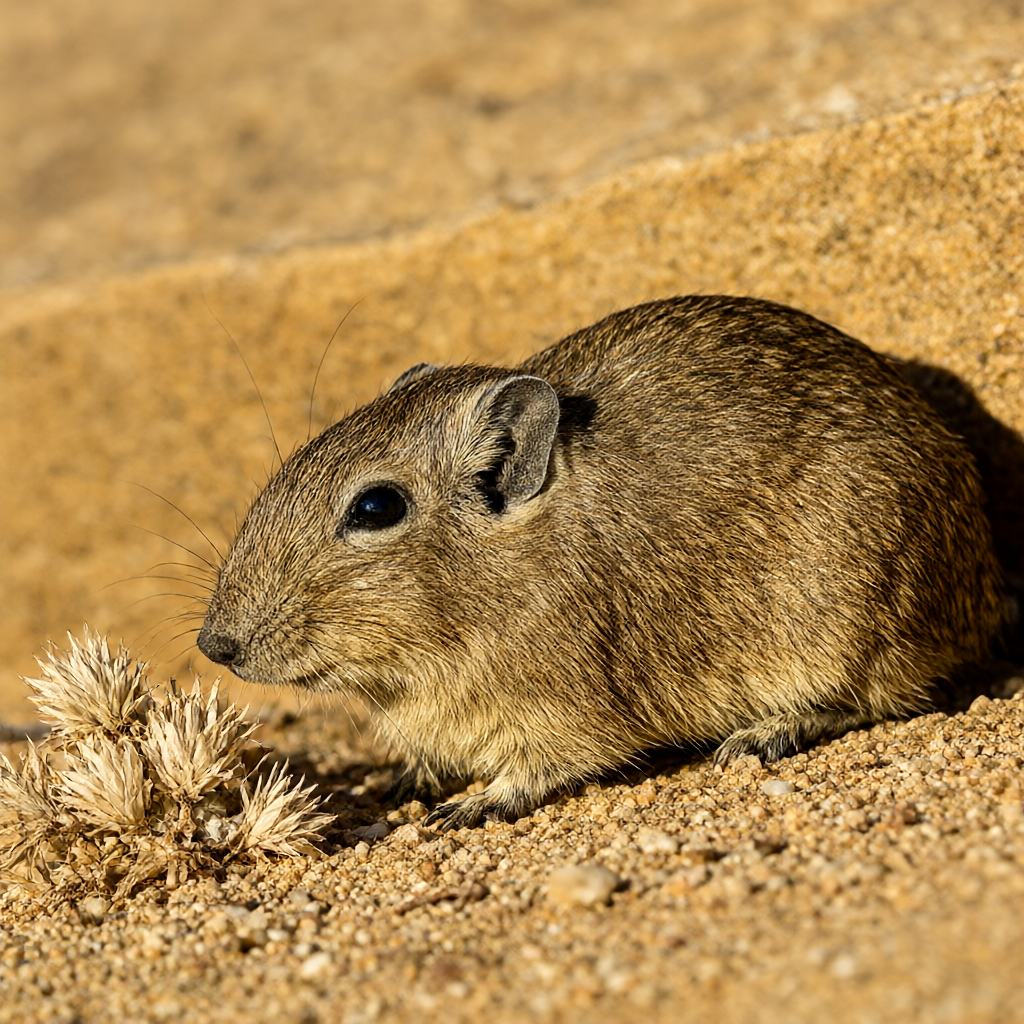
Sandstone and limestone outcrops hold the species. The range runs from Morocco into Libya. Gundis need cracks they can back into.
Because the animal cannot dig, it depends on rock that already splits. Dry scrub and sparse grass grow at the base of those cliffs. Daytime heat there passes 40 C in summer.
The rock stays cooler than the air, so the animals retreat inside at midday. Colonies cluster where rock weathers into deep fissures.
Dry leaves and seeds
What it eats
Leaves, seeds and dry grass make up the diet. Because the plant matter holds little water, the animal rarely drinks. It feeds in short bursts through the morning and the evening.
Gundis do not store food, since the desert offers nothing worth keeping. Their teeth grow always, which suits a diet of grit-covered plants. A feeding group spreads out, yet each animal stays within a metre of cover.
When a hunter appears, the whole group bolts for the same cracks. Nothing in the diet comes from animals.
One to three young
The breeding cycle
Breeding follows the rains, so timing shifts from year to year. Gestation lasts about 57 to 76 days. Females produce two broods in a good season.
Each litter holds one to three young. Because the pups arrive fully furred and with their eyes open, they can move through the crevice within hours. They nurse for roughly four weeks.
Young females may stay in the group, while males disperse. A female can breed again within days of giving birth.
Least Concern
Conservation
Red List status is Least Concern. Its range stays broad and its numbers appear stable. Because the animal lives on cliffs and never enters a field, farming barely touches it anywhere in its range.
Thieves take some for the pet trade, though the volume stays low. Road building fragments a few groups. Quarrying poses the larger threat, since rock is easy to cut.
Where mining removes the rock face, a group goes within a single season and never comes back. Surveys remain sparse, so nobody has counted gundis across the whole range.
Side by side
How It Compares
| Trait | Common Gundi | Lesser Egyptian Jerboa |
|---|---|---|
| Family | Ctenodactylidae | Dipodidae |
| Locomotion | walks on the whole foot | hops on two legs |
| Tail | 3-5 cm | very long, tufted |
| Water | taken from plants | taken from plants |
| Range | Morocco to Libya | North Africa and Arabia |
| Rating | Least Concern | Least Concern |
Common misreadings
What People Get Wrong
- Not a jerboa with short legs. The foot works differently. A gundi walks on the whole sole rather than on the toes, so it climbs rock instead of crossing open sand at speed.
- Not a burrower of any kind. Rock supplies the shelter. The family lost the digging habit long ago, and every living gundi depends on natural fissures rather than on anything it excavates.
- Not a drinker in the usual sense. Plants carry the water. Green leaves and seeds supply almost everything it needs, and the animal can pass a whole life without reaching open water.
Going further
Sources and Further Reading
Quick hits
Five things to remember
- The comb bristles on the two inner toes are unique among rodents, and they work like a rake through the fur.
- A gundi can go its whole life without drinking, as long as the plants stay green.
- Colonies keep in contact with whistles, chirps and purrs, and the sound carries along the cliff.
- It runs on the whole foot rather than the toes, which is unusual for a rodent.
- Females sit higher in the group, so they pick the deepest cracks first.
[…] bottom of ponds. Across Europe they share the landscape with a variety of wildlife, including the Hedgehog, a fellow ground-dweller that, unlike most animals, can tolerate the toad’s defensive […]