 By st20113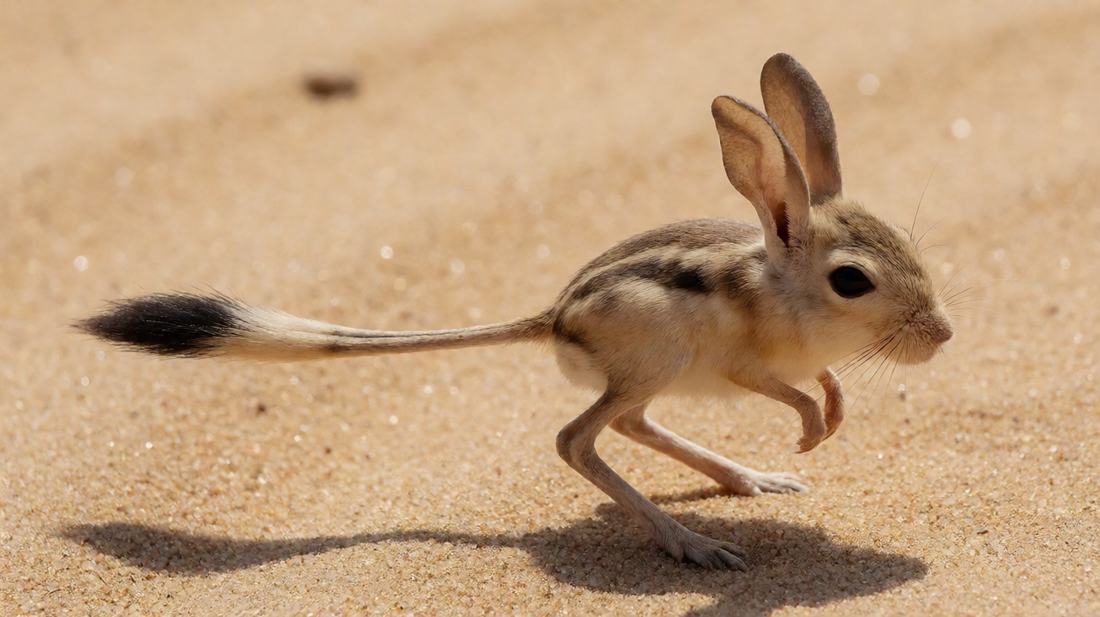
Jaculus jaculus | Lesser Egyptian Jerboa
Species Profile · Dipodidae
Lesser Egyptian Jerboa
A night active desert rodent with hind legs longer than its body that never drinks water and seals its burrow against the heat.
A desert rodent that crosses the sand in long bounds
Body
Tail
Weight
Hind toes
Litters
Family
The Lesser Egyptian Jerboa
A bounding rodent of the desert
The Lesser Egyptian Jerboa is a small hopping rodent of dry deserts. Its back legs are longer than its body. A long tail with a dark tuft steadies every jump.
The animal is active only at night. It spends the hot day deep in a sealed burrow. It never needs to drink water at all.
Family tree
Rodentia, Dipodidae
The species sits in the family Dipodidae, the jerboas. Its order is the Rodentia. The family holds about 50 species in all. It shares the order with the European Water Vole.
Both animals are rodents with strong front teeth. Jerboas differ in their very long hind legs. The species was named by Linnaeus in 1758.
13 cm of body and 19 cm of tail
How to tell one
The body measures about 13 cm from nose to rump. The tail adds another 19 cm. The animal weighs about 75 g at most.
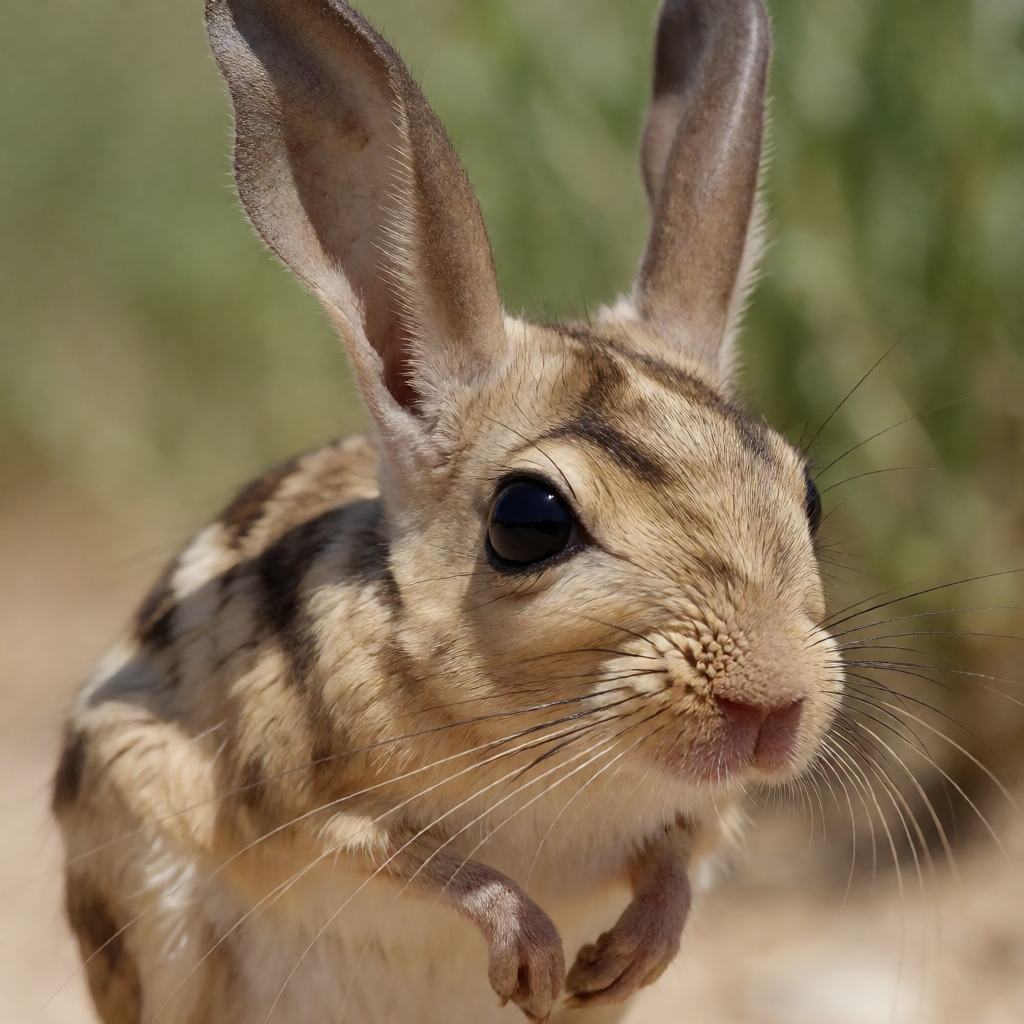
The hind legs are about 3 times the length of the front ones. Each hind foot carries only 3 toes. The ears and eyes are large for the size of the head.
The coat is sandy above and paler below. The tail ends in a black and white tuft.
1
2
3
Desert and semi desert ground
Where it lives
The species lives in desert and semi desert regions. It ranges from North Africa to the Arabian Peninsula. It needs open ground with sparse plant cover. The animal digs its own burrow system.
Each system has several entrances and chambers. One chamber stores seed for hard times. A plug of sand seals the burrow during the hot season.
Seeds, insects and desert truffles
What it eats
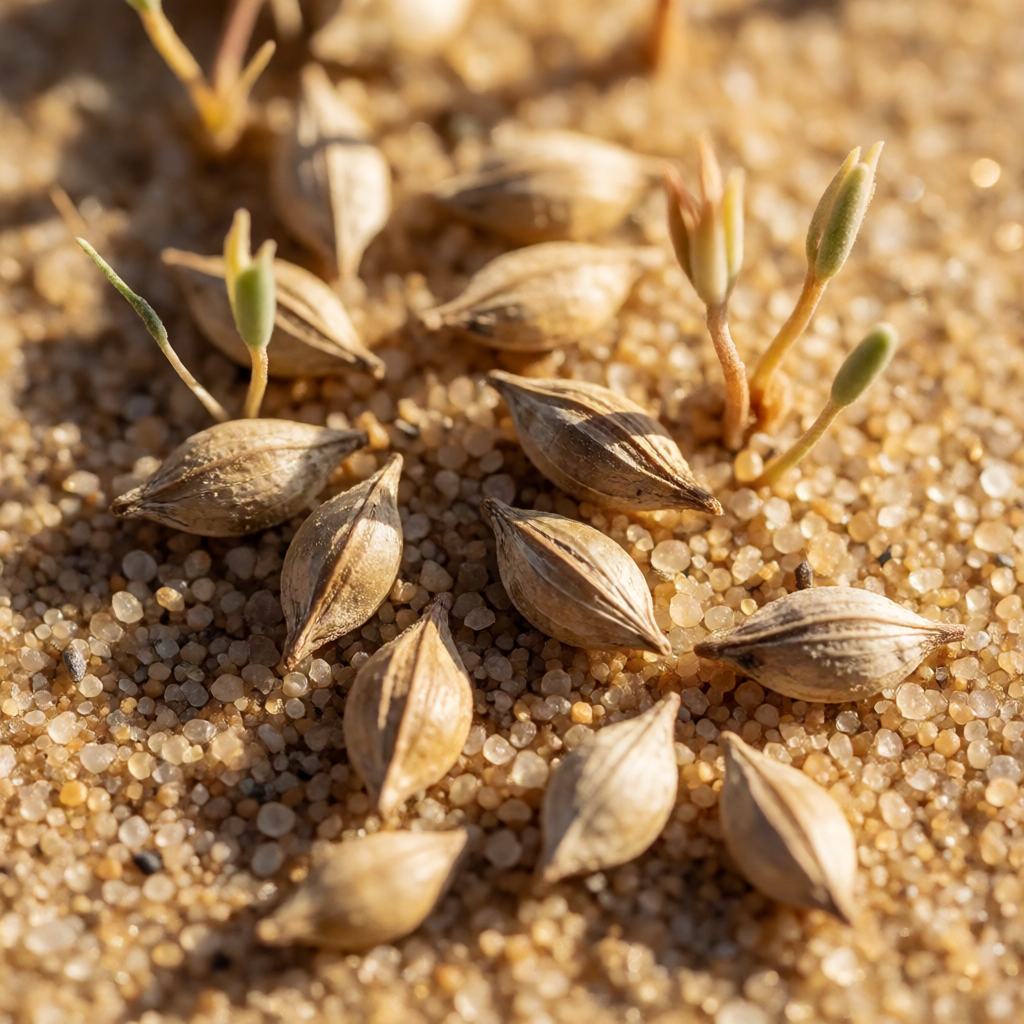
The animal eats seeds and dry desert plants. It also takes insects and desert truffles. It finds food with a keen sense of smell. Long whiskers help it feel its way in the dark.
It does not drink and takes water from its food. Most feeding happens in the first hours of the night. Extra seed is carried home in the mouth.
2 litters a year
The breeding cycle
Breeding takes place at least twice a year. One season falls in early summer and one in winter. A litter holds between 4 and 5 young. The young are born blind and helpless in a nest chamber.
They stay with the mother for about 10 weeks. They reach full size at about 12 months. Few animals live longer than 2 years in the wild.
Farming, roads and hunters of the night
Conservation
The species is listed as Least Concern by the IUCN. It is widespread and often common across its range. Desert farming and grazing cause some local losses. Roads and new settlements split its habitat.
Owls, foxes and snakes hunt it heavily at night. Its burrow system protects it from most enemies. No special protection is in place for the species.
Quick hits
Five things to remember
- Its hind legs make up more than half of its standing height.
- A single bound can carry it about 3 m across open sand.
- It seals its burrow with sand to hold in the moisture.
- The tail tuft acts as a rudder when it turns in mid air.
- It can live for months without drinking any water.