 By st20113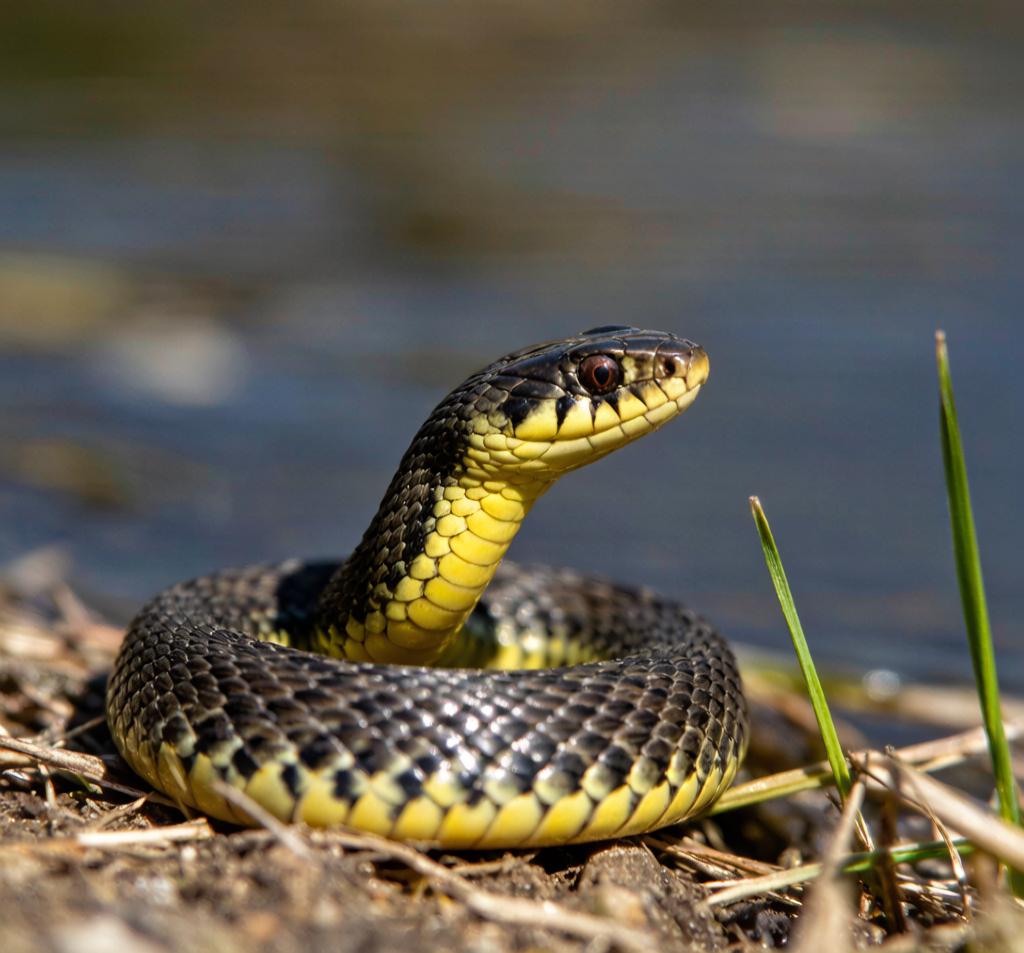
Introduction
The viperine snake is a nonvenomous, semiaquatic colubrid native to southwestern Europe and northwestern Africa, perfectly at home in rivers, lakes, irrigation ditches, and coastal wetlands.
Despite its name, it is entirely harmless to humans, resembling an adder in its blotched dorsal pattern and zigzag skin, but it lacks the venom apparatus of true vipers.
This resemblance is widely regarded as Batesian mimicry, effectively deterring predators that have learned to avoid the genuinely venomous adder.
The viperine snake is an expert fish and amphibian hunter, capable of foraging underwater and remaining submerged for extended periods while stalking prey.
Conservation of riverine habitats and the amphibians they depend on directly benefits this attractive, non-threatening snake across the Mediterranean region.
Taxonomy
The viperine snake belongs to the family Colubridae, the largest and most diverse family of snakes, containing more than 200 genera and 1,800 species.
Its genus Natrix, the true water snakes, includes seven species distributed across Europe, Asia, and Africa, all of which are nonvenomous and semiaquatic.
Natrix maura was first described by Linnaeus in 1758, and its specific epithet maura refers to Mauritania, a historical misattribution of its origin.
The species is considered monotypic, with no recognized subspecies despite considerable variation in dorsal pattern across its range.
Physical Characteristics
The viperine snake is a medium-sized snake, typically 60 to 90 centimetres in total length, with occasional specimens exceeding one metre.
The dorsal pattern is highly variable, ranging from a distinct zigzag stripe resembling an adder to irregular dark blotches against grey, brown, or olive backgrounds.
The belly is often a reddish-orange or pinkish colour with a row of dark spots, and the head is only slightly distinct from the neck.
Round pupils indicate diurnal or crepuscular habits, and the species has a divided anal plate and paired subcaudal scales.
Habitat
The viperine snake is a strict aquatic associate, occupying a wide range of freshwater and brackish wetland habitats across the Mediterranean and Atlantic coast of the Iberian Peninsula.
It is most abundant along slow-moving rivers and streams with abundant vegetation and rocky substrates that support fish and amphibian prey.
Sandy riverbanks and gravel bars provide crucial basking sites and nesting habitat, while dense submerged vegetation offers cover from predators.
The species is most active during the day in cooler regions, becoming more crepuscular and nocturnal in southern Mediterranean areas where summer heat is extreme.
Diet
The viperine snake is a specialized aquatic predator, with fish and amphibians comprising the majority of its diet across its range.
Frogs, toads, tadpoles, and newts are captured by active hunting underwater, where the snake swims silently through vegetation to approach prey before striking.
Small fish including minnows, gudgeon, and carp fry are chased and cornered against submerged plants before being swallowed alive or after brief constriction.
The snake is capable of remaining submerged for 30 minutes or more while stalking prey through dense vegetation.
Reproduction
Breeding occurs in spring as snakes emerge from hibernation, with mating observed from April to June when multiple males may compete for a receptive female in dramatic wrestling bouts.
Females produce 10 to 30 parchment-shelled eggs, laid in late June to August in warm, humid burrows, compost heaps, or rotting vegetation.
Incubation lasts 30 to 60 days depending on temperature, with hatchlings of 15 to 22 centimetres emerging in late summer or early autumn.
Neonates are independent from the moment of hatching and must find their own food, primarily small tadpoles and insects.
Conservation
The viperine snake is assessed as Least Concern across its range, though population trends are poorly monitored and localized declines have been reported.
It is protected under the Bern Convention and national legislation in several range states.
Primary threats include the drainage and degradation of wetland habitats, pollution of freshwater systems, and persecution by humans who mistake it for a venomous adder.
Road mortality is increasingly recognized as a significant pressure where roads bisect wetlands and river valleys.
Fun Facts
This mimicry is imperfect and variable, with some individuals showing blotched patterns very different from typical adders, suggesting it is reinforced by predator learning.
Unlike most snakes, viperine snakes give birth to live young rather than laying eggs, retaining eggs internally until fully formed.
A single female may give birth to 20 or more live young, each approximately 18 centimetres long.
The grass snake is the most closely related species to the viperine snake, and both are nonvenomous aquatic colubrids of Europe.
The smooth snake is another nonvenomous colubrid of European wetlands that shares habitats with the viperine snake in southern Europe.
The edible frog is one of the primary prey species for the viperine snake, which hunts frogs actively underwater in Mediterranean ponds.