 By st20113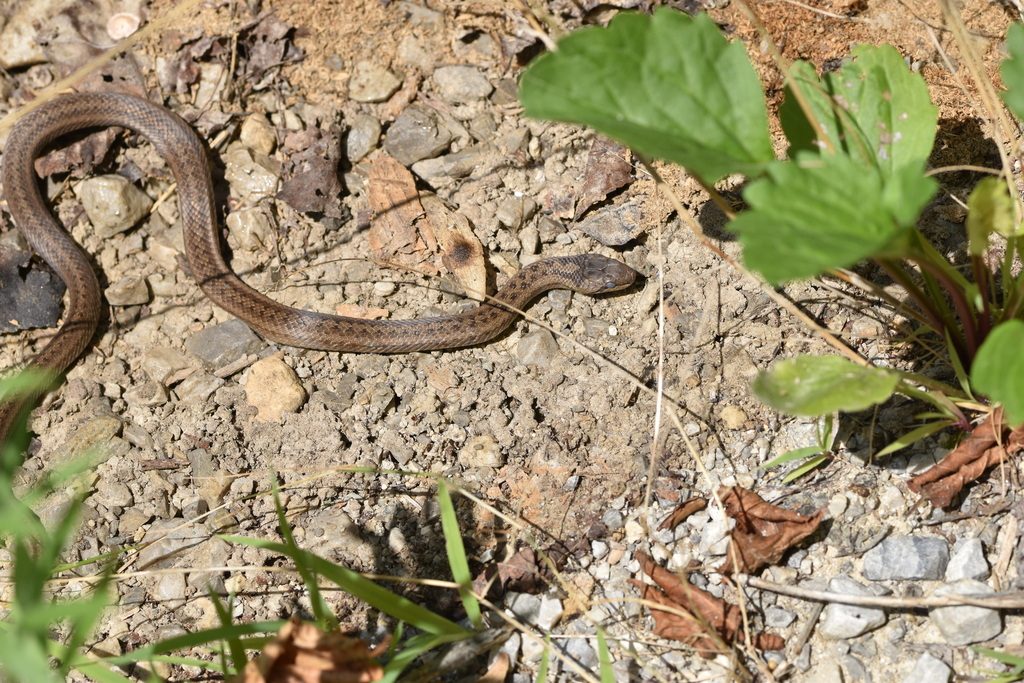
Introduction
The Smooth Snake (Coronella austriaca) is a small, secretive, and completely harmless snake native to Europe. Shy and rarely seen, it is the continent’s smallest and most retiring serpent, easily overlooked among grass and heather. Unlike the more famous adder, the smooth snake lacks venom and avoids humans, relying on camouflage and a mild disposition. It is a species of sunny, open habitats and a quiet emblem of healthy lowland heaths, where it slips unnoticed through the vegetation. Its secretive habits mean population sizes are poorly known, and the species is likely under-recorded across much of its range because so few people ever see it.
Taxonomy
The smooth snake belongs to the family Colubridae, the largest group of snakes worldwide. Described by Laurenti in 1768, Coronella austriaca sits in a genus of slender, smooth-scaled snakes. Its closest relatives include the larger whip snakes. Genetic work confirms its place among the harmless constrictor-like colubrids rather than the venomous vipers, and its body plan reflects a life spent hunting small, agile lizards. Females tend to be slightly larger than males and show bolder markings during the breeding season, when courtship may last several hours in the warm sun.
Physical Characteristics
Adults measure 60 to 75 centimeters, slim and gracefully built. The scales are smooth and glossy, giving the snake its name, and the body is grey-brown to reddish with two rows of dark spots that may merge into a banded pattern. A characteristic dark stripe runs through the eye, and the head is rounded with no distinct neck. The pupils are round, unlike the vertical slits of vipers, and there is no triangular venomous head shape, making the smooth snake safe to observe from a respectful distance.
Habitat
Smooth snakes favor dry, sunny heathland, sandy grassland, open pine woodland, and scrub where they can bask and hunt. They need loose, warm soil for shelter and reproduction. In Britain they are confined to a few southern heaths, making them a conservation priority. Across central Europe they are more widespread but always tied to open, structurally diverse ground rather than dense forest, and they disappear where scrub succeeds the open habitat they require.
Diet
This snake is a specialist predator of lizards, particularly sand lizards and skinks, which it overpowers with gentle constriction. It will also take small mammals, nestling birds, and large insects when opportunity arises. Prey is usually swallowed alive after being pinned. The smooth snake sometimes competes with the Common Lizard as both predator and, rarely, rival, and overlaps in range with the Adder, though the two occupy slightly different microhabitats and rarely interact directly in the field.
Reproduction
Smooth snakes are ovoviviparous in cooler parts of their range, giving birth to live young, while in warmer regions they lay eggs. Litters or clutches of four to fifteen appear in late summer. The young are independent immediately and must find their own prey. Mating occurs in spring after emergence from hibernation, often beneath rocks or in abandoned mammal burrows, and females may store sperm to fertilize eggs laid in a later favorable season.
Conservation
The species is classified as Least Concern globally but is declining locally, especially where heathland is lost to agriculture, afforestation, or development. In several countries it receives strict legal protection. Conservation focuses on maintaining open, sunny habitat through careful grazing and controlled burning that prevents scrub from closing in, and reintroductions have helped stabilize a few isolated populations.
Fun Facts
1. The smooth snake is non-venomous and poses no danger to people. 2. It specializes in eating lizards rather than rodents, a unusual diet among European snakes. 3. When threatened it may puff up and hiss but rarely bites. 4. Its smooth scales distinguish it from rough-scaled snakes and give it a polished appearance. 5. In Britain it is one of the rarest reptiles, restricted to southern heaths and carefully monitored by conservationists.