 By st20113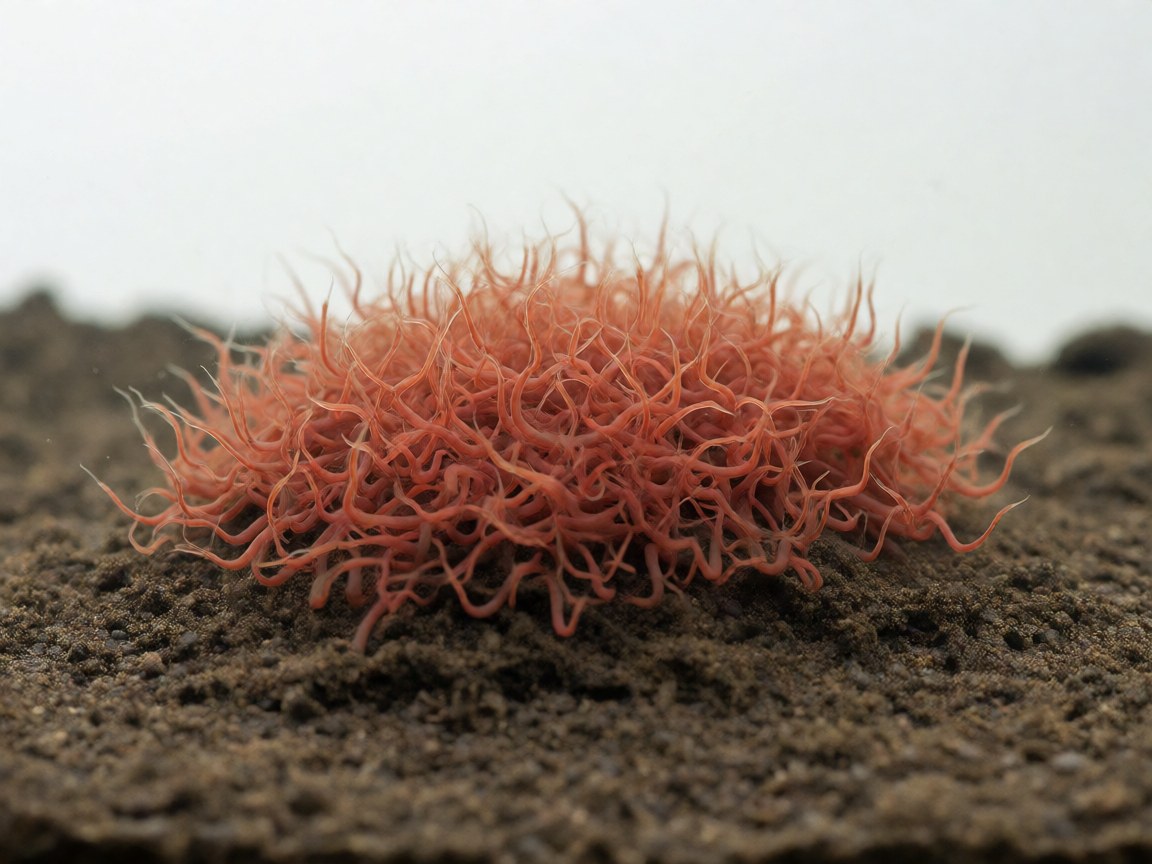
Tubifex tubifex | Sludge Worm
Introduction
The sludge worm (Tubifex tubifex) is a small red thread of an animal that lives head-down in the mud of ponds, canals, and slow rivers, and it is one of the best-known signs that freshwater has been enriched with organic waste. A handful of bottom mud from a polluted ditch will often contain thousands of them, each sitting in a fragile tube of mucus and sediment with its tail end waving in the water above. The red colour comes from haemoglobin, unusually concentrated for an animal of its size, and it is the key to the worm’s success: it allows Tubifex to extract oxygen from water that holds almost none, so it can live exactly where its competitors and predators cannot. Aquarists know it as the classic live fish food, ecologists know it as a standard indicator of organic pollution, and fisheries scientists know it for an entirely different reason — it is the essential host of the parasite that causes whirling disease in trout and salmon.
Taxonomy
Tubifex tubifex is an annelid worm, a member of the oligochaetes, the group that includes the earthworms and the freshwater worms of the family Naididae, in which the older family Tubificidae is now usually placed. Its relatives are the numerous small sediment-dwelling worms that dominate the bottom of most freshwater bodies, several of which are very similar and require examination of the bristles and reproductive organs to tell apart. It belongs to the same class, Clitellata, as the familiar earthworm Lumbricus terrestris, and shares with it the fundamental oligochaete features: a segmented body with a small number of bristles, or chaetae, per segment, no parapodia and no head appendages, and a glandular saddle called the clitellum that secretes the cocoon in which the eggs develop. The genus name Tubifex means “tube-maker”, and the species is the type of the genus.
Physical Characteristics
The body is long, thin, and cylindrical, usually two to eight centimetres long and rarely more than a millimetre or two in diameter, made up of anything from thirty to well over a hundred segments. It is a translucent red or pinkish red in life, the colour coming from the haemoglobin dissolved in the blood and visible through the thin body wall, and the gut contents often show through as a darker line. There are no gills and no parapodia; gas exchange takes place across the general body surface, and the blood vascular system is well developed with a dorsal vessel acting as a heart. Each segment carries four small bundles of chaetae: the dorsal bundles contain both long, fine hair chaetae and shorter, forked or comb-shaped ones, and the ventral bundles are simpler — the precise shape and arrangement of these bristles is what separates Tubifex from its many lookalikes. The head end is a simple, blunt prostomium with no eyes, and the tail end is often slightly flattened and is the part the worm waves above the sediment. The animal lives in a loose tube of mucus and fine sediment particles, which it secretes and repairs continuously.
Habitat
It lives in freshwater, in the mud and silt at the bottom of ponds, ditches, canals, slow-flowing rivers, reservoirs, and lake margins, and it tolerates brackish water in some estuaries. It is characteristic of soft, fine, organically rich sediment, and it reaches its greatest densities where decaying organic matter is abundant: below sewage and storm-water outfalls, under fish cages, in enriched farm ponds, and in the muddy reaches of slow lowland rivers. Densities of tens of thousands of individuals per square metre have been recorded, forming a red mat on the sediment surface. The species is virtually cosmopolitan, having been recorded from Europe, Asia, North and South America, Africa, and Australia, partly through natural distribution and partly through the aquarium trade. It is also able to survive in temporary and heavily polluted habitats that exclude almost everything else, and it recolonises disturbed sediment quickly.
Diet
Sludge worms are deposit feeders, and they feed in a distinctive head-down position: the head is buried several centimetres into the sediment while the tail remains at the surface, and the worm swallows mud as it burrows, digesting the bacteria, algae, protozoa, and organic detritus coating the particles and voiding the remainder at the surface as a small coil of castings. This feeding style means that the animal processes very large quantities of sediment relative to its size and hence plays a major role in the physical and chemical working of the mud — a process known as bioturbation. By continually turning over and irrigating the top layers of sediment, dense Tubifex populations carry oxygen deeper than it would otherwise reach, change the rates at which nutrients are released, and make the mud a very different place from the stagnant, layered sediment it would be without them. They can also take up dissolved organic matter directly from the water, and in low-oxygen conditions the tail-waving behaviour increases the flow of water over the body surface.
Reproduction
Like most oligochaetes, Tubifex is a hermaphrodite, and two individuals mate reciprocally, exchanging sperm which is stored and used later to fertilise the eggs. Reproduction is seasonal in temperate waters, peaking in spring and summer when temperatures rise and food is abundant, though in stable conditions such as heated effluents it can continue much of the year. The clitellum, a thickened glandular band towards the head end, secretes a cocoon into which several eggs and a supply of albumen are deposited; the cocoon is shed into the sediment, and development, being direct, produces small but fully formed worms — there is no free-living larval stage. This matters for dispersal: without a planktonic larva, spread depends on the movement of adults and cocoons, on birds and other animals carrying them, and on human activities such as the movement of fishing gear and aquarium stock. Asexual reproduction by fragmentation of the body also occurs, and is common in laboratory cultures, where a single worm broken in two can regenerate the missing half.
Conservation
The species is abundant, cosmopolitan, and in no sense threatened; it is among the most tolerant and successful of freshwater animals. Its importance to people lies almost entirely in what it reveals and what it carries. Because it flourishes where oxygen is scarce and organic pollution heavy, its dominance in a sample is one of the clearest biological signals that a water body is degraded, and it is one of the standard species used in biotic indices and in laboratory sediment toxicity testing. Conversely, it is also the definitive host of Myxobolus cerebralis, the myxozoan parasite responsible for whirling disease in salmon and trout: the parasite develops in the worm and is released into the water as a stage that infects fish, and reducing worm populations is one of the approaches used in managing the disease in hatcheries. Populations are reduced by well-oxygenated, clean conditions, which is exactly the outcome water managers aim for, and they are also sensitive to some pesticides and heavy metals, which is why their response is used in ecotoxicological assessment.
Fun Facts
- The red colour is haemoglobin, which lets the worm breathe in water with almost no oxygen.
- It lives head-down in the mud and waves its tail in the water to get oxygen.
- Thousands can live in a single square metre of enriched mud.
- It is the host of the parasite that causes whirling disease in trout and salmon.
- Aquarists have long valued it as a live food for fish.