 By Iris
Tiwanaku | The City at the Roof of the Andes
Historical Profile · Bolivia
Tiwanaku | The City at the Roof of the Andes
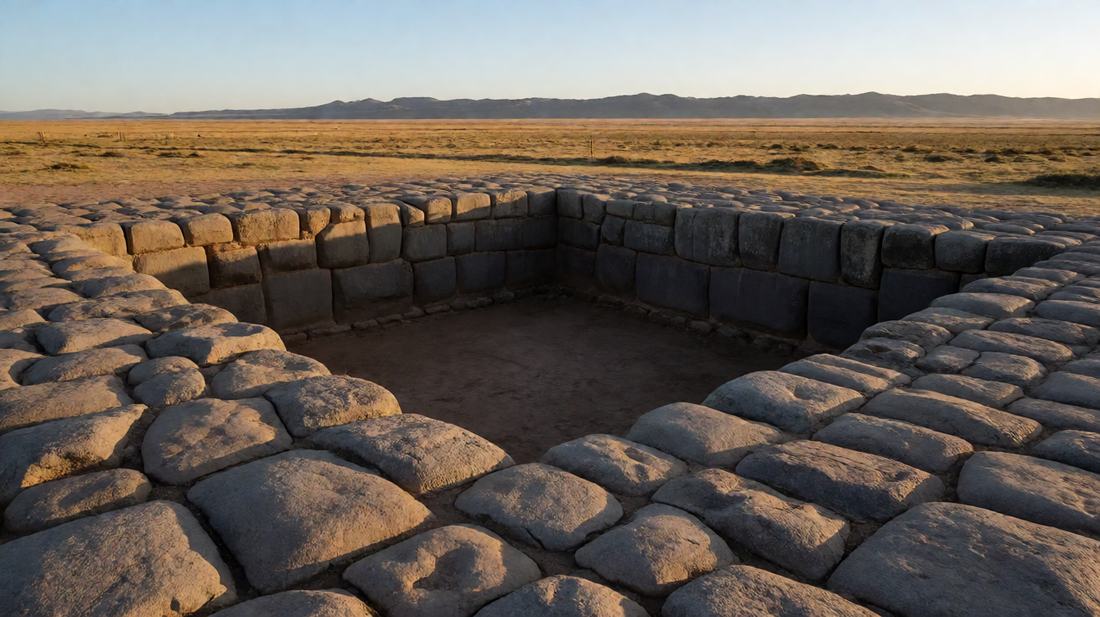
A stone city at 3,800 metres beside Lake Titicaca, whose masons fitted blocks so closely that a blade will not go between them.
c. AD 500-1000
Height
First works
Gate of the Sun
People
Listed
The big picture
Introduction
Tiwanaku stands on the high plain beside Lake Titicaca, in what is now Bolivia. Its height is about 3,800 metres above the sea. Its state rose around AD 500 and fell around 1000. For five centuries this was the largest and most formal city in the southern Andes.
Stone was cut and fitted with a precision that later builders could not match. Stepped platforms, sunken courts and a gateway carved from a single block all survive. Perhaps 20,000 people lived there at its height, though no count survives. Influence reached from the lake to the desert coast and into the valleys to the east.
Air is thin and the nights are cold, and every wall was built to last. Inca came later, and they told a story that their line had come out of the lake at Tiwanaku.
Setting
Historical Context
Plain around the lake is high, dry and cold. Few places there let a farmer be sure of a harvest. People had lived there for centuries before the city rose, and they knew the plain well. They learned to work the ground in a way that used the water rather than fighting it. A raised field took the flood and kept the soil above it, so that a wet month did no harm.
Beside it a ditch held the water when the rain stopped. Thus a field could be wet in a dry month. That system fed a large population on land that looks poor to a stranger. Tiwanaku grew as a centre of that system, and it drew pilgrims and workers from the whole basin. Rulers turned a place of ceremony into a city.
In turn the city became the head of a state. By then the plain had fed a court for generations. Labour came in the thousands when the court called.
Turning points
Key Events
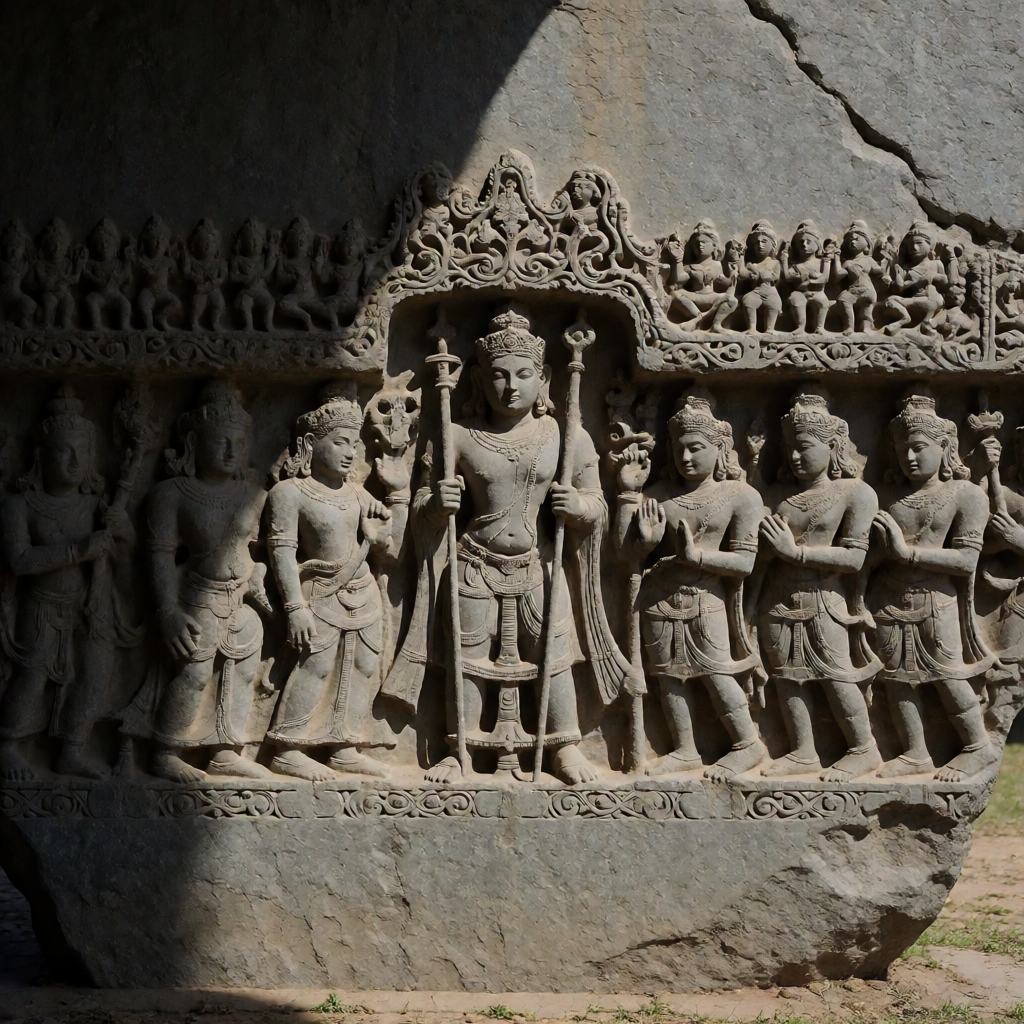
Building began in the first centuries AD, and the great works came after 500. Platform of the Akapana rose in stages. Into the ground beside it a court was sunk. One block of stone became the Gate of the Sun. In the middle a figure holds two staffs.
Standing stones closed the main court, and each pillar came from a quarry many days away. Height came between 700 and 900. Goods moved across the high plain and down to the coast, and wealth therefore came back. Meanwhile drought came at the end of that period, and the water table dropped. By about 1000 the great works had stopped.
People left for smaller towns. Water was the limit. Inca arrived in the 15th century and made the site a shrine. UNESCO listed Tiwanaku as a world heritage site in 2000.
1
2
3
Who held power
People and Powers
No written record tells us what these people called themselves. No list of kings survives. Rulers and priests formed a class that could command labour for a wall no farm needed. Carved figures hold a staff in either hand, and the same face appears again and again.
One figure appears on stone across the region, so a single cult probably bound the state together. Power seems to have rested on ceremony and on water, since a field needs both. Raised fields needed a steady hand to plan and to keep. Lords of Tiwanaku left no picture of a battle, and their art shows no army.
That silence has led some scholars to argue for a state of pilgrims rather than a state of soldiers. Inca later claimed the site as their own origin. They built a shrine there for their own line.
Everyday world
Daily Life and Society
Families lived in small houses of stone and earth. Houses stood in groups around a shared yard. Each house was for sleeping and for storage. Most of the day was spent outside it. Food was kept in a sealed room, because a bad year could empty the plain.
High plain gives a dry cold that keeps a store good for a long time. Women worked the ground and the home, and men owed labour to the state for part of the year. State moved that labour in gangs. Gangs could move a block of stone that weighed many tonnes. Feast days, moreover, brought people into the courts.
Courts were built to hold a crowd, and thus a feast day could fill them. Children born on the plain learned early that water was the measure of a good year. Stores were wealth, and a full room was therefore a kind of fortune.
Craft and ideas
Trade, Technology and Ideas
Stonework is the reason the site is famous. Its rules, however, are still not fully understood. Blocks were cut with a copper tool and dressed to a face, and moreover they were fitted dry. Many of them join with a joint so tight that a blade will not go in. A block sometimes carried a projecting boss.
Crews lifted it with a rope and cut the boss away. Bronze came into use for tools and for pins, and the metal was cast rather than hammered. Ridged fields were the greater invention, since they turned a flood into a harvest. That trick fed a city without a machine. Canals carried water to a field, and a gate let it out again when the field had drunk.
Clay mortar held the small stones, and the great ones needed none. Records were kept on knotted cords, and the same device served the Inca after them. Nothing here was rushed. Stone outlasted the state.
What lasted
Legacy
Its fall came around 1000. Fields and walls stayed on the plain for a thousand years. Their story made Tiwanaku a place of origin, and it gave the ruin a second life. Spanish writers saw the site in the 16th century, and they wrote it down.
They could not believe that the local people had built it, and indeed they blamed the Inca. Modern work began in the 20th century, and consequently a heap of stone became a plan. Raised fields have therefore been rebuilt on part of the plain. Ground that was dry for centuries has produced a harvest again.
Machu Picchu draws the crowds, yet Tiwanaku is the older city and the harder puzzle. An Inca Empire came after and ruled ten million people from a base that Tiwanaku had prepared. Visitors today walk a plain where the walls stand to the height of a man.
Side by side
How It Compares
| Point | Tiwanaku | The Inca |
|---|---|---|
| Dates | About AD 500 to 1000 | About 1438 to 1533 |
| Centre | The plain beside Lake Titicaca | Cusco in the highlands |
| Height | About 3,800 metres | About 3,400 metres |
| Stone | Blocks cut and fitted dry | Blocks cut and fitted dry |
| Records | Knotted cords | Knotted cords |
| Its end | A drought around 1000 | A Spanish conquest in 1533 |
Common misreadings
What People Get Wrong
- Tiwanaku was an Inca city. It was a ruin five centuries before the Inca rose, and they made it a shrine.
- The blocks were cut by a lost machine. Copper tools and patient labour did the work, and the marks are visible.
- The state fell to an invasion. No enemy is known, and the water table seems to have failed.
Going further
Sources and Further Reading
- Wikipedia, Tiwanaku
- Encyclopaedia Britannica, Tiwanaku. Encyclopaedia Britannica, Inc.
- Kolata, A. L. 1993. The Tiwanaku. Blackwell.
- Janusek, J. W. 2008. Ancient Tiwanaku. Cambridge University Press.
Quick hits
Five Things to Remember
- Tiwanaku stands near Lake Titicaca at about 3,800 metres, and its state ran from about AD 500 to 1000.
- The Gate of the Sun was cut from a single block, and a figure in the middle holds two staffs.
- Blocks were dressed to a face and joined so tightly that a blade will not go in.
- The raised field turned a flood into a harvest, and it fed a large population on poor land.
- UNESCO listed the site in 2000, and the Inca later claimed it as their place of origin.