 By st20113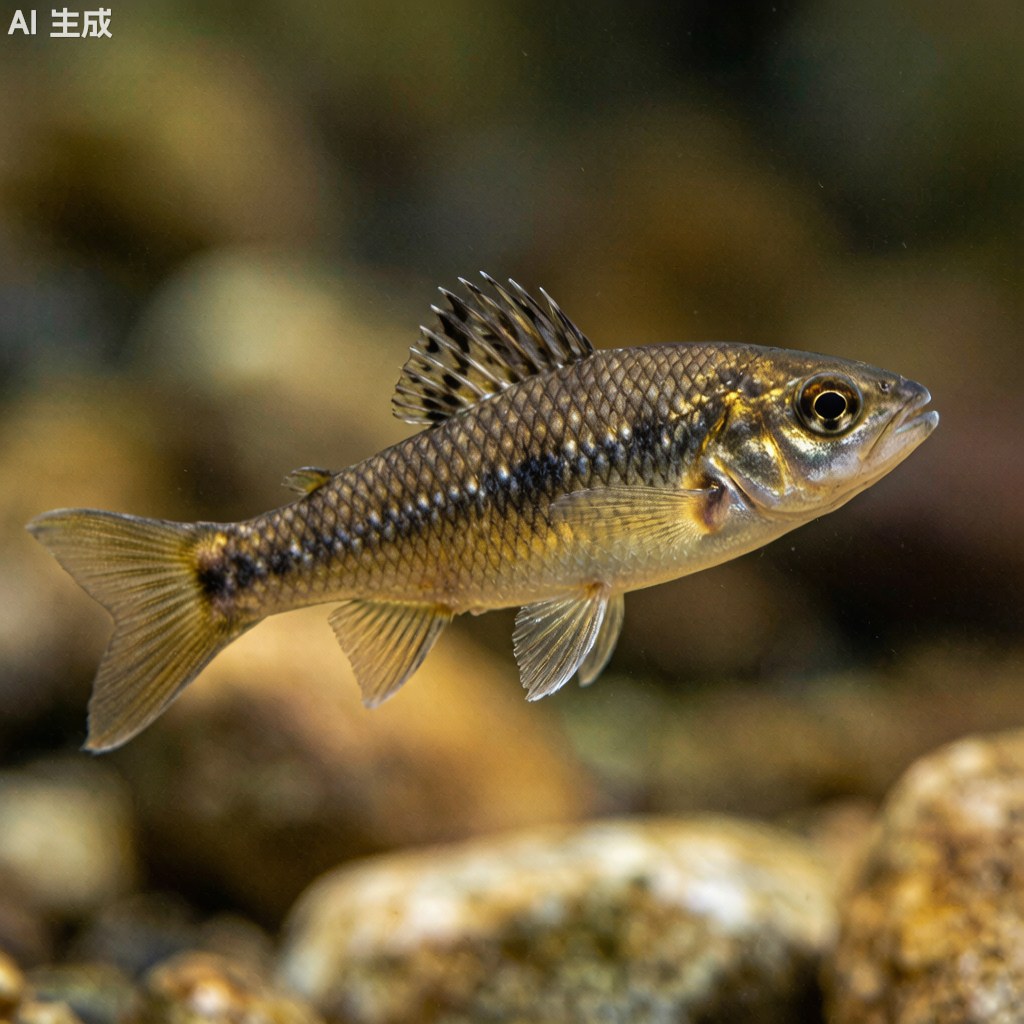
Introduction
The three-spined stickleback, scientifically Gasterosteus aculeatus, is a small fish found in coastal waters, estuaries, and freshwater streams across the Northern Hemisphere. Famous among biologists for its dramatic mating behavior, it builds nests and guards its young with fierce devotion. Adaptable and abundant, it moves between salt and fresh water, and its spines give it protection from many predators that would otherwise swallow it whole.
Taxonomy
The three-spined stickleback belongs to the family Gasterosteidae, the sticklebacks, within the genus Gasterosteus. It is a relative of larger predatory fish such as those taken by the great white pelican, though it itself is tiny prey rather than a hunter of birds. Several closely related stickleback species exist, but the three-spined form is the most widespread and best studied, valued as a model organism in evolutionary research.
Physical Characteristics
Adults are usually 4 to 8 centimeters long, with a slender, laterally compressed body. As the name suggests, they carry three sharp spines on the back in front of the dorsal fin, plus a pair of spines on the pelvis. These spines can be locked erect to make the fish difficult to swallow. Coloration changes with season: breeding males turn bright red below and greenish above, while females and non-breeders are silvery. The body is scaleless except for a bony plating along the flanks.
Habitat
Three-spined sticklebacks occupy an extraordinary range of habitats, from marine coasts and brackish lagoons to lowland rivers, lakes, and even small streams. Many populations are anadromous, spending winter at sea and migrating into fresh water to breed. They prefer shallow, vegetated margins where they can find food and nesting sites. Their tolerance of varying salinity and temperature has made them one of the most successful small fish of the north.
Diet
Sticklebacks feed on small crustaceans, insect larvae, worms, and tiny fish, which they take near the bottom or among vegetation. They themselves are a crucial food source for larger fish, birds, and mammals. In turn, they help control populations of midge larvae and other aquatic invertebrates. Feeding is visual and opportunistic, with the fish darting to seize prey before retreating to cover. Their abundance makes them a key link in many freshwater and coastal food webs.
Reproduction
In spring, the male develops a red belly and builds a tunnel-shaped nest from plant fragments glued with kidney secretions. He courts females, who lay eggs inside, after which he fertilizes and tirelessly guards the nest, fanning water to keep the eggs oxygenated. He may attract several females to the same nest. Once the young hatch, he continues to protect them briefly before they disperse. This paternal care is unusually devoted among fish.
Conservation
The three-spined stickleback is listed as Least Concern and remains abundant across its vast range. However, pollution, habitat alteration, and introduced predators can affect local populations, especially in small streams. Because it is sensitive to environmental change, it is sometimes used as an indicator of freshwater health. Protecting clean, vegetated shallows helps maintain the diverse life cycles this remarkable little fish depends upon.
Fun Facts
The male stickleback’s red belly can trigger aggression in rival males, a classic example studied by ethologists. He glues his nest together using a sticky substance from his kidneys. When threatened, the fish raises its spines so a predator gets a mouthful of needles. Some populations complete their entire life in one small pond. The species has colonized habitats from Arctic lakes to temperate estuaries with astonishing flexibility. Scientists have traced how armor plating evolves rapidly when predators appear in a lake. The fish can learn to recognize predators after a single bad encounter and remember them for weeks. Males sometimes steal eggs from rivals’ nests to raise as their own. Its genome has become a key tool for studying evolution in action across wild populations. The red belly of a guarding male glows like a warning light in the shallow sunlit water.
[…] of its genus found across much of Europe and northern Asia. It is most often compared with the Three-spined Stickleback, which shares its nesting habits but carries just three spines; the ten-spined form is more […]