 By Iris
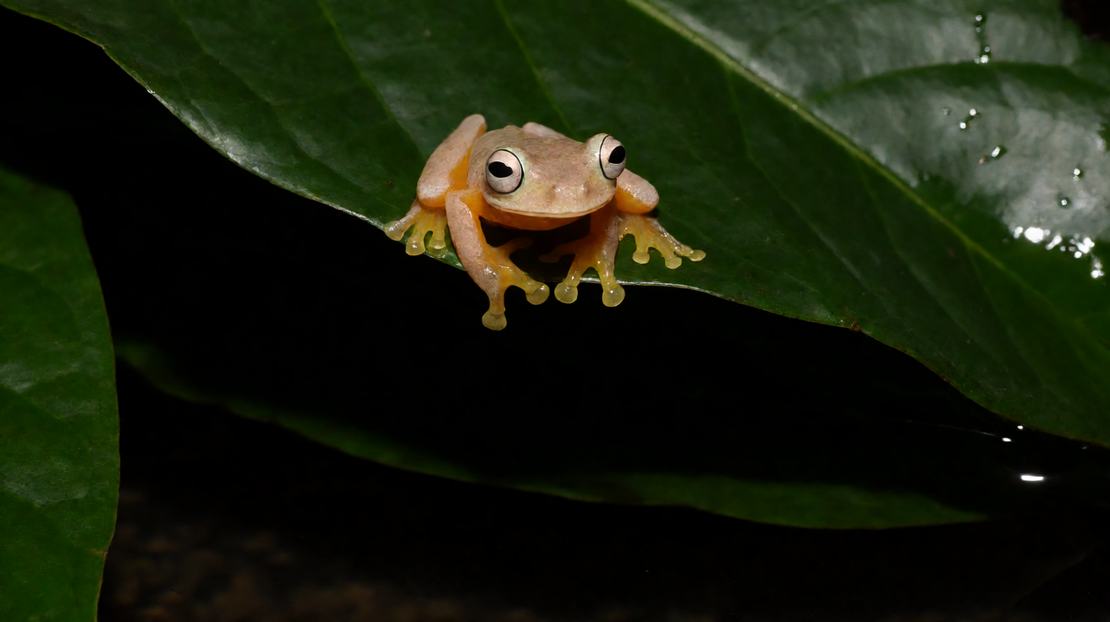
Hyalinobatrachium fleischmanni | Glass Frog
Species Profile · Centrolenidae
Glass Frog
A small green frog whose belly shows the beat of its own heart.
Least Concern
Length
Skin
Eggs
Care
Range
Rating
Three centimetres of clear tissue
Skin you can see through
Glass frogs carry skin so thin that the heart shows through the belly. Its back stays pale green, and the belly stays clear, although the skin looks wet. Body length reaches 3 cm. White tissue covers part of the gut, and the rest stays visible.
It lives beside streams, and it climbs well, since the leaves stay wet. Males call from the underside of leaves, and the sound carries over the water. Females lay eggs on a leaf that hangs above the stream, so the tadpoles drop straight into water when they hatch. Most people meet one at night with a torch, although the animal soon hides.
The frog stays small. Nothing about it is easy to see, and that is the point.
Family tree
Centrolenidae, the glass frogs
Hyalinobatrachium fleischmanni is one of about thirty glass frogs. The family is Centrolenidae, and the group lives only in the neotropics. Its nearest relative here is the Red-Eyed Tree Frog, another leaf nester of the same forest.
Both lay eggs above water, and both hatch tadpoles that fall in. Yet the two differ in cover, since one hides and the other warns. Oskar Boettger described the species in 1893 from material collected in Costa Rica.
Workers moved several populations into other species, and the range shrank. That revision left a smaller animal than the old books describe, so older field guides often show a wider range than the current one. No subspecies is listed.
Thin skin, visible organs
How to tell one
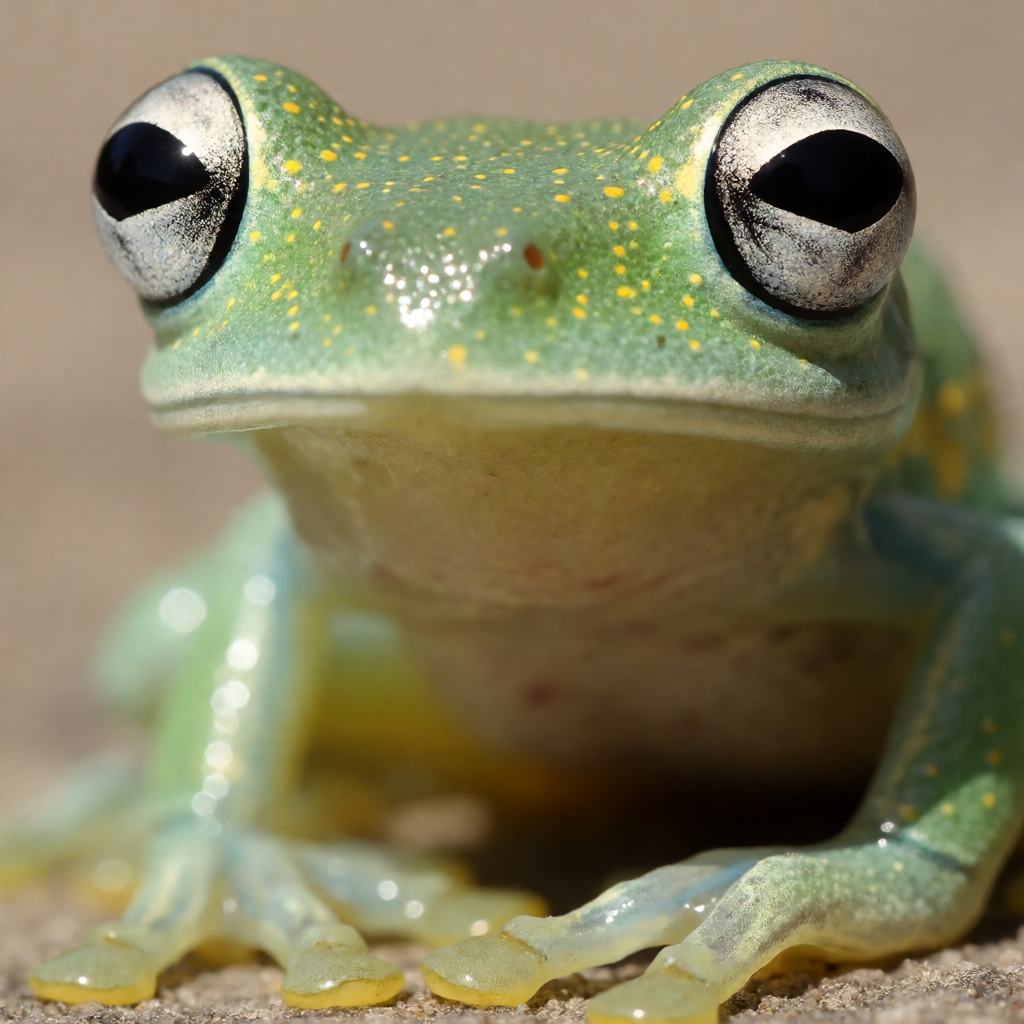
Males measure 19 mm to 25 mm, and females grow to 32 mm. Back is lime green, and small yellow dots cover it, though the dots fade with age. Skin looks wet. Belly skin is transparent, and the heart beats there in plain view.
White guanine wraps the liver and the gut, so the animal hides some organs while it leaves the heart exposed. Eyes face forward, and the iris carries gold flecks. Fingers end in discs, and the discs hold a wet leaf with ease. Legs are long, and the animal jumps well, since it must cross gaps between leaves.
Voice is a thin whistle. Males carry a vocal sac under the throat, and it swells when they call. Colour fades after death.
1
2
3
Stream side leaves at night
Where it lives
Streamside forest holds the species from Mexico to Colombia. The range also reaches Venezuela, Guyana and Suriname, and it stays below 1500 m. Adults sit on leaves, and they rarely touch the ground.
Clean water matters most. Silt kills the tadpoles, so a stream without shade loses its frogs. One kilometre of stream may hold hundreds of animals, and each one keeps to a small patch of overhanging leaves.
Coffee shade suits the species, and so do forest edges, although both need clean water. Forest clearing removes the stream bank, and the colony then disappears. Altitude limits the spread.
Small flies in the dark
What it eats
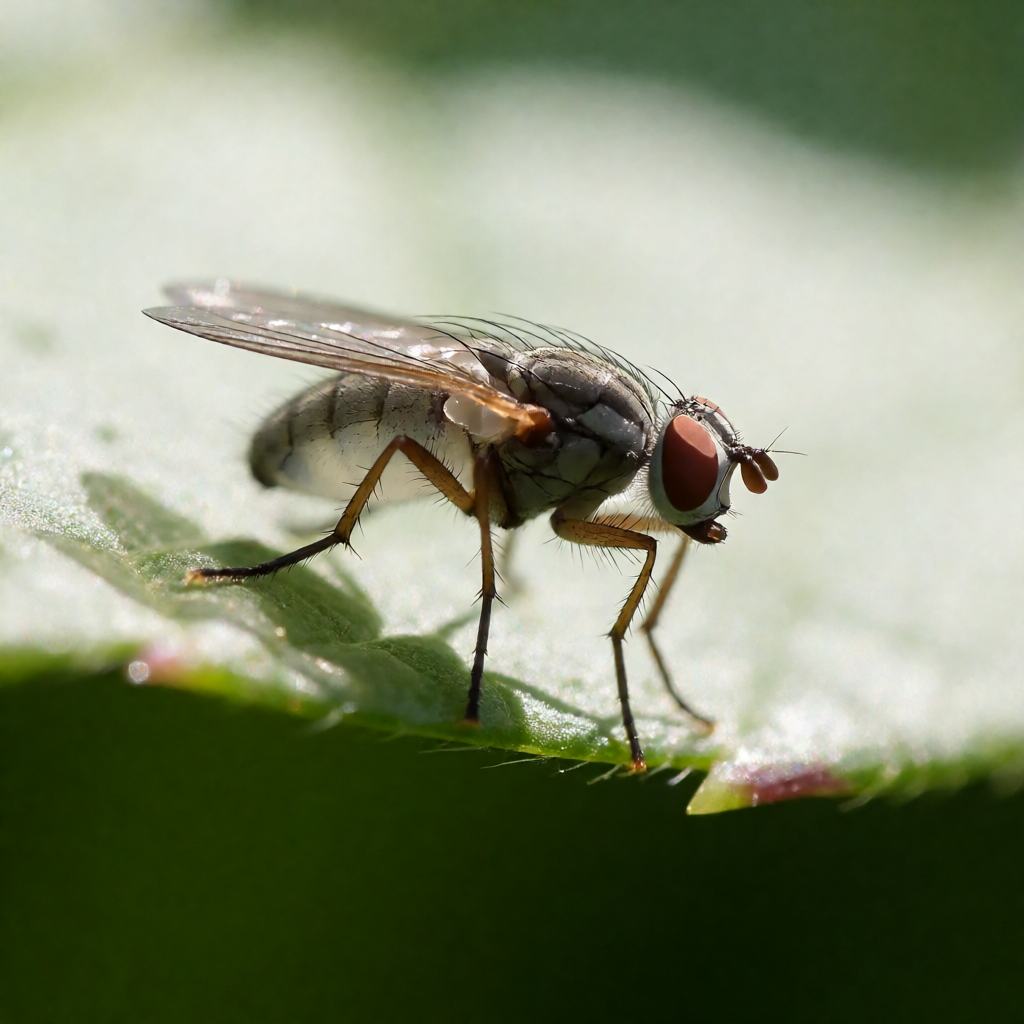
Small insects form the diet, and flies rank first. It also takes crickets, spiders and small moths, and it hunts at night. One flick of the tongue ends the hunt.
That tongue strikes faster than a human eye can follow, and the prey sticks to the tip before it can move. Nothing is chewed, and the frog swallows every catch whole. Feeding starts after dark, and it peaks before midnight, since the insects move then.
Water comes from prey. Captive animals take fruit flies, and they do well on that simple diet. Nothing is stored.
A clutch above the water
The breeding cycle
Males call from a leaf, and they defend the spot, although neighbours keep trying. Two males may wrestle over a leaf, and the winner keeps the spot. Females answer, and they lay 20 eggs to 30 eggs.
Eggs go on the underside of a leaf that hangs over the stream, and the male then stays with them for days. He keeps them wet, and he drives off a fly that would lay inside them. Tadpoles hatch after two weeks, and they drop into the water.
They burrow into the gravel, and they stay there until they change, though many never do. Metamorphosis takes months. Adults live a few years, and the cycle repeats each wet season, though few reach old age.
Least Concern, and still common
Conservation
The Red List ranks the species as Least Concern. Workers assessed it in 2021, and the population trend looked stable then, though the data stay thin. Stream pollution is the main risk, and silt follows close behind, since farms sit on the slopes.
Forest loss removes the shade, although the species also uses coffee farms. Frogs that need clean water cannot survive a damaged stream, so the species disappears long before the forest does. Collectors want the animal, and the trade takes a few, although the species breeds fast.
No rule protects the species, although every country in the range has parks. The species stays common. Most records come from a few well studied streams.
Side by side
How It Compares
| Trait | Glass Frog | Red-Eyed Tree Frog |
|---|---|---|
| Length | 19 mm to 32 mm, and females grow larger | 5 cm to 7 cm, and the female passes the male |
| Colour | pale green with yellow dots, and a clear belly | green with a red eye and orange toes |
| Food | flies, crickets and small spiders | insects and small arthropods, taken at night |
| Eggs | 20 to 30 eggs on the underside of a leaf | a clutch laid on a leaf above the water |
| Care | the male guards the clutch and keeps it wet | no guard, and the eggs rely on rain |
| Defence | transparent skin that hides the animal | a sudden flash of red that startles a bird |
Common misreadings
What People Get Wrong
- Many people think the frog is transparent all over, yet only the belly stays clear. White tissue covers part of the gut, so the heart shows while the liver does not.
- A common tale says the eggs drop as soon as they are laid, although the male guards them for days. He keeps the clutch wet and drives off a fly that would lay inside it.
- Guides claim the species lives in deep forest, yet it also breeds in coffee shade and along forest edges. Clean water matters most, so silt does more damage than shade loss.
Going further
Sources and Further Reading
Quick hits
Five things to remember
- Heart shows through the belly.
- Males guard the eggs.
- Tadpoles drop into the stream.
- The back carries yellow dots.
- A parasitic fly hunts the clutch.
[…] one of many marsupial frogs. Hemiphractidae is the family, a group found only in the Neotropics. A Glass Frog lays its eggs on leaves above a stream, though the parents offer no pouch at […]