 By Iris
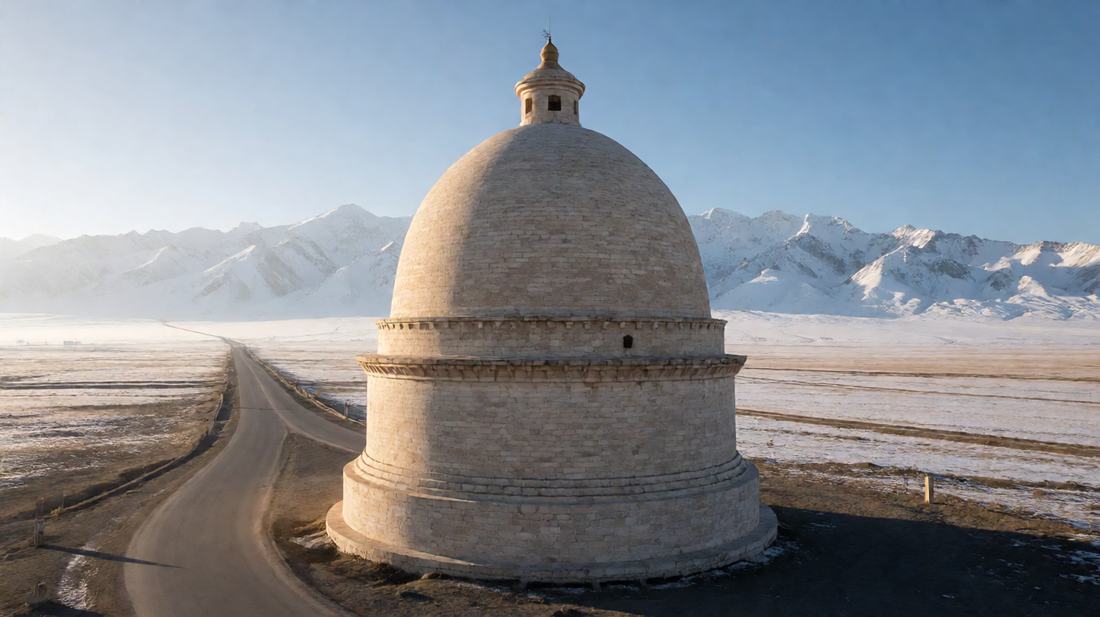
The Kushan Empire | The Crossroads of Asia
Historical Profile · Central Asia
The Kushan Empire | The Crossroads of Asia
Five groups of riders from the north took the passes of Central Asia, taxed the road that crossed them, and used the profit to give the Buddha a human face.
AD 30-375
Founded
Reach
Money
Art
End
The big picture
Introduction
An empire can stand on a road instead of a river. Kushan riders held the middle of Asia, where routes from China met routes from India. Their state began as one of five groups from the north. Within two centuries it ruled from the Aral Sea to the Ganges plain.
Gold coins carried the king’s own image, and the mint in effect spoke for the state. Sculptors here made the first images of the Buddha in human form. That change was enormous, since a faith that had used symbols now had a face. Its rule lasted about three hundred years.
It left no histories of its own. What survived was art, coinage and a road that carried ideas as well as goods. Trade paid for the temples, and the temples in turn paid for the art. Few states have shaped so much and said so little.
Setting
Historical Context
Riders moved into Bactria from the north east in the second century BC. They came as five groups, and one of them took the name Kushan. That group held the passes. Control of a pass pays better than any field since every caravan must cross it. Kujula Kadphises united the five in the first century AD.
He took a Greek title on his coins because Greek was still the language of trade in every market there. His successors pushed south into the plain and east along the road. Kanishka ruled around 130 and held the widest reach. Three capitals served the state, and each sat on a different route. One looked west to Iran, one looked south to India, and one looked east to China.
That arrangement kept the court close to every market. It also meant that no single city could hold the whole state. Rebellion in a single province could not be crushed quickly, and thus a small rising could last for years. Rivals could raise their own coin. Power was spread out, and spread power is hard to keep.
Turning points
Key Events
Kanishka is the name that the sources remember. Monks met in council under his rule, and they fixed a canon of texts. Buddhism split into two paths in that century, and the court backed the wider one. Faith had asked for a monk’s life. It now offered help to a household, and that change in turn made it a religion for traders and farmers.
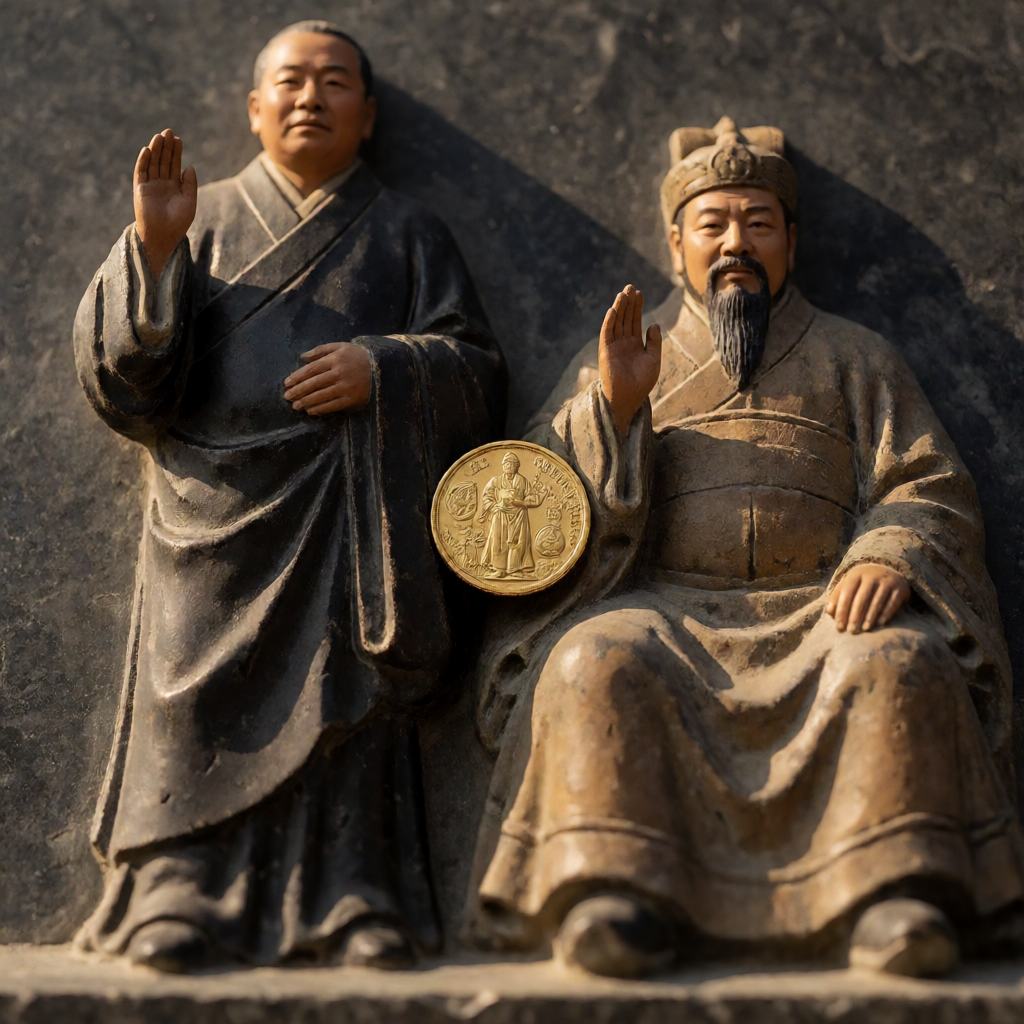
Art changed with it. Sculptors in the north west carved a figure with a Greek face and a Greek robe. Sculptors in the plain carved a softer figure in local stone. Both were new, and indeed both were Buddhist. Coins of the period show a king on one side and a deity on the other.
Tolls on the road paid the guard, and the state took a share. After Kanishka the reach shrank, and a Persian house took the west, though the eastern cities held longer. The last Kushan lands fell to a new power in the fourth century. Nothing explains the collapse. No source names the last king.
1
2
3
Who held power
People and Powers
Kings ruled with a council of nobles and a body of clerks. Coins carried the royal name in two scripts, so that every trader could read it. Governors held the provinces, and some of them struck their own coins. That freedom was a sign of strength and equally a seed of weakness. Court patronage reached temples and monasteries, and a monastery could hold land and rent.
Gifts to a monastery bought merit and a lasting income for the monks. Traders paid a toll, and the toll paid for the road guard. Merchants from the west could travel with a letter and expect it to be honoured. Law came from local custom as much as from a royal order. Cities kept their own councils, and they kept their own weights.
That patchwork held while the centre was strong. Once the centre weakened, the patchwork came apart. No office in the state could outlive a weak king.
Everyday world
Daily Life and Society
Most people in the north west lived in villages and worked irrigated land. Water came from a channel, and a channel needed constant repair since silt fills it in a season. Towns on the road held a market, a caravanserai and a mint. Travellers could find a bed, a meal and a money changer in one street.
Houses were built of mud brick around a courtyard, and a flat roof served as a workroom. Cloth was woven at home, and wool from the hills was likewise the common fibre. Farmers paid a share of the crop, and traders paid a toll. Monasteries fed the poor on a festival day.
Baths stood in every large city, and a bath was a public place as well as a washing place. Learning sat with the monks and with a few families of clerks. Ordinary life left few traces, and thus the coins, the walls and the drains must speak for it.
Craft and ideas
Trade, Technology and Ideas
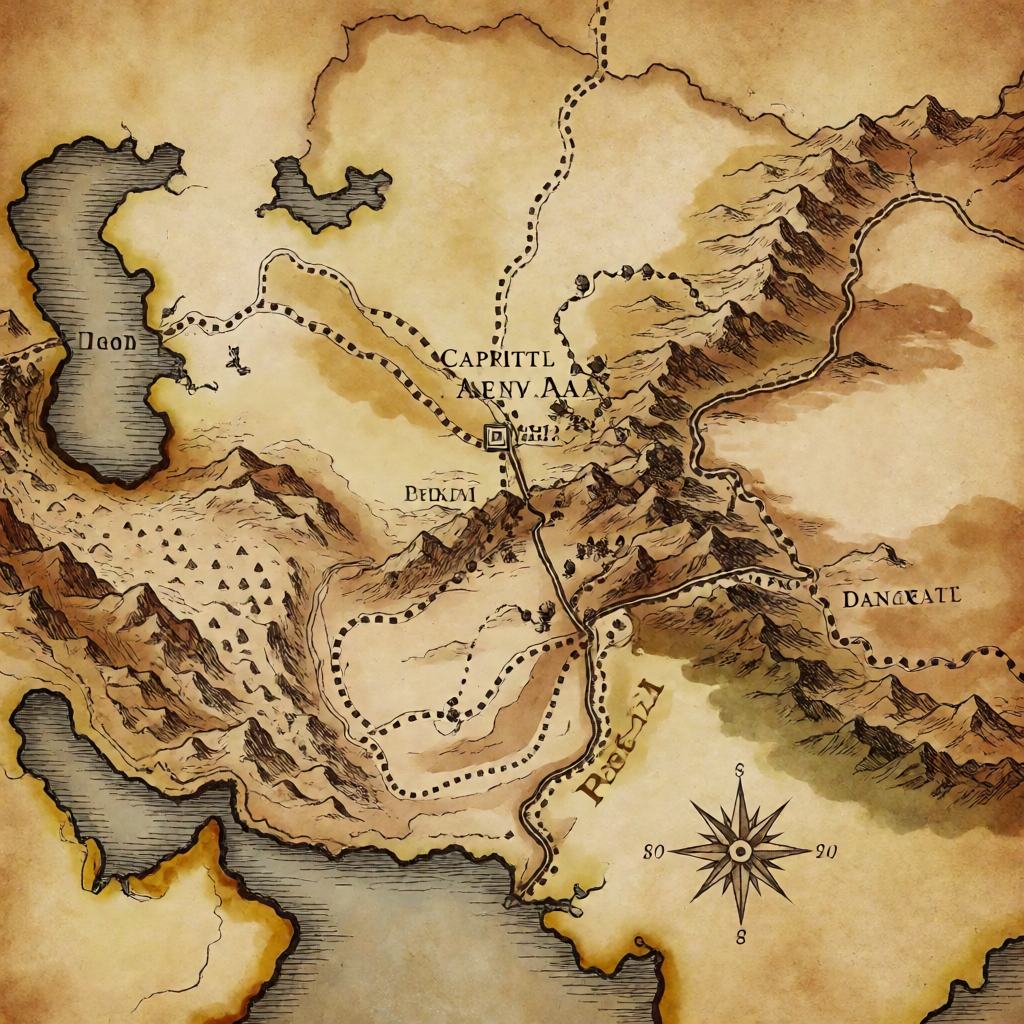
Roads were the state’s main asset, and in fact the toll gate was its chief office. Silk came west from China, and it passed through a Kushan gate. By then the Silk Road had run for two centuries, and its middle section was the richest. Samarkand sat to the north, and its merchants handled the northern branch.
Ships from a Roman port took Kushan goods west, and Roman coins have of course been found in Kushan cities. Gold flowed east, and in turn silk moved west. Kushan coinage copied a Roman weight, which shows how closely the two markets were tied. Two centuries later the Guptas took the Indian plain, and their gold coins copy the Kushan type.
Art moved with the goods, and so did a whole set of skills. Greek features on a Buddhist figure are the clearest proof. Masons cut stone to a Greek measure, and preachers carried Indian texts east. Technology travelled too, since paper and the potter’s wheel moved along the same track.
What lasted
Legacy
What survived was a style, a faith and a set of routes. Images of the Buddha in a robe spread from here into China and beyond. Monasteries on the road became models for later foundations. Coins with two scripts disappeared with the state, yet the idea of a coin that speaks to two markets lasted. Kushan art now fills museum cases on three continents.
Writers once treated the empire as a mere passage between larger states, and the record still says so. Coins, inscriptions and sculpture argue for a state with its own order. Its weakness was structural, since a road empire has no natural centre. A road can be cut. States that live on a road can be cut with it.
That is what happened. It happened twice. Persia cut it first, and the north cut it second.
Side by side
How It Compares
| Point | Kushan | Parthia |
|---|---|---|
| Dates | AD 30-375 | 247 BC-AD 224 |
| Core | Bactria to the Ganges plain | Iran and Iraq |
| Money | Gold coins with a king’s image | Silver drachms |
| Faith | Buddhism given wide backing | Local cults and Zoroastrian rites |
| Art | The first Buddha in human form | Relief carving on rock |
| End | Pressure from Persia and India | Replaced in 224 |
Common misreadings
What People Get Wrong
- The Kushans are often cast as raiders who broke the trade routes. They taxed the routes instead, and their coins turn up along the whole length of them.
- Buddhist art is usually said to have avoided the human form. Workshops here broke that rule, and a standing Buddha appears on their coins.
- The reign of Kanishka is often given as a fixed date. Inscriptions and coin finds disagree by decades, and no single year can be proved.
Going further
Sources and Further Reading
- Wikipedia, Kushan Empire
- Encyclopaedia Britannica, Kushan dynasty. Encyclopaedia Britannica, Inc.
- Rosenfield, J.M. 1967. The Dynastic Arts of the Kushans. University of California Press.
- Liu, X. 2010. The Silk Road in World History. Oxford University Press.
Quick hits
Five Things to Remember
- Five groups of riders from the north took Bactria.
- Kujula Kadphises united them in the first century AD.
- Kanishka ruled around 130 and backed the wider Buddhist path.
- The first images of the Buddha in human form were made here.
- The state broke apart in the fourth century.