 By Iris
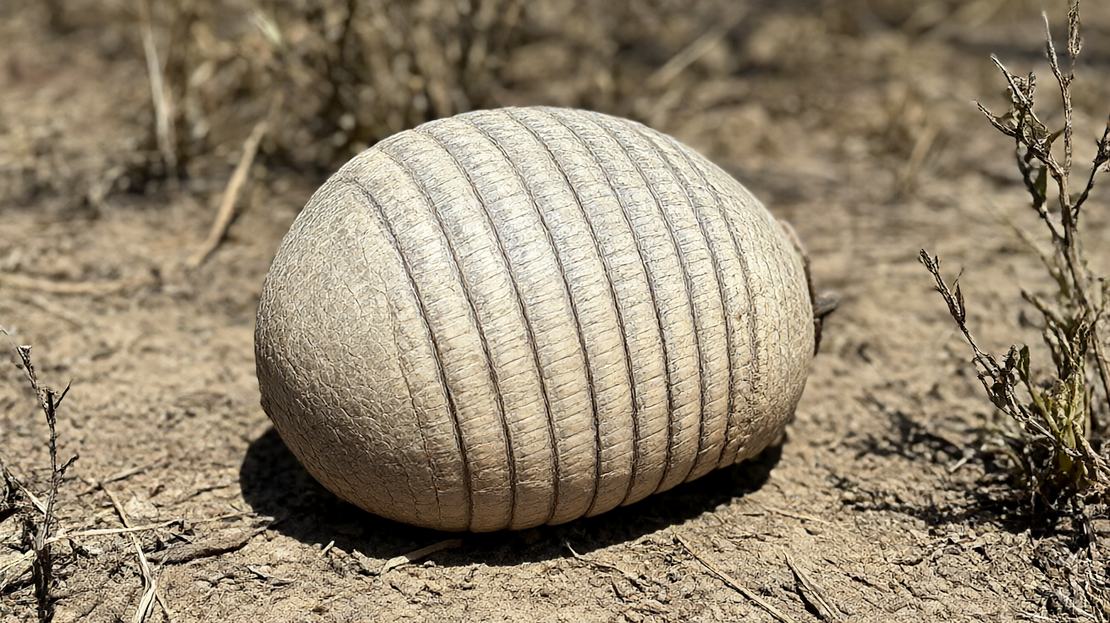
Tolypeutes matacus | Southern Three-banded Armadillo
Species Profile · Chlamyphoridae
Southern Three-banded Armadillo
A ball of shell that walks on the tips of its own claws.
Near Threatened
Length
Weight
Bands
Toes
Young
Rating
One and a half kilos of shell
A ball with legs
A small armoured animal walks across dry thorn scrub on the tips of its front claws. It stops, sniffs, and starts to dig with a quick, awkward motion. Nothing bites back, and a moment later it moves on. This is the southern three-banded armadillo, and it reaches about 30 cm in length. Adults weigh 1 to 1.6 kg.
Shell plates cover the back and the head, and three movable bands cross the middle. Those bands let the animal fold in half. Once curled, head plate and rear plate meet, and the gaps close. A rolled armadillo looks like a wooden ball. Few predators can open it.
Jaguars and dogs sometimes try, then give up. People rarely see one, since the animal works at night and keeps to cover. Its range covers the dry interior of south central South America.
Family tree
Chlamyphoridae, the shelled armadillos
Twenty or so armadillo species live in the Americas, and only two of them roll into a ball. Both belong to the genus Tolypeutes. This species holds the southern part of the range, while its cousin lives in eastern Brazil. Older guides placed all armadillos in one family, and that grouping has since broken up.
Gene work moved the group into two families, and the three-banded forms sit in the larger one. Its nearest kin include the giant armadillo and the tiny pink fairy armadillo. Those relatives dig for a living. This one relies on armour instead, which makes it odd among its kin.
Two other names still appear in books. Spanish speakers call it tatú bola, and the Brazilian cousin became the mascot of a football World Cup. Armadillos share an old line with the sloths and the anteaters.
Two armadillos that roll
How to tell one
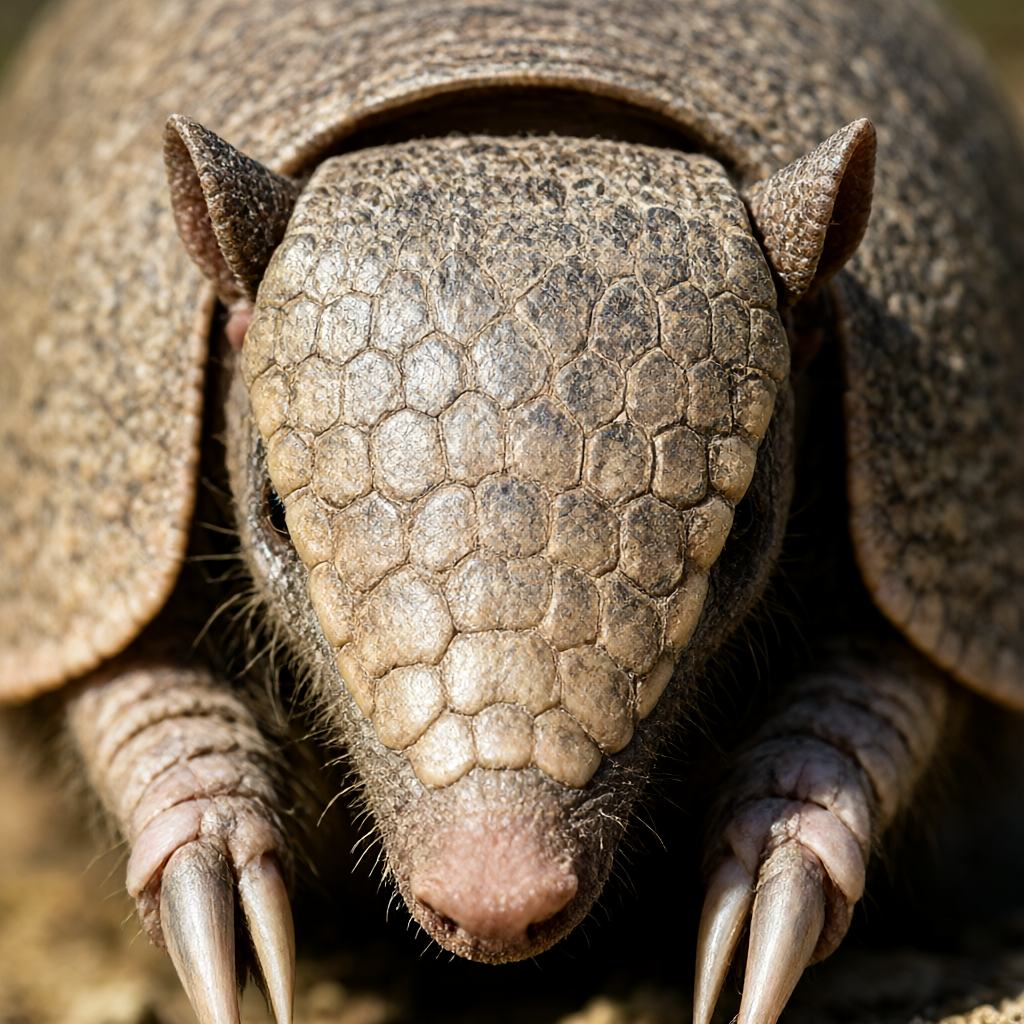
The shell is made of bony plates set in horny skin, and it covers the whole upper body. Three bands across the middle stay flexible, while the front and rear shields stay rigid. Head plate and tail plate fit against the bands when the animal rolls. Skin seals the remaining gaps.
A rolled animal can hold the pose for hours. Front claws are heavy and curved, and the animal walks on their tips with the feet turned inward. Hind feet carry five toes, and the front feet carry four. Body hair is sparse, and short bristles show between the plates.
The tail is short and armoured. Legs are short and strong. Ears are small and rounded. Females grow slightly larger than males, although the two look alike at a distance.
1
2
3
Shell, claws and a sealed ball
Where it lives
Dry woodland, grass and thorn scrub hold the species across the Chaco and the Pantanal. Open ground with scattered trees suits the animal. Grassland with sandy soil suits it, since the soil drains fast after rain. Rain falls in a short season here, and the rest of the year stays dry.
Scrub gives cover, and the animal also uses holes dug by other species. Unlike the widespread Nine-banded Armadillo, it never digs a burrow. Instead it shelters under bushes and in hollow logs. Forest blocks its spread, because the animal needs open ground to feed.
Farmland holds fewer animals, although pasture with hedges keeps a few. Fire sweeps the Chaco each dry season, and it kills slow animals. The shell gives no shelter from heat, and a long fire kills animals that cannot outrun it.
Dry Chaco thorn scrub
What it eats
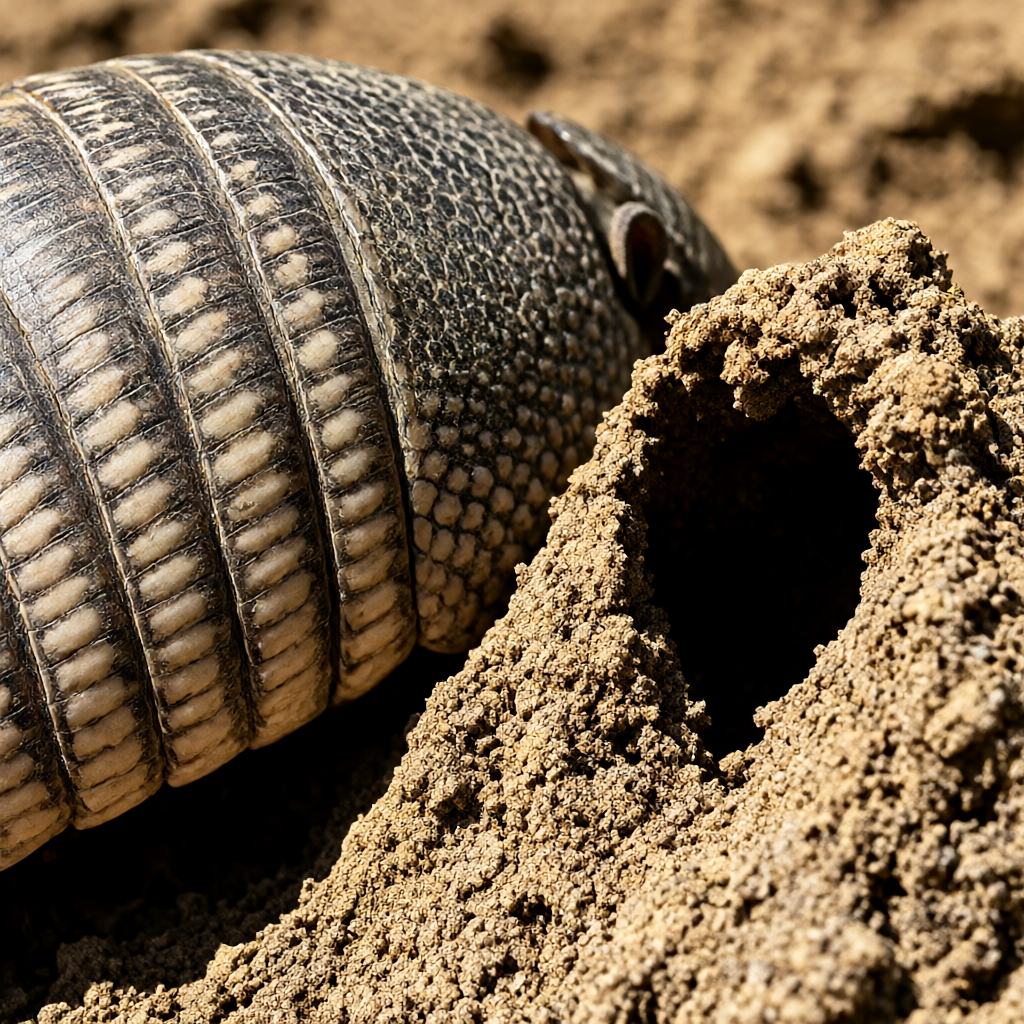
Ants and termites form the bulk of the diet. Larvae, worms and fallen fruit fill out the diet. It feeds by pushing its snout into a nest and licking out the contents. Front claws break the surface of a mound.
Sand and grit pass through with the food, which helps grind it. Feeding takes place in short stops rather than long bouts. An animal may visit dozens of nests in a night. Termites build hard mounds, and the animal opens only the softer parts.
Ants defend themselves with bites, so the animal moves fast. Water comes from food, and drinking happens rarely. Long dry spells cause no trouble, since the body holds water well. Fat stored under the shell carries it through lean weeks.
Ants and termites
The breeding cycle
Most activity happens at night, and the animal moves alone. A threatened animal rolls up at once, and the shell then seals tight along every edge. It can also run, and the animal often reaches cover before a person sees it. Rolling works better than running, so the shell does most of the work.
Females give birth after about four months. One young is usual, and twins stay rare. The newborn shell is soft, and it hardens over several weeks. Young animals stay with the mother for a few months.
Adults meet only to mate, and they then separate. Scent marks on twigs tell neighbours who passed. Home ranges overlap, and the animals tolerate each other. Nothing is known about how long they live in the wild, although captive animals have reached 12 years.
Near Threatened, and eaten
Conservation
The IUCN lists this species as Near Threatened. Hunting drives much of the decline, since the meat is popular across the Chaco and fetches a good price. Habitat loss adds to the pressure. Pasture and soy fields replace the thorn scrub.
Fires set for land clearance kill animals that cannot move fast. Roads take a steady toll. Parks cover part of the range, although patrols are uneven. Numbers fall outside reserves.
Slow breeding limits recovery, since a female raises one young a year at best, and many young die early. Local campaigns now teach hunters about the decline. Some villages have stopped taking the animal, and those areas keep numbers. The species still holds much of its old range, which gives any recovery plan a base.
Side by side
How It Compares
| Trait | Southern Three-banded Armadillo | Nine-banded Armadillo |
|---|---|---|
| Length | about 30 cm | 40 to 50 cm with the tail |
| Weight | 1 to 1.6 kg | 3 to 6 kg |
| Shell | three movable bands, rolls into a ball | nine bands, cannot roll up |
| Shelter | none built, hides under bushes | a deep burrow |
| Home | dry Chaco thorn scrub | woodland and farmland from Texas to Argentina |
| Rating | Near Threatened | Least Concern |
Common misreadings
What People Get Wrong
- Many people think every armadillo rolls up, yet only two of them can do it.
- A common claim says the animal digs a burrow, although it shelters under bushes instead.
- Some guides call the shell rigid, yet three bands let the animal fold in half.
Going further
Sources and Further Reading
Quick hits
Five things to remember
- Only two armadillos can roll into a ball.
- The shell has three movable bands.
- Front feet carry four toes.
- One young is born after about four months.
- A cousin became a World Cup mascot.