 By Iris
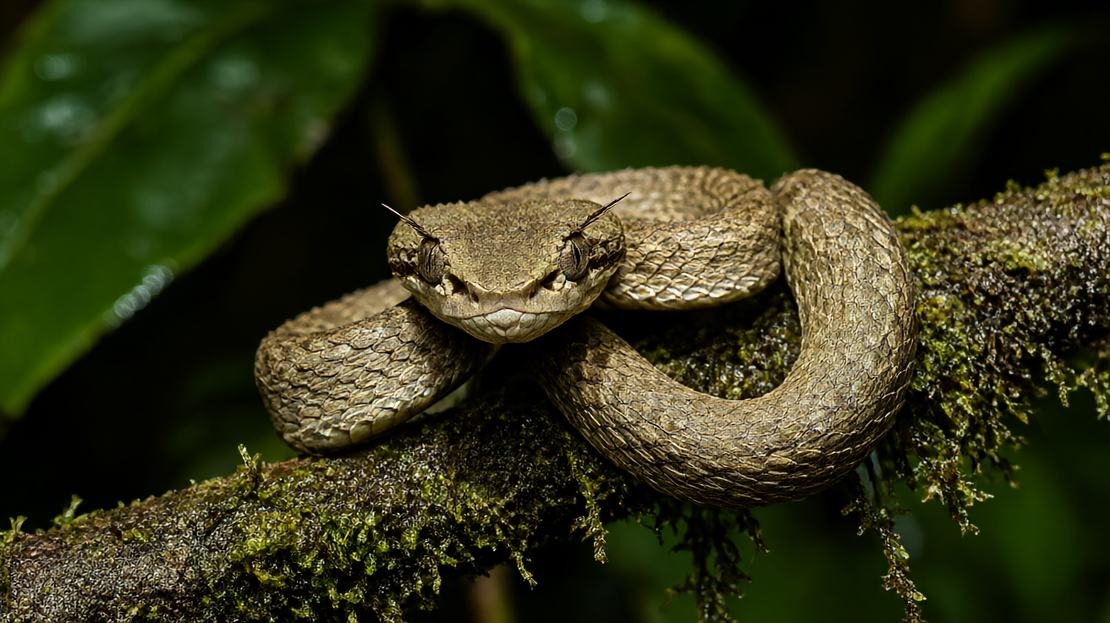
Bothriechis schlegelii | Eyelash Viper
Species Profile · Viperidae
Eyelash Viper
A coiled ambush hunter in moss green or gold, with lashes over each eye.
Least Concern
Length
Eye scales
Scales
Range
Young
Rating
Eighty centimetres of ambush
A snake that wears eyelashes
A small snake coils on a mossy branch and waits for the light to fade. Spiny scales stand above each eye. Those scales give the species its common name. Colours vary wildly, even inside one valley. Some animals are bright yellow, others moss green or rust red.
The yellow form carries the local name oropel, which means tinsel. Adults measure 55 to 82 cm. Females grow longer than males, and their heads look broader. This viper lives in wet mountain forest, where damp air keeps the moss green all year. It hunts after dark, when frogs and lizards move through the wet leaves.
Daylight hours pass in stillness, since a moving snake draws the wrong kind of attention. A coiled animal can stay in one place for days. Hikers who pass close often miss it completely, because the pattern blends into the moss and the bark.
Family tree
Viperidae, the pit vipers
The eyelash viper sits in the pit viper family, and its genus holds about a dozen tree-dwelling species. Its name honours Hermann Schlegel, a German snake expert. For a long time, guides treated every eyelash viper from Mexico to Peru as one animal. That view collapsed in 2024. A gene study split the old species into five new ones, and it also brought three old names back into use.
Snakes in Colombia keep the name schlegelii. Animals further north now belong to other species, although older books still group them together. Its closest kin are the palm pit vipers of Central America, which share the same gripping tail and the same ambush habit. Unlike the Saw-scaled Viper, this snake spends almost all its life above the ground. Both species strike from cover, yet only one of them climbs.
Scale counts and head shape set the genus apart from the lanceheads, although the two groups look alike at a glance. Keep the 2024 change in mind when reading older guides. Many printed maps still show the wide range.
Ridged scales and heat pits
How to tell one
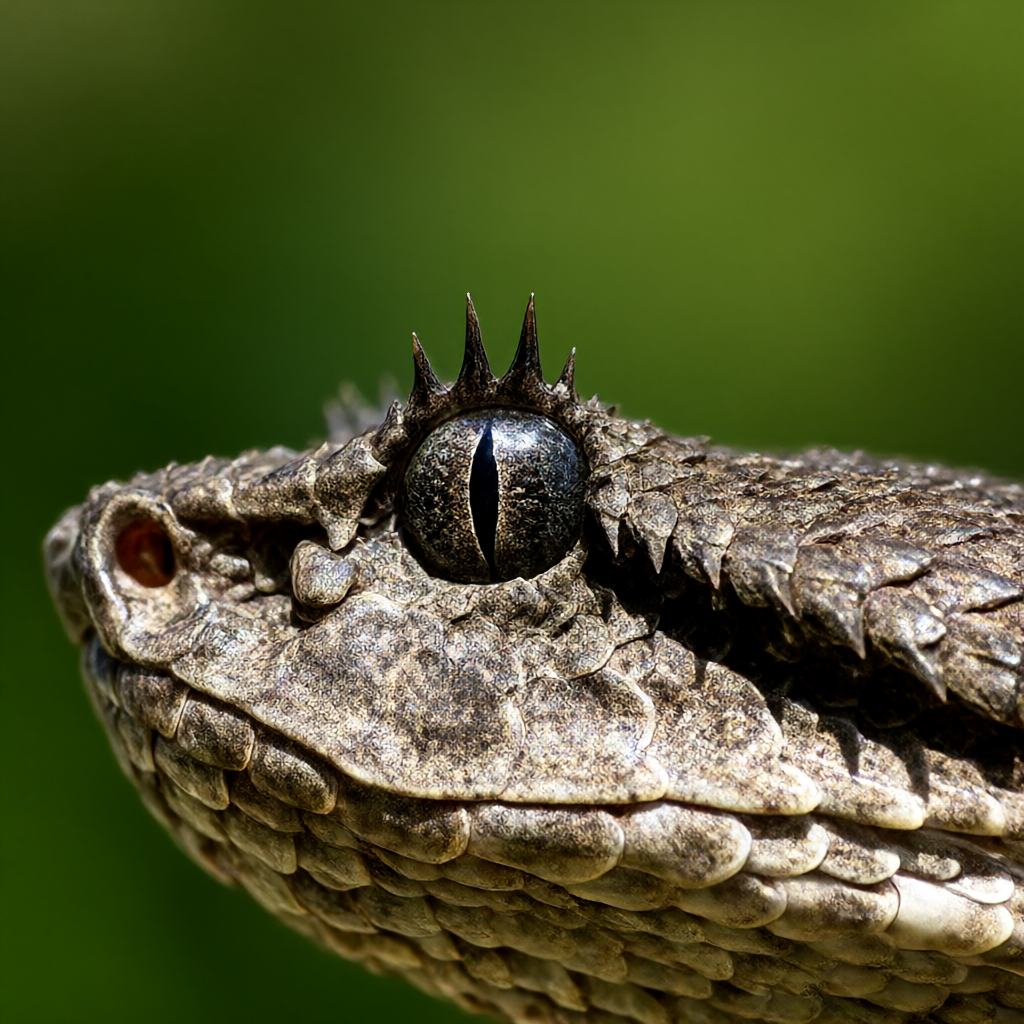
Keeled scales cover the body, and each one carries a raised ridge down the middle. That texture makes the skin look rough rather than glossy. Eyelash scales stand above the eye like small horns. Nobody has proved what they do, though they probably break up the outline of the head. Heat pits sit between eye and nostril.
Those pits find warm bodies in total darkness. Fangs fold back against the roof of the mouth. When the jaw opens, they swing forward. Venom breaks down flesh and stops blood from clotting, so a bite swells fast. Deaths stay rare, yet the pain can last for days.
A strong gripping tail holds the body steady while the head moves freely. Colours run from yellow to green, red, brown and grey. Young snakes often look duller than adults.
1
2
3
Wet mountain forest
Where it lives
Mountain forest above 1,000 m suits the species best. Coffee farms and banana farms also hold animals, since the snake tolerates disturbed ground. Wet leaves give cover, and the canopy keeps the air even. Rain falls often here, and the damp lasts through most of the year.
Hedgerows link fields, although open ground stops movement. Unlike the Adder of cold European heath, this snake never needs to bask in open sun. Warm nights keep it active, and feeding goes on through most of the year. Trees matter more than ground cover, because the animal hunts from branches.
Logging opens the canopy, and the snake then loses both cover and hunting height. Regrowth can still hold animals, so cleared land is not always empty. Each animal keeps a small home range, and it returns to the same resting coils for weeks. Clearance removes those sites one by one.
Frogs, bats and mice
What it eats
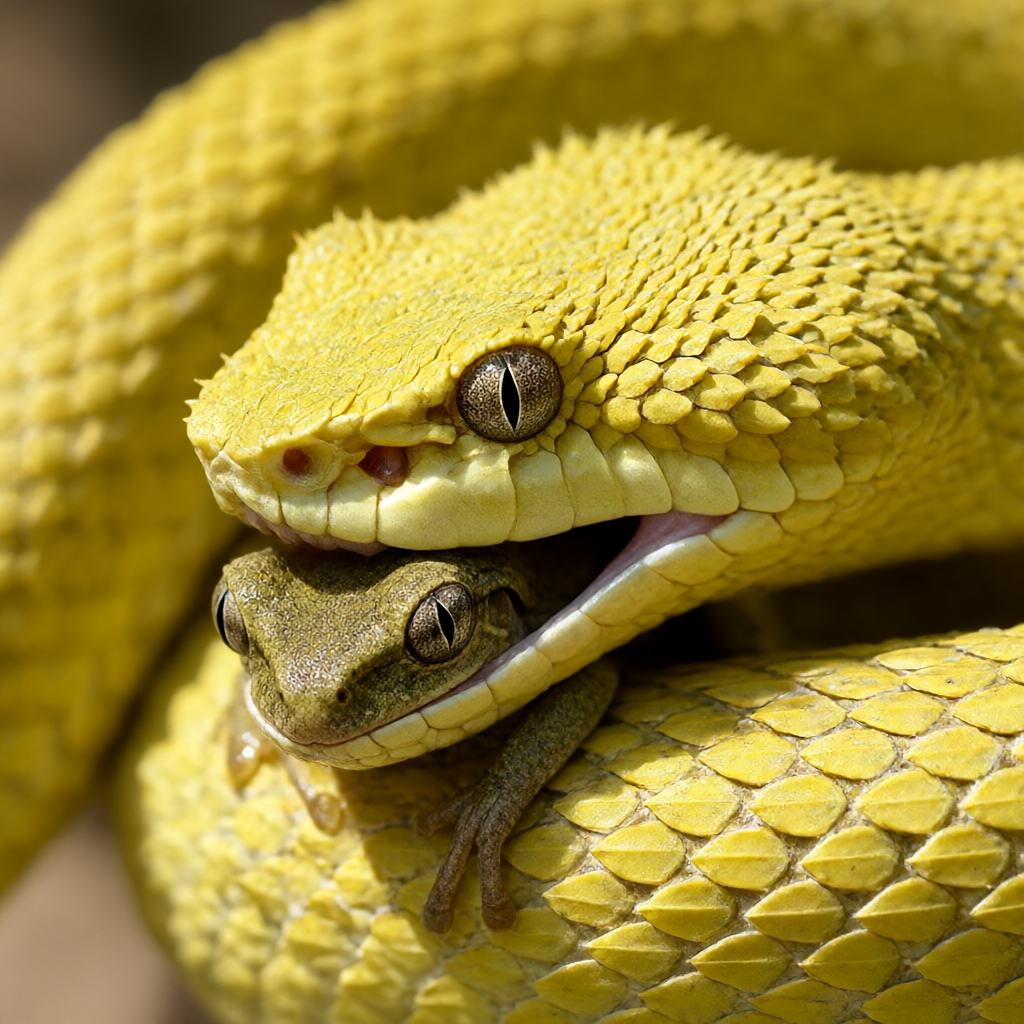
Frogs make up much of the diet, especially tree frogs that call at night. The snake also takes lizards, small birds, mice and bats. Bats get caught as they leave a roost at dusk, since the snake waits beside the flight path. Hunting is pure ambush.
Nothing moves until prey comes within reach. A strike takes less than a second, and the fangs sink deep. Venom kills small prey fast, so the snake rarely risks a struggle. After swallowing, the animal rests for days.
Cold weather slows digestion, and a single meal can last two weeks. Adults feed perhaps once a fortnight, although growing young eat far more often. A hungry snake will take insects when nothing else appears. Water comes from rain on the leaves, and drinking takes only a moment.
Live young, no eggs
The breeding cycle
Most activity happens between dusk and dawn. Days pass in a tight coil, often on a branch a few metres up above the leaf litter. Threat displays are loud and obvious. The snake opens its mouth wide, shows a pale lining, and may strike without any warning. Most bites on people happen at such a moment, when someone reaches into foliage.
Yet the animal would rather flee. It drops from a branch and vanishes into the leaf litter. Females give birth to live young rather than laying eggs. That suits a cool, wet forest, because eggs would rot on the ground. Litters vary from a few young to about 20.
Newborns measure around 20 cm and carry the same pattern as adults. The mother shows no care for her young, and she may eat them if they stay close. Young snakes grow fast while food is easy to find.
Least Concern, and still killed
Conservation
The IUCN lists this species as Least Concern, and the trend is stable. Its flexible habits explain that rating. Coffee farms, hedges and patches of regrowth all hold animals, so the snake survives well outside reserves. Loss of forest still presses on the species, especially where cloud forest is cleared for pasture.
Killing by people poses a second threat. Most bites happen when a snake is handled or stepped on, and the animal usually dies afterwards. No world count exists. Protected forest in Colombia holds good numbers, although counts remain patchy.
The species came off the CITES list in 2002. Trade in live animals continues at a low level. Long-term survival depends on strips of forest, since cut-off groups lose their gene pool. Colombian law protects the snake across its range.
Side by side
How It Compares
| Trait | Eyelash Viper | Saw-scaled Viper |
|---|---|---|
| Length | 55 to 82 cm | 30 to 60 cm, rarely longer |
| Body | slender, with a gripping tail | stout, with keeled scales and a serrated flank |
| Home | wet mountain forest in Colombia | dry scrub and farmland from west Africa to India |
| Hunting | ambush from a branch above the ground | ambush from leaf litter in the open |
| Food | frogs, lizards, bats and mice | lizards, frogs and small rodents |
| Rating | Least Concern | Least Concern |
Common misreadings
What People Get Wrong
- Many people think every eyelash viper is yellow, yet green and rust red forms are common.
- A popular claim says the lashes are hairs, although they are raised head scales.
- Some guides still treat the species as one wide range, yet a 2024 study split it into five.
Going further
Sources and Further Reading
Quick hits
Five things to remember
- Eyelash scales are modified head scales, not hairs.
- The yellow form carries the local name oropel.
- A 2024 study split the old species into five.
- Bats form part of the diet near some roosts.
- Fangs fold back when the mouth is closed.