 By st20113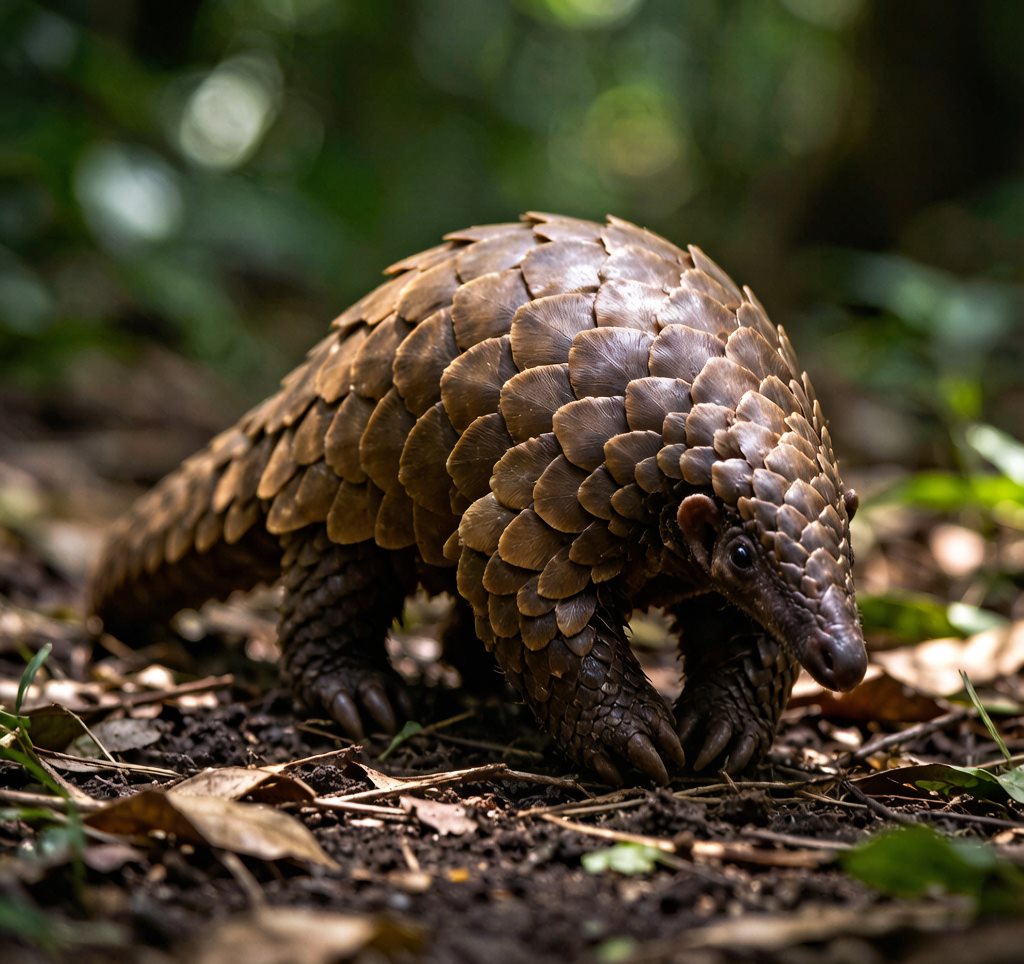
Introduction
The Sunda pangolin, Manis javanica, is a nocturnal, scale-covered mammal native to the forests and plantations of Southeast Asia. Often described as a living pinecone, it is the only mammal wholly covered in protective keratin scales. Despite its unusual appearance, it is a shy and solitary animal that spends its nights searching for ants and termites in the leaf litter and on the trunks of trees.
Active mainly after dusk, the Sunda pangolin avoids the heat of the day by resting in hollow trees or burrows. Its keen sense of smell guides it to insect prey, and its small, reduced eyes are of little use in the dark forest understory. Seldom seen by people, it remains one of the least understood yet most heavily threatened mammals of Southeast Asia.
Taxonomy
Sunda pangolins belong to the order Pholidota, a group so unusual that it is only distantly related to other mammals and was long placed near the carnivores and primates. Their ecological niche overlaps with several specialised insect-eaters on other continents, including the giant anteater of South America, the burrowing nine-banded armadillo, and the slow-moving two-toed sloth. Another specialist digger with a taste for ants is the aardvark of Africa, though these animals are not close relatives despite their similar diets.
Physical Characteristics
An adult Sunda pangolin measures roughly 1 metre including its long tail and weighs up to 7 kilograms. Its body, tail, and limbs are armoured with overlapping scales, while its underside and face are covered in sparse hair. A long, sticky tongue can extend well beyond the length of its head, perfect for probing deep into insect nests, and a pangolin may use its tail as a fifth limb to grip branches while climbing.
Habitat
This species inhabits primary and secondary tropical forests, rubber and oil-palm plantations, and agricultural edges across countries such as Indonesia, Malaysia, Thailand, and Vietnam. It is largely arboreal, using its prehensile tail and strong claws to climb and forage among the trees, though it also forages on the ground. Loss of forest cover has pushed many individuals into more disturbed and fragmented habitats where they are easier for traders to find.
Diet
Sunda pangolins feed almost exclusively on ants and termites, locating colonies by scent before tearing them open with powerful front claws. A single animal may consume thousands of insects in one night, making it an important natural controller of pest populations in forests and farms. It has no teeth and instead grinds food in a muscular stomach lined with sand and small stones that it deliberately swallows.
Because a pangolin must eat almost constantly to meet its energy needs, it may visit dozens of insect nests in a single night. The same mounds it raids are often rebuilt by the ants, so the relationship between pangolin and prey is one of ongoing, sustainable pressure rather than total destruction.
Reproduction
Little is known about pangolin reproduction in the wild, but females typically give birth to a single offspring after a gestation of about 120 to 150 days. The newborn is born with soft, pale scales that harden within a few days, and it rides on its mother’s tail or back until it is strong enough to walk. Young pangolins are weaned within a few months and soon become independent foragers under their mother’s watchful eye.
Conservation
The Sunda pangolin is listed as Critically Endangered, primarily because of illegal trafficking for its meat and scales, which are wrongly believed in some cultures to have medicinal value. It is considered one of the most heavily trafficked mammals in the world, with demand centred in certain overseas markets. Strengthened law enforcement, habitat protection, and public awareness campaigns are vital to reversing its steep decline.
Fun Facts
When threatened, a Sunda pangolin rolls into a tight, scales-out ball that few natural predators can open, leaving only a tough armoured exterior exposed. Its scales are made of keratin, the very same material as human fingernails and hair. Although it looks reptilian, the pangolin is a true mammal and can close its ears and nostrils to keep ants and dust from crawling inside while it feeds.
A pangolin’s tongue is attached near its pelvis rather than its throat, allowing it to extend far beyond the mouth, and it can be longer than the animal’s entire body. Despite their armour, these gentle creatures have no real defence against humans except curling up and hoping to be overlooked.
of the carnivorans, having diverged from that lineage approximately 76 to 79 million years ago. The Sunda Pangolin is its nearest geographic relative within the genus and shares many ecological characteristics