 By st20113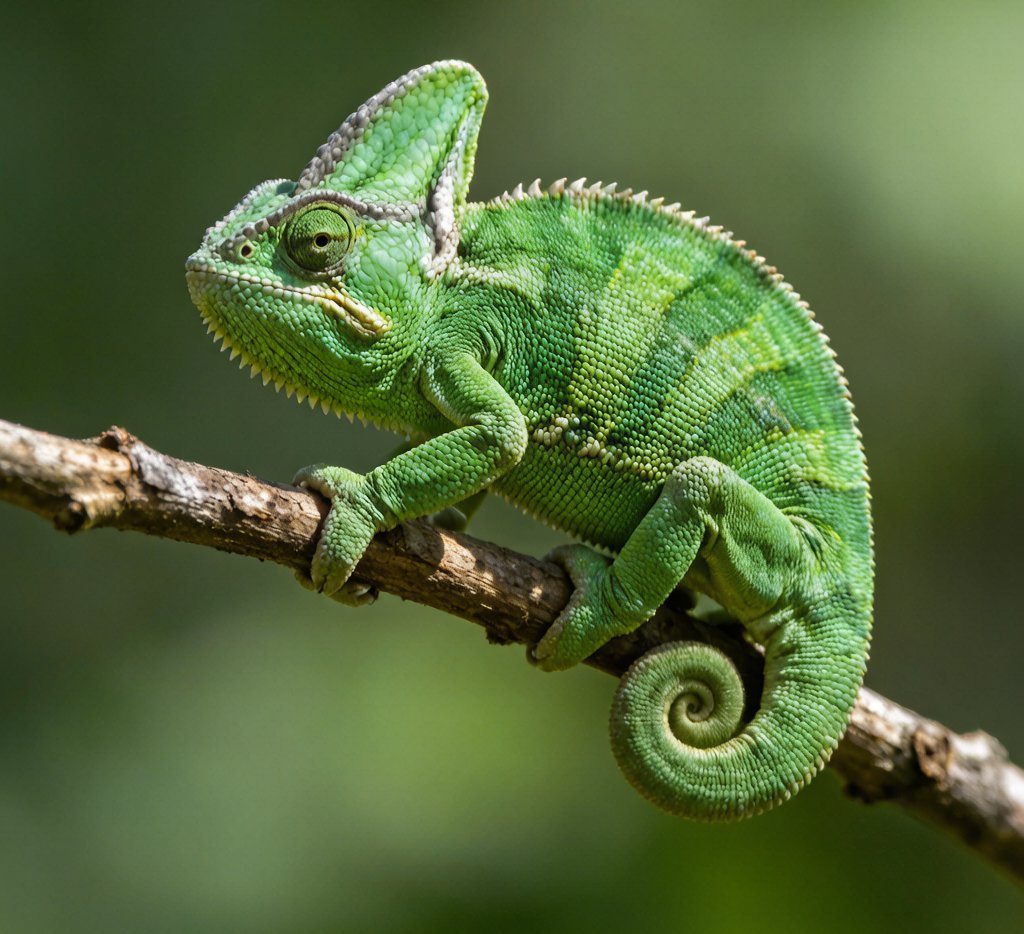
Introduction
The common chameleon, Chamaeleo chamaeleon, is a distinctive reptile native to the Mediterranean region, parts of the Middle East, and North Africa. Renowned for its ability to change color, this small to medium-sized lizard has fascinated observers for centuries. It possesses a body adapted for life among branches, with grasping feet and a tail that can coil like a spring. Chameleons are best known for their independently rotating eyes and their remarkably long, sticky tongues used to capture prey. The common chameleon is among the most widespread members of its genus, inhabiting scrubland, gardens, and woodland edges. Though often kept as a curiosity, it is a wild animal with specialized needs and behaviors.
Taxonomy
Chamaeleo chamaeleon belongs to the genus Chamaeleo within the family Chamaeleonidae. It was first described by Carl Linnaeus in 1758, making it one of the earliest named reptiles. The chamaeleon family includes roughly 200 species distributed mostly across Africa and Madagascar, with a few in Asia and Europe. Within its genus, the common chameleon is separated from relatives by subtle differences in crest shape, scale patterning, and size. Molecular studies have clarified its relationships with other Mediterranean and African chameleons. Taxonomists continue to debate the boundaries between closely related species, but Chamaeleo chamaeleon remains a well-established name in herpetology.
Physical Characteristics
The common chameleon typically reaches 20 to 30 centimeters in total length, including the tail. Its body is laterally compressed, giving it a leaf-like silhouette among foliage. The skin is covered in granular scales, often with a crest of small casque-like ridges along the head and spine. Color change is driven by layers of pigment cells called chromatophores, allowing the animal to shift between green, brown, and grey tones. Its feet are zygodactylous, with toes fused into opposed groups that grip branches securely. The eyes move independently and provide a wide field of vision. A long tongue, sometimes longer than the body, is launched to snatch insects with great speed.
Habitat
This species thrives in warm, dry environments such as Mediterranean scrub, olive groves, stone walls, and cultivated areas. It is found from the Iberian Peninsula through North Africa and into the Levant. The common chameleon prefers bushy vegetation where it can bask and hunt while concealed. It is primarily arboreal but descends to lower shrubs and occasionally the ground. Like many reptiles, it relies on external heat to regulate body temperature and is most active during warm daylight hours. Habitat fragmentation and urban expansion have reduced suitable areas in parts of its range, though the species remains relatively adaptable compared with forest specialists.
Diet
The common chameleon is an ambush predator that feeds mainly on insects and other small invertebrates. It waits motionless on a perch, then shoots its extensible tongue to capture passing prey with a sticky tip. Spiders, crickets, grasshoppers, and flies make up much of its diet. Larger individuals may occasionally take small vertebrates such as nestling birds. The chameleon’s stereoscopic, independently aiming eyes allow precise distance judgment before striking. Because it has no teeth suited for chewing, prey is crushed by jaw pressure and swallowed whole. Water is obtained from dew and rain droplets on leaves, which the animal laps with care.
Reproduction
Breeding occurs in the warmer months, with females laying eggs rather than giving live birth, unlike some relatives. After mating, a female excavates a burrow in soft soil and deposits a clutch of roughly 20 to 40 eggs. The eggs incubate underground for several months, with hatching timed to favorable conditions. Hatchlings emerge fully independent and must fend for themselves immediately. Young chameleons grow rapidly and reach sexual maturity within their first year or two. Because reproduction depends on stable warm seasons, climate shifts can affect nesting success. The species produces only one or two clutches per year, limiting how quickly populations can rebound.
Conservation
The common chameleon is currently listed as Least Concern by the IUCN, reflecting its broad distribution and tolerance of modified habitats. However, local populations face threats from habitat loss, pesticide use, and collection for the pet trade. In some regions, vehicle traffic and agricultural intensification reduce connectivity between groups. Legal protections exist in parts of its European range, and captive breeding helps supply the pet market without depleting wild stocks. Public education about responsible pet keeping supports conservation. Continued monitoring is important, because gradual declines can go unnoticed until populations become locally rare.
Fun Facts
A chameleon’s tongue can accelerate faster than a fighter jet during a strike. Its eyes can look in two different directions at once. The common chameleon changes color to communicate mood and temperature, not just to match backgrounds. Its feet work like tiny pincers to hold slender twigs. Some chameleons can rotate their tails into a tight spiral when resting. Ancient cultures believed chameleons held magical properties because of their color shifts. These remarkable lizards remain a symbol of adaptability in the animal kingdom.