 By st20113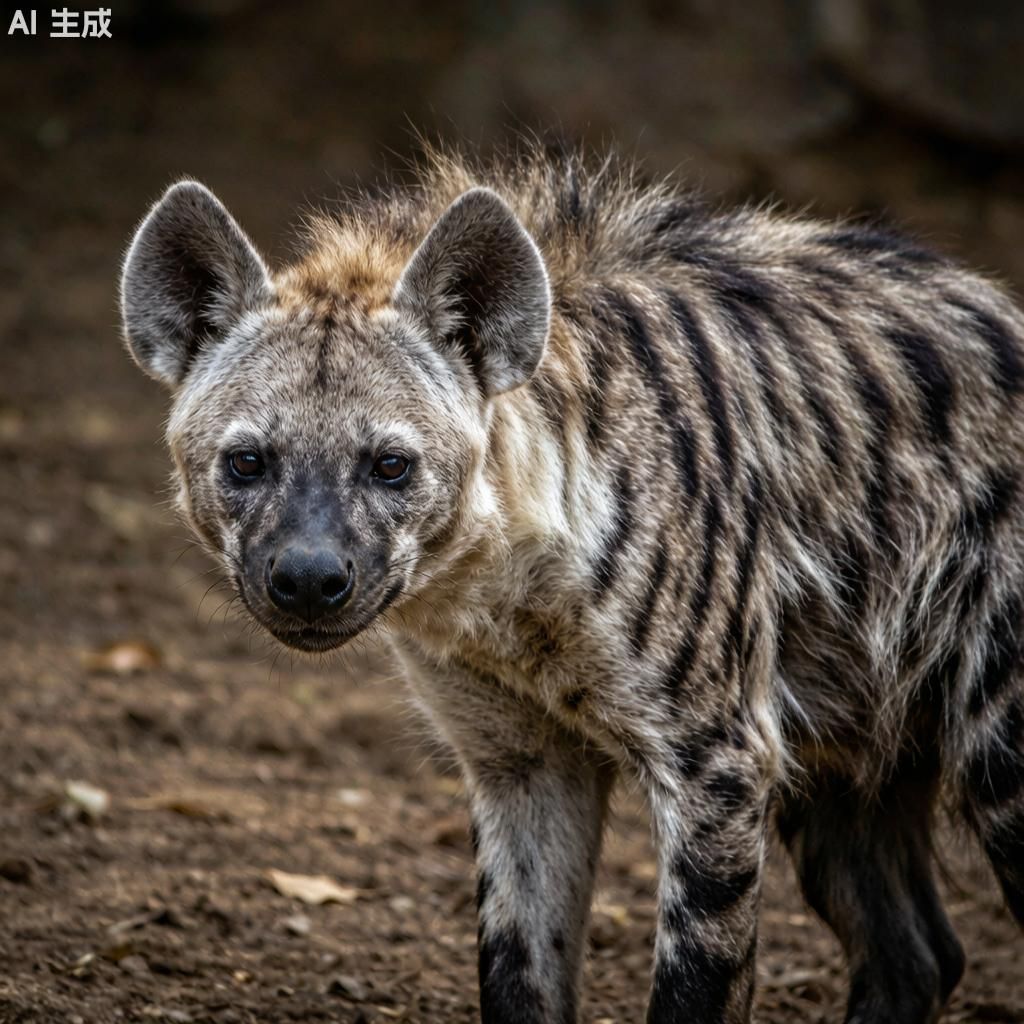
Introduction
The striped hyena, Hyaena hyaena, is a medium-sized carnivore found across North and East Africa, the Middle East, and parts of Central and South Asia. It is the smallest of the true hyenas and the only member of its genus. Largely nocturnal and reclusive, it is more scavenger than hunter, feeding chiefly on carrion but also taking small live prey. Its shaggy coat, sloping back, and bold black stripes make it unmistakable. The lion frequently displaces it from kills, highlighting its subordinate role among African predators.
Taxonomy
Hyaena hyaena is the sole species in the genus Hyaena, within the family Hyaenidae. Despite their dog-like appearance, hyenas are more closely related to mongooses and the honey badger than to true canids, belonging to the suborder Feliformia, which also includes cats such as the caracal. The striped hyena diverged early from its spotted and brown cousins. Several subspecies are recognized across its vast range, varying in size and stripe prominence. Genetic studies support its status as a distinct lineage with ancient roots in the Old World, separate from the bone-crushing spotted hyena.
Physical Characteristics
Striped hyenas weigh between 22 and 55 kilograms and measure up to 1.3 meters in body length. They have a coarse, grayish-brown coat with vertical black stripes on the torso and legs, plus a dark mane of long hairs along the neck and back that erects when alarmed. Their forelimbs are longer than the hind limbs, giving the characteristic sloping stance. Powerful jaws and large premolars allow them to crack bones and consume tough tissue. Excellent hearing and a keen sense of smell guide them to carcasses across long distances in darkness.
Habitat
Striped hyenas occupy arid grasslands, open woodlands, rocky hills, and semi-deserts, as well as the fringes of human settlements. They den in caves, rock crevices, or burrows dug into slopes, often reusing sites for generations. They range across a vast sweep of Africa and Asia, overlapping with large herbivores such as the cape buffalo in savanna regions, though they avoid direct contact. The species tolerates a wide temperature range and is most active after nightfall, resting through the heat of day in sheltered dens.
Diet
Striped hyenas are primarily scavengers, consuming the remains of kills made by larger predators and the carcasses of wild and domestic animals. They also hunt rodents, hares, lizards, insects, and fallen fruit, and will raid garbage near villages. Unlike the cooperative African wild dog, the striped hyena usually feeds alone or in loose family groups and rarely tackles large living prey. Its strong digestion allows it to process rotting meat safely. This scavenging lifestyle provides a vital cleanup service, reducing disease by removing decaying carcasses from the landscape.
Reproduction
Breeding occurs during the cooler months, with timing varying by region. After a gestation of roughly 90 to 100 days, the female gives birth to two to four cubs in a secluded den. The cubs are born with their eyes closed and a faint stripe pattern, becoming mobile after about a month. Both parents may attend the den, though the mother provides most care. Young hyenas are weaned by around four months and reach independence by their first year. Family groups are loosely bonded, and offspring may remain near the parental range for some time before dispersing.
Conservation
The striped hyena is currently listed as near threatened by the IUCN, with populations declining across parts of its range. Major threats include habitat loss, persecution as a livestock threat, and poisoning aimed at other carnivores. In some regions it is killed for body parts used in traditional medicine. Despite this, it remains widespread and survives in protected areas and marginal lands. The species benefits from its scavenging flexibility and nocturnal secrecy. Conservation efforts focus on reducing human-wildlife conflict and protecting denning sites from disturbance and development.
Fun Facts
The striped hyena can intimidate rivals by erecting its mane and appearing noticeably larger than it really is. Its vocalizations are limited compared with the spotted hyena’s famous laugh, mostly consisting of growls and whines. Ancient cultures revered the striped hyena, featuring it in folklore across the Middle East and Asia. It has one of the strongest digestive systems among mammals, neutralizing bacteria in rotting flesh. The species can consume bones almost entirely, leaving little waste. Though shy, it has been known to cache food by burying it near the den for later meals.