 By st20113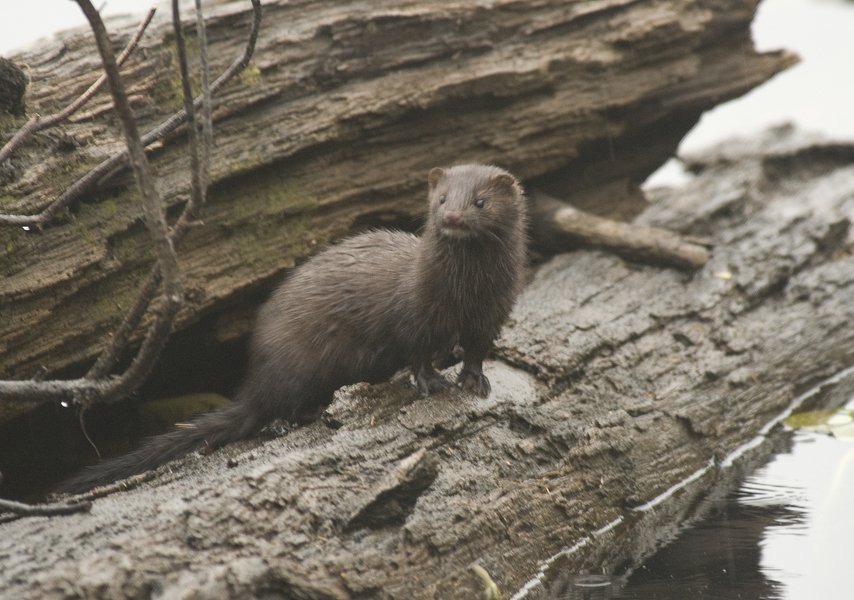
Introduction
The American mink (Neovison vison) is a small, semi-aquatic carnivore of the weasel family found across most of North America, from the Arctic edges of Alaska and Canada to the wetlands and woodlands of the southern United States. With its long, sinuous body, short legs, and dense waterproof fur, the mink is built for a life that moves freely between land and water. For centuries its glossy dark pelt made it one of the most commercially valuable furbearers in the world, and escapees from fur farms have established feral populations on several other continents. Though secretive, it is a familiar sight to patient observers along quiet streams, where it leaves a telltale line of bubbles and ripples at the water’s surface.
Taxonomy
The American mink was long placed in the genus Mustela, but genetic studies now assign it to Neovison, a genus it shares only with the extinct sea mink of New England. Like its relative the sea otter, the mink belongs to the diverse mustelid family, which also includes weasels, badgers, and wolverines. Three subspecies are generally recognized across its broad North American range, differing mainly in size and coat tone. Fossil relatives show the lineage split from Old World minks several million years ago, after the Bering land bridge first opened.
Physical Characteristics
An adult mink measures 46 to 70 centimeters from nose to tail tip and weighs roughly 0.5 to 1.6 kilograms, with males noticeably larger than females. The body is slender and low-slung, the legs short, and the tail about a third of the total length. The dense underfur is guarded by glossy outer hairs that range from chocolate brown to near black, often with a small white patch on the chin or throat. A membrane between the toes makes the paws effective paddles, and the small rounded ears close tight when the animal dives. Its eyesight is keen in low light, and whiskers packed with nerves help it feel prey in dark or muddy water.
Habitat
Mink favor the edges of streams, rivers, lakes, marshes, and coastal estuaries where water and cover meet. They are territorial and rarely travel far from a permanent waterway, using hollow logs, rock crevices, or abandoned beaver lodges as den sites. Although primarily freshwater animals, they also hunt along sheltered marine shores and tidal flats in the north. In winter a mink may tunnel through snow and ice to reach open water beneath frozen streams.
Diet
The mink is an opportunistic predator with a varied menu. Fish, crayfish, frogs, and aquatic insects form the staple near water, while on land it takes mice, voles, rabbits, birds, and eggs. A bold and agile hunter, it can climb trees and swim long distances in pursuit of prey. Like the adaptable raccoon, the mink thrives wherever food is abundant and cover is close. In cold months it caches surplus food in crevices, returning to frozen stores when hunting is poor.
Reproduction
Breeding occurs in late winter, but a remarkable reproductive trait called delayed implantation means the embryo does not attach to the womb until the following spring. After a gestation of about 40 days once implantation happens, the female gives birth to four or five blind, helpless kits in a hidden nursery chamber. The kits open their eyes at around five weeks and are hunting on their own by late summer, when they disperse to claim their own shorelines. Young males may wander many kilometers before settling, while females often establish territories near their birthplace.
Conservation
In its native range the American mink is common and secure, though populations have been trapped heavily for fur. The bigger ecological story lies in introduced populations, especially in Britain and parts of Europe, where feral mink compete with and prey upon native species such as water voles. Conservation groups in some regions run control programs to protect those vulnerable natives. In North America regulated trapping keeps the harvest sustainable, though climate shifts that alter ice cover could affect denning success.
Fun Facts
A mink can swim up to 30 meters underwater on a single breath and slip through gaps no wider than its own head. Its scent glands can release a strong musky odor when the animal is alarmed, a trait shared with many of its mustelid cousins. Despite its reputation for fierceness, a wild mink is secretive and largely nocturnal, more often glimpsed by the ripple it leaves than by the animal itself. A startled mink can pivot almost in place and vanish into a bank burrow within seconds.