 By Iris
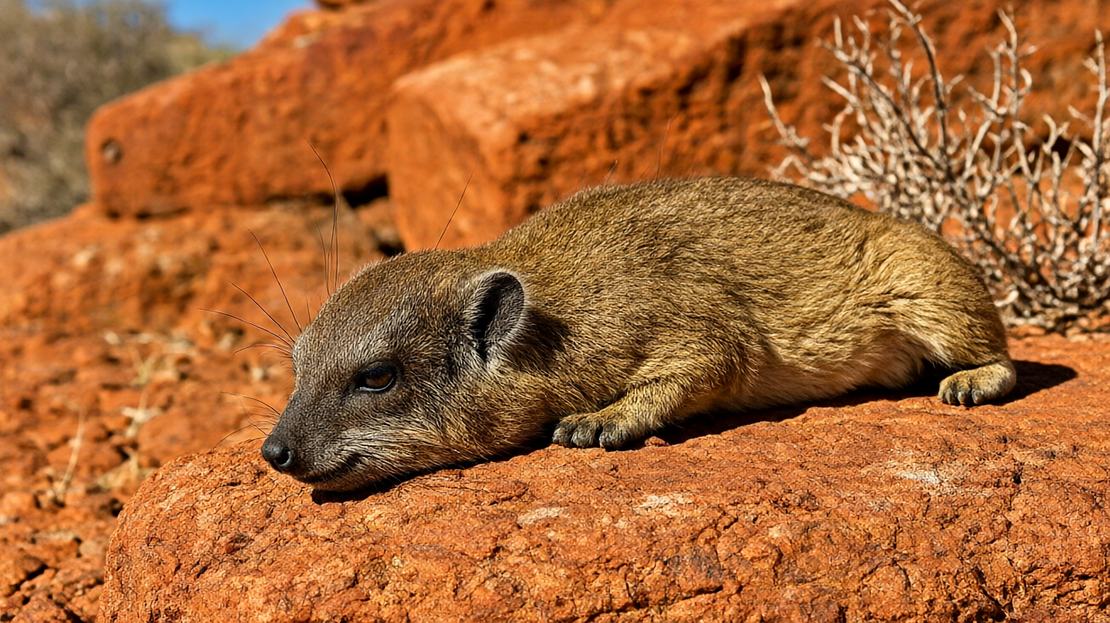
Petromus typicus | Dassie Rat
Species Profile · Petromuridae
Dassie Rat
A brown rodent slides into a crack of rock and disappears.
Least Concern
Length
Tail
Weight
Skull
Litter
Rating
The Dassie Rat
A skull that folds flat
A brown rodent slides into a crack of rock and disappears. The gap looks too narrow for anything with bones. Its skull flattens, and the animal is inside.
Dassie rats live on rocky outcrops in southwestern Africa. They climb with the confidence of animals half their weight. Because the body is built for gaps, a pursuer has nowhere to reach.
Family tree
Petromuridae, a family of one
Its proper name is Petromus typicus, the only member of the family Petromuridae. The name came from a mistake, since early collectors thought the animal belonged near the rock hyrax. A Porcupine shares the rodent order but nothing else, and the two never meet on the same ground.
A Lesser Egyptian Jerboa shows what open desert does to a rodent, since that animal runs on two legs across sand. Its nearest relatives are the cane rats of Africa, and the split runs deep.
A flat skull
How to tell one
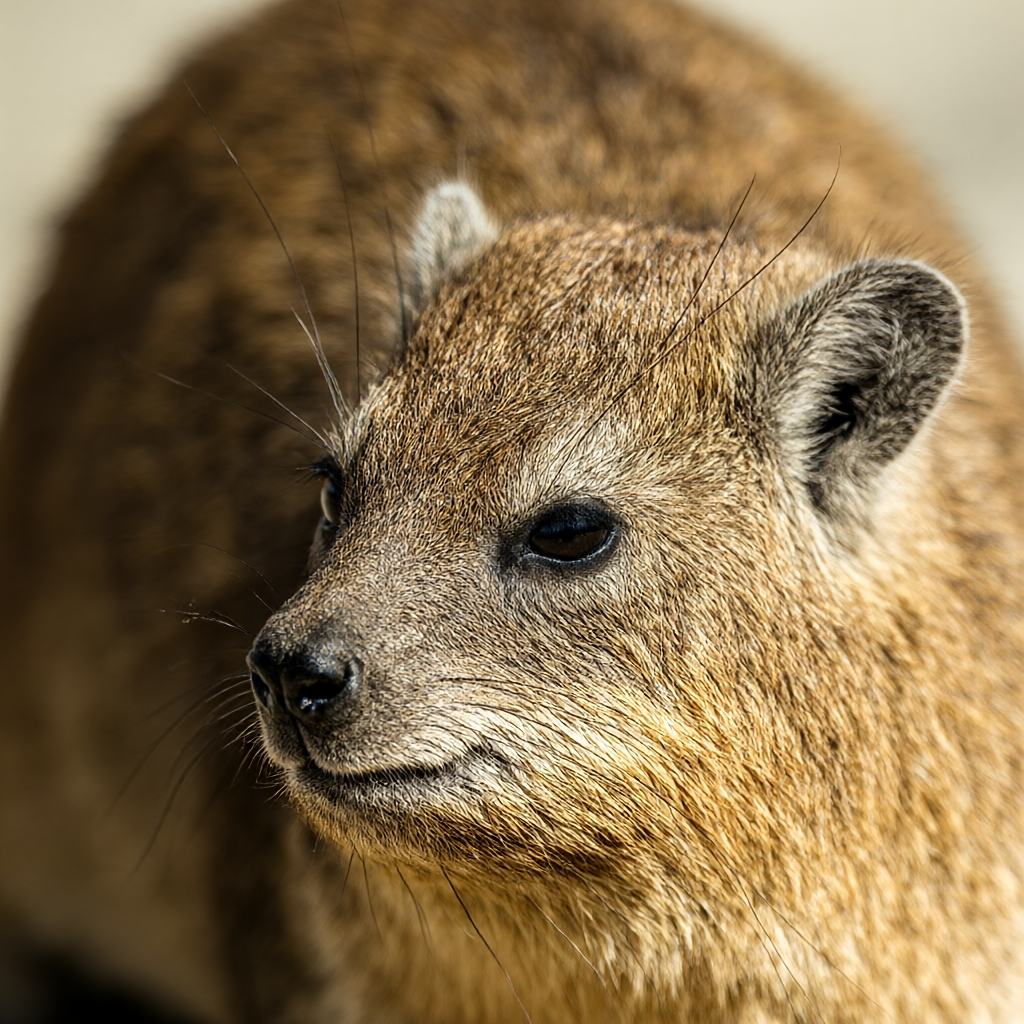
Adults run 15 to 22 cm from nose to rump. The tail adds another 15 to 20 cm. Weight falls between 170 and 300 g. The skull is flat and the body is flattened, which lets the animal press into narrow seams.
Its fur is long, soft and slightly woolly, and the colour matches the local rock. Because the tail carries a fringe of long hair, it works as a balance pole on a ledge. Females carry two pairs of teats set high on the flank.
1
2
3
Cracks, not burrows
Where it lives
Rocky outcrops in Namibia, South Africa and southern Angola hold the species. Granite and quartzite suit it best. Because the animal needs deep cracks, it avoids smooth boulders.
Dassie rats also use stone walls and road cuttings. Colonies sit apart on isolated hills, and each hill holds its own group.
Leaves and seeds
What it eats
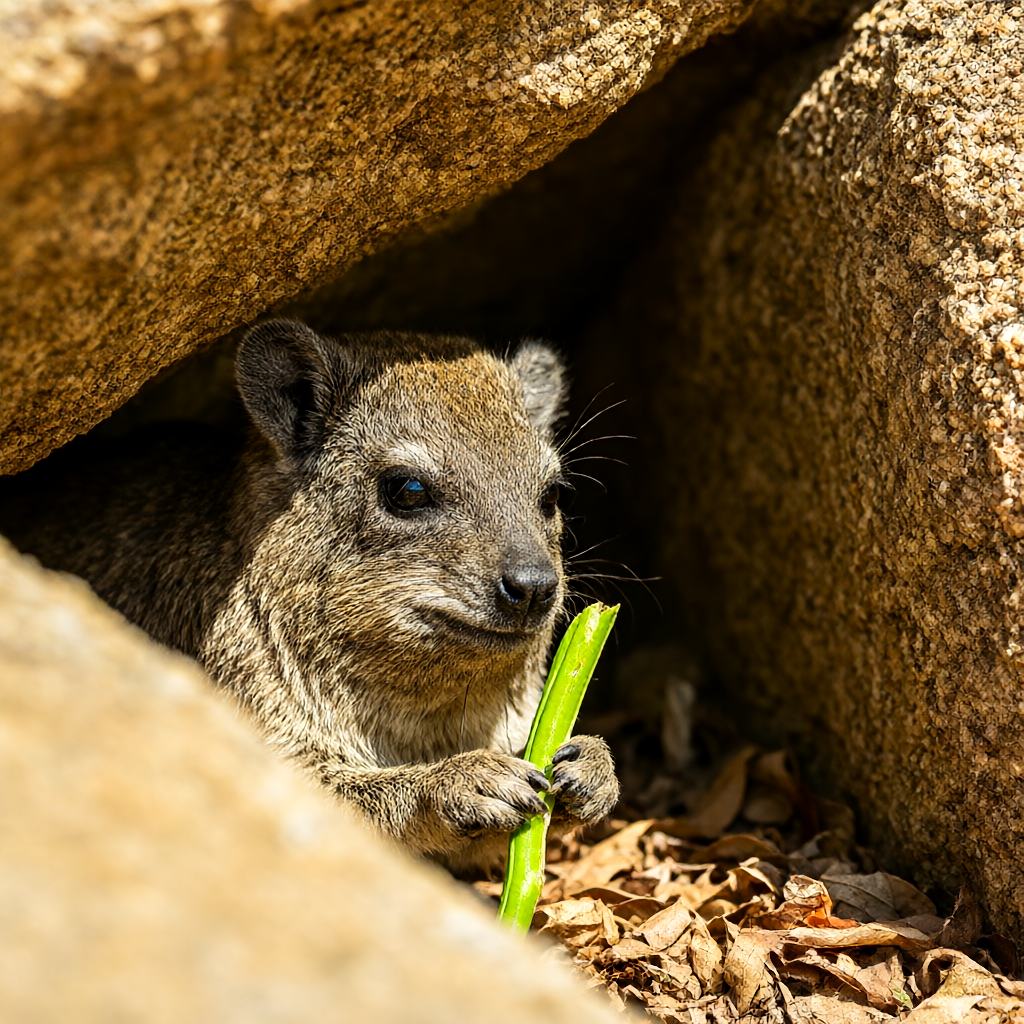
Leaves and seeds make up most of the food. Grass blades and small succulents fill out the rest. Because the animal lives on dry rock, it takes water from plants rather than from pools.
Feeding happens by day, mostly in the first hours of sun. A dassie rat may sit on the same ledge for an hour. It rarely descends to the ground.
One or two young
The breeding cycle
A female bears one or two young after a long pregnancy. Births come in the wet season, when the rock stays cooler. Newborns arrive covered and with eyes open.
Because the young stay near the nest for weeks, the mother keeps to one crevice. Males take no part in rearing. Growth is slow, and a female may breed only once a year.
Least Concern
Conservation
Red List status is Least Concern. Its range covers a wide stretch of rocky country. Because the animal lives where farming cannot follow, it holds on better than most rodents.
Collectors take a few for the pet trade. Drought matters, since plants on bare rock dry out fast.
Side by side
How It Compares
| Trait | Dassie Rat | Rock Hyrax |
|---|---|---|
| Family | Petromuridae | Procaviidae |
| Skull | flat, folds into cracks | blocky and deep |
| Tail | 15-20 cm, fringed | short stub |
| Diet | leaves and seeds | grasses and leaves |
| Shelter | natural rock cracks | crevices and ledges |
| Rating | Least Concern | Least Concern |
Common misreadings
What People Get Wrong
- Not a hyrax with a long tail. Rodent teeth settle it. Early collectors grouped the two by habitat alone, and the name survives even though the skull and the incisors place it among rodents.
- Not a burrower at any stage. Cracks do the work. The animal cannot dig, so it depends on rock that already splits and presses its flat skull through gaps a few centimetres wide.
- Not an animal of open ground. It stays above the floor. Most records come from ledges and boulders, and the species rarely descends even when food sits within easy reach below.
Going further
Sources and Further Reading
Quick hits
Five things to remember
- The flat skull lets the animal pass through a gap only a few centimetres wide.
- Its fur is longer and softer than that of almost any other African rodent.
- The tail carries a fringe of hair that works as a counterweight on a ledge.
- Early naturalists placed it near the rock hyrax, and the name has stuck ever since.
- It can sit motionless against rock for so long that a walker mistakes it for a stone.
[…] form a significant portion of its non-breeding diet, while during breeding it actively hunts rodents, hares, and small antelopes. Its most celebrated prey is snakes — including puff adders, cobras, […]