 By st20113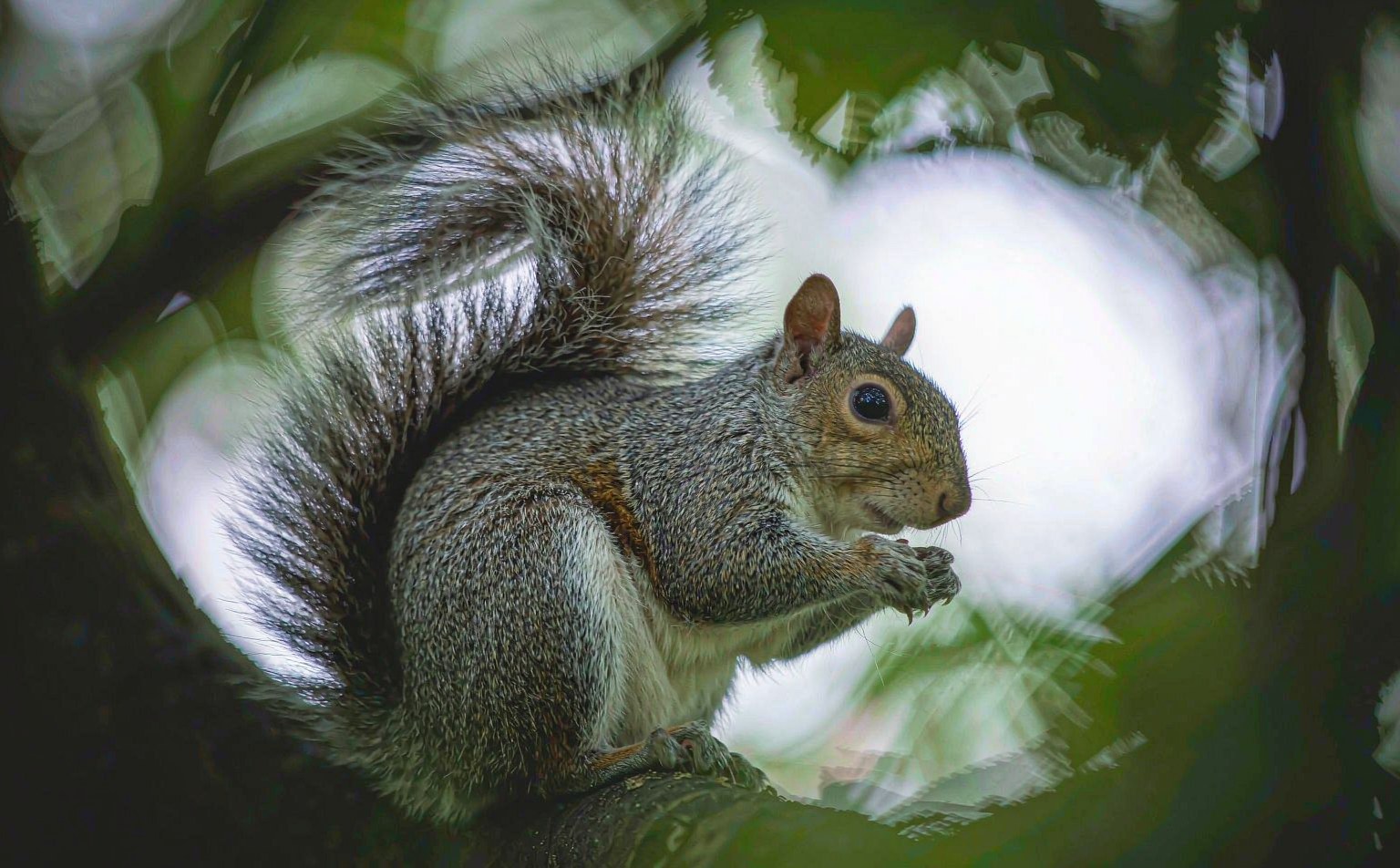
Sciurus carolinensis | Grey Squirrel
Introduction
The Grey Squirrel (Sciurus carolinensis) is a bushy-tailed rodent native to eastern North America that has become one of the most familiar mammals of parks and woodlands across Britain and parts of western Europe. Agile, diurnal and bold around people, it is a frequent visitor to garden feeders and a common sight racing along branches or foraging on lawns. Its success abroad, however, has come at a cost to native squirrel populations.
Introduced to Europe in the late nineteenth century, the Grey Squirrel has spread widely in lowland woodland and urban green space. It is an excellent climber and a skilful forager, caching nuts and seeds that it later relocates by smell, and its adaptability has made it a dominant component of many European woodland ecosystems.
Taxonomy
The Grey Squirrel was described by the French naturalist Georges Cuvier’s colleague Johann Christian Erxleben in 1777, within the genus Sciurus, which includes the tree squirrels. It is a member of the family Sciuridae, alongside chipmunks, marmots and flying squirrels. In Europe it is best known in comparison with the native red squirrel, which it has largely displaced in many regions.
In British woods it shares habitat with the Red Fox and the European Badger, and it is a prey item for the Eurasian Jay, which also competes with it for cached acorns.
Physical Characteristics
The Grey Squirrel is a medium-sized tree squirrel, 23 to 30 centimetres in body length with a tail almost as long again, and it weighs 400 to 700 grams. Its fur is predominantly grey on the back and pale on the belly, though individuals may show brownish or even black tones, especially in northern climates. The tail is long, broad and slightly flattened, used for balance and as a warm cover when resting.
The eyes are large and dark, the ears rounded without prominent tufts, and the limbs are strong with sharp claws for climbing. The front paws are dexterous, capable of manipulating nuts and seeds with a near-hand-like grip. Compared with the slimmer native red squirrel, the Grey Squirrel is larger, bulkier and lacks the red’s distinctive ear tufts and smaller size.
Habitat
Grey Squirrels thrive in deciduous and mixed woodland, especially where oaks, beeches and hickories provide mast crops, but they have also colonised urban parks, large gardens, cemeteries and university campuses. They need trees for nesting and travel, using leaf nests (dreys) or cavities in trunks, and they readily exploit the connected canopy of town avenues.
They are strictly diurnal and non-hibernating, remaining active through winter by relying on stored food and sheltered nests. In Europe their range is limited by cold continental climates and by the presence of the more cold-tolerant native red squirrel in conifer-dominated north and upland areas.
Diet
The Grey Squirrel is an omnivorous forager with a strongly plant-based diet. Nuts and seeds, particularly acorns, hazelnuts, beech mast and walnuts, form the staple, supplemented by buds, flowers, bark, fungi, fruits and roots. It is also known to take birds’ eggs and nestlings, young shoots and, occasionally, insects and fungi.
A defining behaviour is scatter-hoarding: the squirrel buries individual nuts across a wide area and later recovers them using spatial memory and smell. This caching spreads tree seeds and can influence woodland regeneration, though the squirrel often fails to retrieve a proportion of its stores, unintentionally planting them.
Reproduction
Grey Squirrels may breed twice a year, in late winter and again in midsummer, though the second litter is less reliable in poor mast years. After a gestation of about 44 days, the female gives birth to a litter of typically two to four blind, hairless young in a leafy drey or tree cavity. She alone cares for them, and they open their eyes at about four weeks.
The juvenile squirrels are weaned at seven to ten weeks and become independent soon after, though they may remain near the mother for a short time. Sexual maturity is reached at about a year. High mortality in the first year is common, but adults can live several years in the wild and longer where food is abundant and predation low.
Conservation
In its native North America the Grey Squirrel is abundant and secure. In Europe it is likewise numerous, but it is listed among invasive alien species of concern because it has displaced the native red squirrel across much of Britain and Ireland through competition and disease carriage. Management in some regions aims to control Grey Squirrel numbers to protect red squirrel strongholds.
For the species itself, the main threats are road traffic, predation by domestic cats and dogs, and control programmes. Its future in Europe is secure in terms of numbers, though it remains the focus of active wildlife-management debate wherever native red squirrels persist.
Fun Facts
- A Grey Squirrel can rotate its hind feet backward to climb down trees headfirst.
- It plants trees unintentionally by forgetting where it buried some of its nuts.
- The broad tail acts as a parachute, a balance pole and a blanket in cold weather.
- Grey Squirrels communicate with tail flicks and chirps to warn of approaching danger.
- Some individuals in cold regions turn almost entirely black, a useful trait for retaining heat.