 By st20113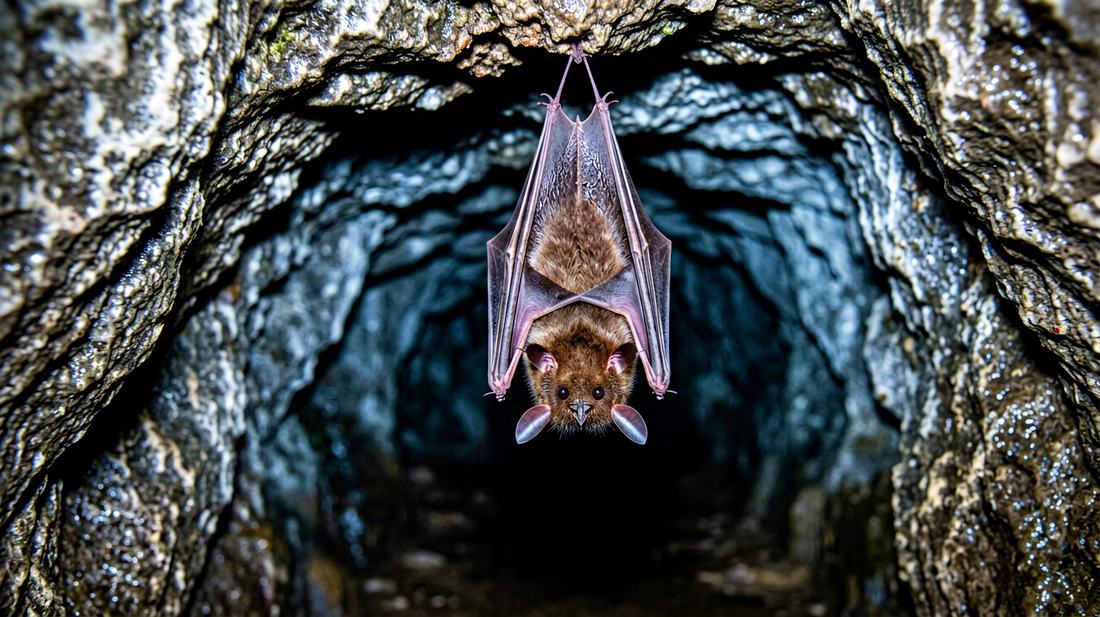
Rhinolophus hipposideros | Lesser Horseshoe Bat
Species Profile · Rhinolophidae
Lesser Horseshoe Bat
A tiny horseshoe bat that hangs wrapped in its wings, hunts moths by echo in near darkness and raises a single pup weighing about one and a half grams.
IUCN: Least Concern
Range
Body
Weight
Call
Winter roost
The bat that wraps itself up
The lesser horseshoe bat
The lesser horseshoe bat is one of Europe’s smallest bats. It is also one of the easiest to spot. A horseshoe-shaped flap of skin rings its nostrils. This flap gives the whole bat family its name. It works like a lens. It focuses the bat’s high calls into a tight beam. This lets the bat pluck insects off leaves with precision.
The bat weighs only 5 to 9 g. That is less than a two-pence coin. It hunts among thick leaves rather than open sky. It flutters slowly between branches. It catches moths, midges and small flies. It finds them by hearing their faint echoes. By day it hangs in a dark cave, cellar, mine or warm roof.
It wraps itself in its wings. In winter it sleeps in such places too. It often returns to the same spot year after year. Its numbers crashed across western Europe in the mid 1900s. Some groups have since recovered. The species is still rare and strictly protected over much of its range.
Family tree
A horseshoe bat at the western edge
The lesser horseshoe bat is in the order Chiroptera. It belongs to the family Rhinolophidae and the genus Rhinolophus. That genus holds about eighty species. They live in Europe, Africa, Asia and Australia. Its closest western European relative is the Greater Horseshoe Bat. That bat is roughly twice its size.
It shares the same nose-leaf shape. It also hangs free in caves instead of squeezing into cracks. It uses the same long, steady echo calls. The two often share the same caves. The greater horseshoe takes the warm, deep parts. The lesser takes the cooler passages near the entrance.
Horseshoe bats are the whispering bats of the Old World. They send calls through the nose, not the mouth. The calls are so fine-tuned that the bats must correct for the Doppler shift of their own echoes. The species was described in 1816. Its name joins Greek words for nose and horseshoe with a term meaning lesser. This points to its small size next to its bigger cousin.
Nose leaf and small size
How to identify one
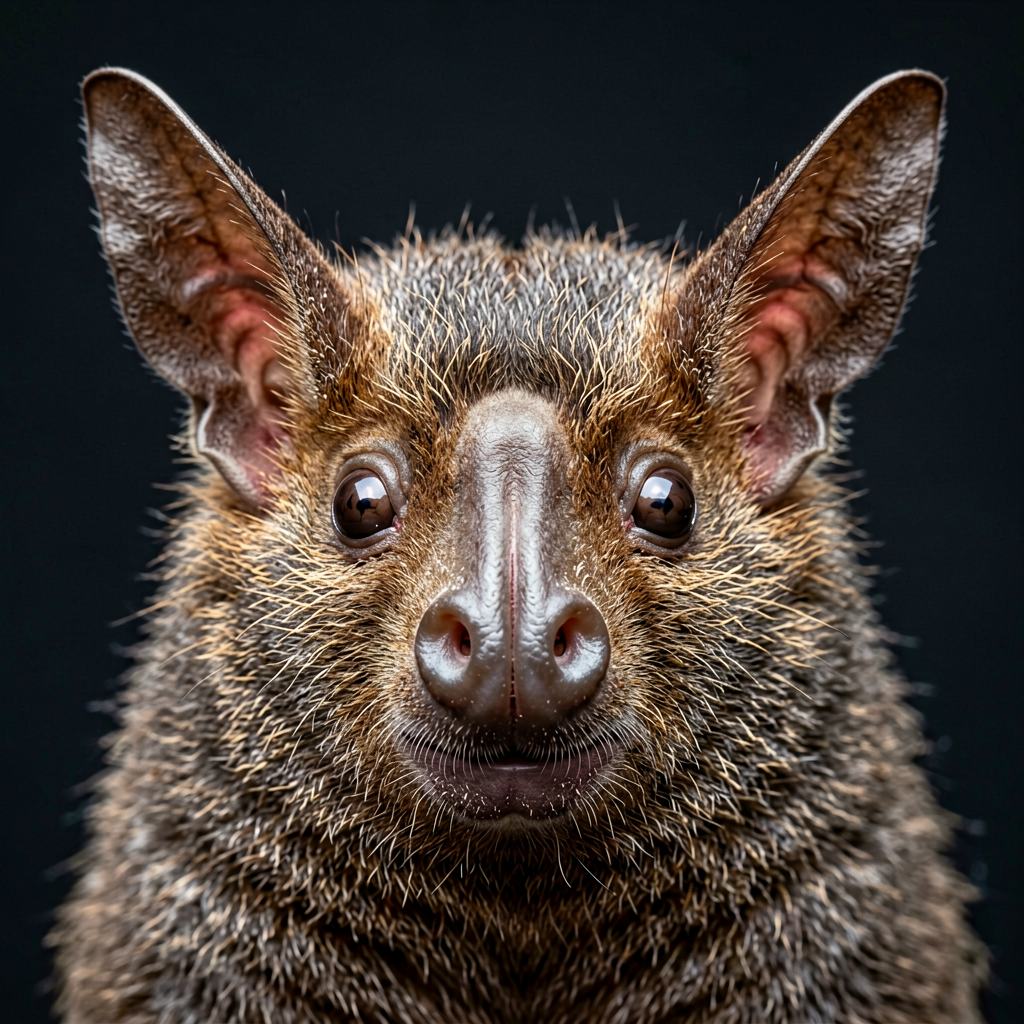
An adult lesser horseshoe bat is 35 to 45 mm long. Its forearm is 35 to 43 mm. Its wingspan is about 192 to 254 mm. It weighs 5 to 9 g. The fur is soft and grey-brown on the back. It is paler underneath. The wings and tail skin are dark grey-brown. They are thin enough to see through in flight. The nose leaf is its most striking part.
It is a horseshoe flap around the nostrils. Above it sits a small saddle-like ridge. A pointed crest rises above that. The whole piece moves as the bat shapes its echo beam. The ears are large, broad and pointed. They have no tragus. They stand up and apart rather than fold back. The eyes are small. This fits a bat that trusts sound over sight.
Its echo calls are long and steady in pitch. They run at 108 to 114 kHz. That is well above human hearing. The bat changes their length and pitch during a hunt. The wings are broad and round. Flight is slow and fluttering for a bat. It is ideal for weaving among leaves. Females are a bit larger than males. Young bats show unfused joints in the wing bones.
1
2
3
Roofs, cellars and caves
Where it roosts
The lesser horseshoe bat lives in western, central and southern Europe. Its range runs from Ireland and Iberia east to the Caucasus and the Middle East. It is also found in North Africa. It likes warm, sheltered places. In Britain and Ireland it stays in the western counties. There mild winters and old stone buildings are common. It needs three things. It needs good roosts.
It needs feeding ground within a few km of those roosts. It needs cold, damp sites to sleep through winter. Summer roosts are almost always buildings. They are roof spaces of old houses, churches, barns and stables. The bats need a warm, quiet space. It must open through a gap in the eaves. Maternity groups form in the warmest roof corners. They often sit above a chimney or a south wall.
In winter they sleep in caves, mines, tunnels and cellars. The air there stays between 4 and 10 °C and stays damp. They feed in mixed woodland and tree-lined lanes. They use pasture with old hedges and waterside plants. They travel along hedgerows and streams. They seldom fly more than two or three km from the roost. They avoid open farmland. This makes them weak to the loss of hedgerows.
What it eats
Hunting moths in the dark
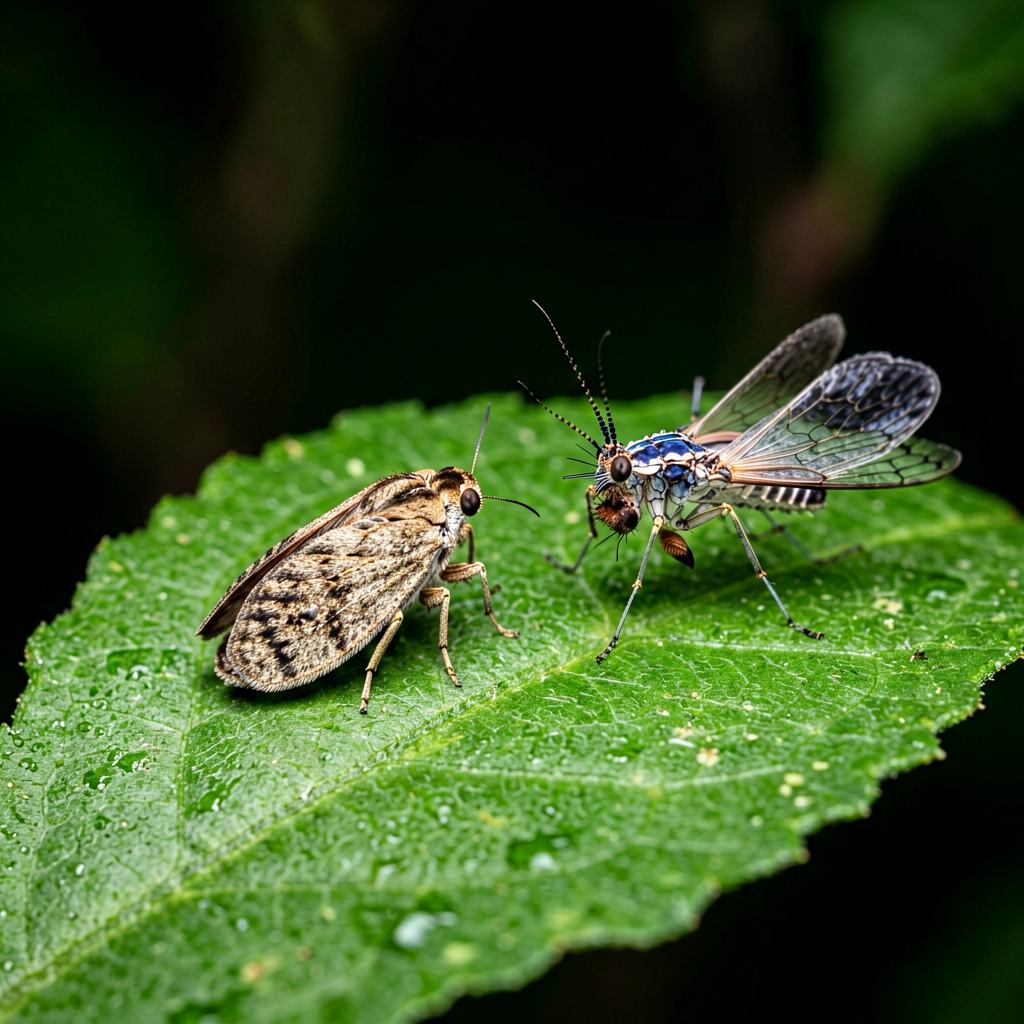
The lesser horseshoe bat lives on insects. It takes prey right off the leaves. It will even lift an insect from a leaf. This is called gleaning. Moths, midges, small flies, caddisflies and lacewings fill most of its diet. So do the smaller beetles. It also eats spiders taken from their webs or leaves.
It hunts in crowded space. It must pick a moving insect from the echo of leaves and branches. Its high calls are sharp enough to catch a fluttering wing. It usually hunts within a few metres of the ground. It follows hedges, wood edges and streams. It catches prey in short darts rather than long fast flights. The bat leaves the roost late, after dark.
It returns several times in the night to rest and digest. Droppings pile up under its feeding posts. This helps surveyors confirm a roost. The bat is eaten by tawny owls, barn owls and house cats. It is most at risk when it leaves the roost at dusk.
One pup a year
A slow life cycle
Lesser horseshoe bats mate in autumn. This often happens at the mouths of winter caves. Females store the sperm through winter. They are fertilised after they wake in spring. In late spring the pregnant females gather in nursery groups. A single roof can hold twenty to over a hundred bats. One pup is born, usually in June or July. It weighs about 1.5 g.
It is left in a tight cluster with other pups. The mothers go out to hunt. They return several times a night to feed their young. The group picks the warmest roof spot. Newborns cannot hold their own heat for the first days. The pup starts to fly at about three weeks. It is independent a few weeks later. It may not breed until it is two or three years old.
These bats live long for their size. Some have passed twenty years. One ringed bat reached thirty. Adults sleep from October or November to March or April. They wake now and then in mild weather. They lose much of their body weight over the winter.
Lost roosts, lost bats
Why numbers fell after 1950
The lesser horseshoe bat is not at risk worldwide. It is Least Concern overall. It is rare and shrinking in the north of its range. It is protected by law across Europe. Its worst losses came in the 1950s and 1960s. Organochlorine sprays were used on farms. They were also used on roof timbers. The chemicals built up in the bats and killed whole colonies.
Since the sprays were banned, some groups have held or grown. Careful roost care has helped in Britain, France and Ireland. The main threats now are lost roosts. Renovation, new roofs and wall insulation cause this. So does the change of old barns and churches. Lost hedgerows and old pasture hurt too. So does the drop in insect numbers. Cavers and visitors disturb the winter sleep.
Bright lights near roosts delay their exit. They break the dark paths the bats use. Wind turbines have killed some horseshoe bats. A single roof can hold a whole regional population. Surveys are required before most renovation. Fake roosts are sometimes built into new or fixed buildings.
Quick hits
Five things to remember
- The horseshoe-shaped fold of skin around its nose focuses its ultrasonic calls into a narrow beam.
- It is one of the smallest bats in Europe, weighing only five to nine grams.
- Its echolocation call is tuned to about 108 to 114 kilohertz, far above the limit of human hearing.
- It can pick a moth or spider straight off a leaf instead of catching it in mid-air.
- One ringed individual lived for thirty years, an exceptional age for such a tiny mammal.