 By st20113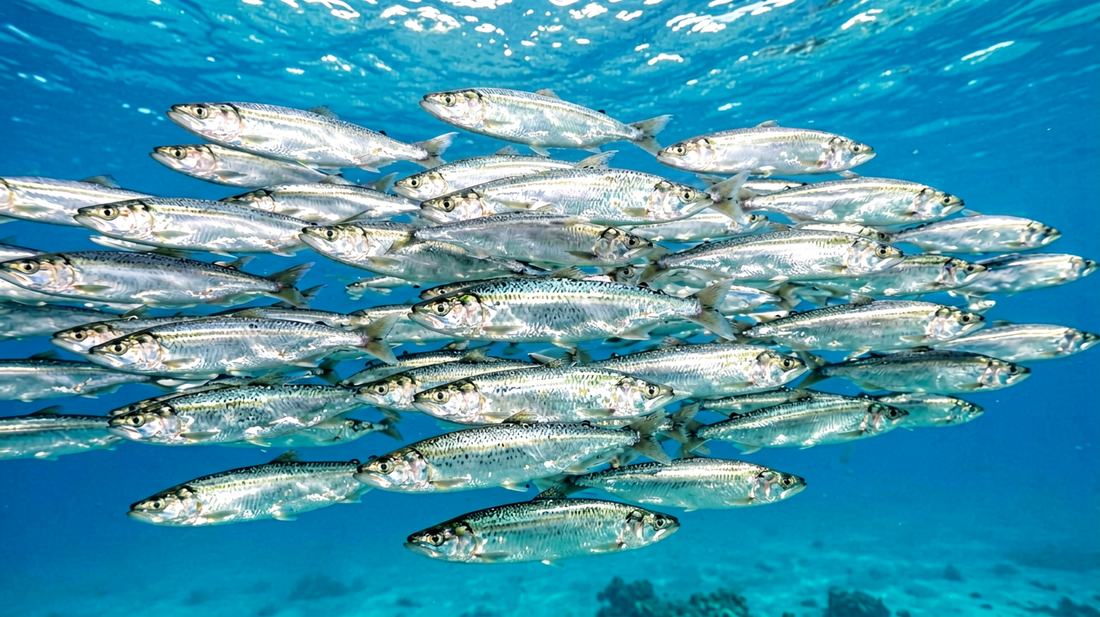
Clupea harengus | Atlantic Herring
Species Profile · Clupeidae
Atlantic Herring
A silver shoaling fish of the cold North Atlantic that feeds cod, whales and seabirds, and has been caught by people for at least a thousand years.
IUCN: Least Concern
Range
Length
Weight
Depth
Spawn bed
The fish that feeds the ocean
The Atlantic herring
The Atlantic herring is a small silver fish of the cold North Atlantic. It swims in shoals that can hold millions of fish. Those shoals move up and down in the water and along the coast. They follow light and food. Herring matter to far more than the fishery.
They feed cod, whales, dolphins, seals and seabirds. People have caught them for at least 1,000 years. The fish is short-lived and very productive. It spawns in huge numbers on gravel beds. It grows fast on a diet of plankton.
Its populations are split into many separate stocks. Each stock has its own spawning ground and season. That structure makes the species resilient in some ways and vulnerable in others.
Family tree
One of two species of Clupea
The Atlantic herring is in the family Clupeidae, the herrings and sprats. The family sits in the order Clupeiformes with the anchovies. It is one of the two species of the genus Clupea. The other is the Pacific herring. The two are closely related. Geography and small differences in the bones and scales separate them. A Swedish naturalist described the species in 1758.
A sharp keel of enlarged scales runs along its belly. Sprats and the young of other fish look similar. The keel is one way to tell them apart. One close relative of the same order lives in the same water. That is the Atlantic Cod. It belongs to a different family. It is much larger.
It spawns on many of the same grounds. It also feeds heavily on herring at some times of year. The link between the two is one of the best-known predator-prey pairs in the North Atlantic. Cod numbers affect the survival of young herring. Herring numbers affect the condition of cod.
Keel, fin and silver sides
How to identify one
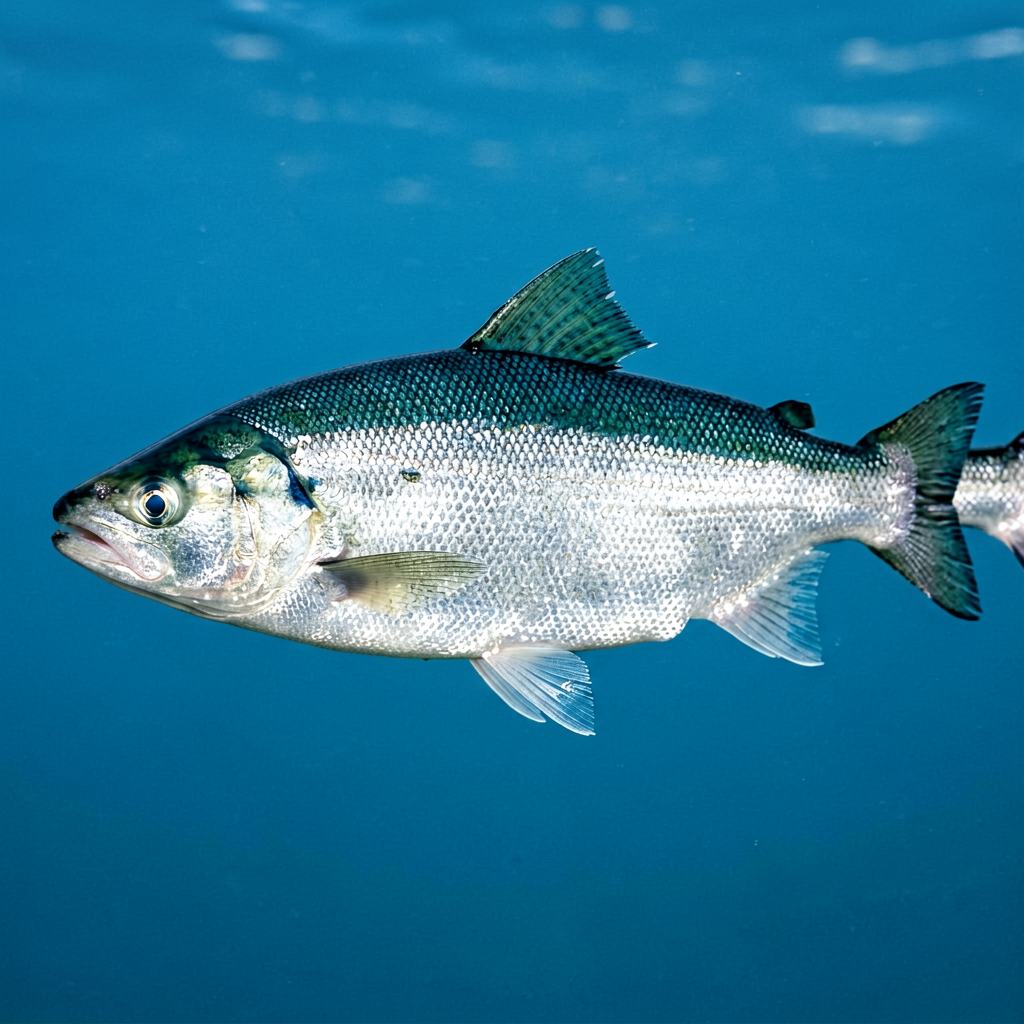
An adult herring is usually 20 to 40 cm long. Large fish reach about 45 cm. It weighs about 100 to 500 grams. Growth varies a lot between stocks and years. Water temperature and plankton supply drive it. The body is slender and strongly flattened from side to side. A single short dorsal fin sits midway along the back. The tail is forked. The colour gives the fish its name.
The back is deep blue-green. The flanks shade through silver. The belly is almost white. A predator looking down sees dark water. One looking up sees light. So the fish is hard to see from either side. Its scales are large and loosely attached. They fall off very easily. A landed herring is usually partly bare.
The belly carries a row of sharp pointed scales. They form a keel from the throat to the vent. The fish has no true lateral line. Instead its head and body carry canals and pits that sense water movement. Its hearing is also very good. A link between the swim bladder and the inner ear carries sound. So a shoal reacts to predators from a long way off. Herring have no spines and no heavy armour. Their defence is numbers and speed.
1
2
3
Cold shelf water
Where shoals move
The Atlantic herring lives throughout the North Atlantic. It ranges from the Gulf of Maine and the Gulf of St Lawrence in the west. In the north-east it reaches Iceland, Norway and the Barents Sea. It runs south along Europe and North Africa to the Bay of Biscay. Baltic stocks live in low-salinity water. Those fish are smaller and grow more slowly. The species lives mostly in the top 200 metres.
It favours shelf waters, banks, coastal seas and deep fjords. It is largely absent from the deep open ocean, the tropics and the Arctic basin. Its movements are complex. Young fish stay in coastal nurseries for a year or two. Adults of many stocks migrate between feeding areas and spawning grounds. On the Norwegian coast the fish move far north to feed. Then they return south to spawn.
Light matters a great deal. Herring feed near the surface at night and sink by day. So the position of a shoal can be predicted. Temperature, light and time of day all play a part. That knowledge is exactly what the fishery has always used. The species sits at the centre of the northern food web. It turns plankton into food for larger animals.
What it eats
Straining plankton
Herring are plankton feeders. They swim with the mouth open. The gill rakers work as a sieve. Small animals and plants are strained out of the water. Copepods are the main prey. These small crustaceans dominate northern zooplankton. Krill, amphipods and mysids are eaten too. So are the larvae of other crustaceans and small fish.
At some times of year the fish take the winged stages of sea insects. They also take the eggs and larvae of other fish. Feeding happens mostly at night near the surface. By day the fish return to deeper water. So the species links the surface plankton community with the deep layers. This daily journey is one of the great rhythms of the North Atlantic. Bigger herring eat bigger prey. They even take the young of their own species.
The spacing of the gill rakers limits what they can take. The rakers become finer as the fish grows. Plankton supply drives growth, condition and oil content. A herring feeding hard in late summer can be more than 20 per cent oil by weight. It carries that store into winter and into the spawning season. That is what made it so valuable to predators and to people.
Sticky eggs on gravel
Spawning in vast gatherings
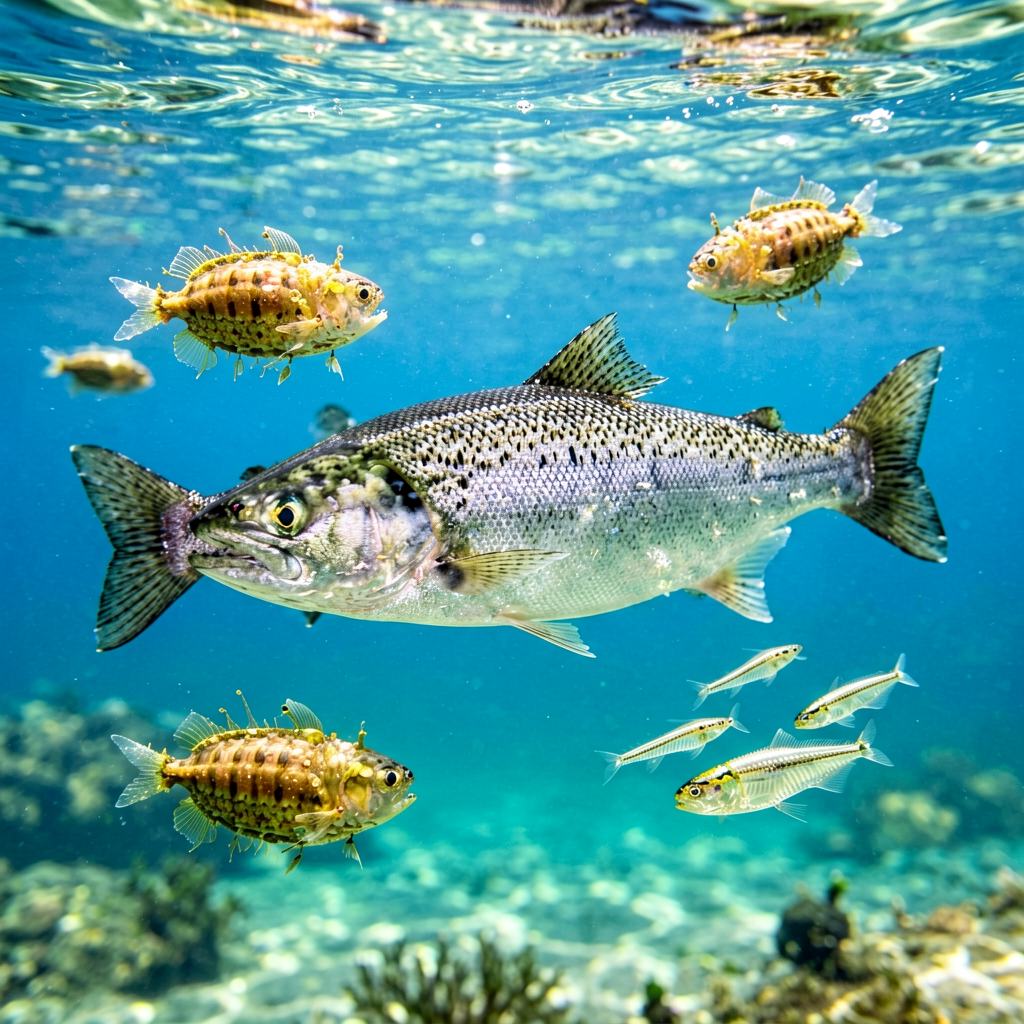
Herring spawn in vast gatherings on gravel and shell beds. The depth is usually 5 to 50 metres. The ground matters. The eggs are heavy and sticky. They must stick to a surface. They must not be smothered by mud. Each stock spawns at its own time and place. Spawning seasons run from spring in some areas to winter in others. That spreads the risk and keeps stocks partly separate.
A female releases 20,000 to 50,000 eggs in batches over several days. Males release sperm at the same time. The water above the bed turns cloudy with milt. The eggs sink and stick to stones and shells. They form layers that can be several eggs deep. The eggs hatch after 2 to 3 weeks depending on temperature. The larvae are 5 to 7 mm long. They are blind at first and live on a yolk sac. Then they feed on small plankton and drift with the currents.
Many reach coastal nurseries and estuaries. Growth in the first year is fast. Young fish may reach 10 to 15 cm before winter. They mature at 3 to 5 years, at 20 to 25 cm long. Some live 15 years or more. Few survive that long in heavily fished stocks. Dense egg patches make spawning grounds very vulnerable. Gravel removal and fine sediment can destroy them.
A fish of dwindling stocks
Collapse and recovery
The Atlantic herring is Least Concern worldwide. Its total population is very large and its range is wide. But individual stocks have collapsed and recovered before. The species is really a group of separate populations. Some of them are in trouble. The North Sea stock was one of the largest. It was fished to commercial collapse in the 1960s and 1970s. Catches fell from hundreds of thousands of tonnes to a fraction of that.
The stock recovered after the fishery closed in the late 1970s. That recovery is a classic case study in fisheries management. Recruitment still fails in some years. Poor plankton conditions cause some failures. Fishing pressure on spawning fish causes others. A warming sea is changing where the stocks live. Quotas are now agreed between neighbouring countries. Several disputes over shares of the stock have taken place.
Beyond fishing, the main concern is the warming of the sea. It is shifting the southern edge of the range northwards. It is also changing the timing of spawning and migration. Bottom-contact activities disturb spawning grounds. Herring are also sensitive to underwater noise. Seismic surveys and pile driving can disrupt shoals. Many species depend on herring for food. So a decline matters far beyond the fish itself.
Quick hits
Five things to remember
- Herring shoals can hold many millions of fish and are among the largest gatherings of animals on Earth.
- One female releases 20,000 to 50,000 eggs and sticks them to gravel and stones on the seabed.
- A well-fed herring can be more than 20 per cent oil by weight, which is why whales, seabirds and cod depend on it.
- The fish feed at night near the surface and sink to deeper water by day.
- The North Sea stock collapsed in the 1960s and 1970s and recovered after the fishery closed in the late 1970s.
[…] Britain the word sprat is also used loosely for any small fish. The sprat is closely related to the Atlantic herring, the larger and better known member of the same family. The two share their range, their schooling […]
[…] the numbers of the birds and the larger fish. The European sardine shares the family with the atlantic herring. That is a larger and darker fish of the cold northern waters. The two are told apart by the colour […]