 By st20113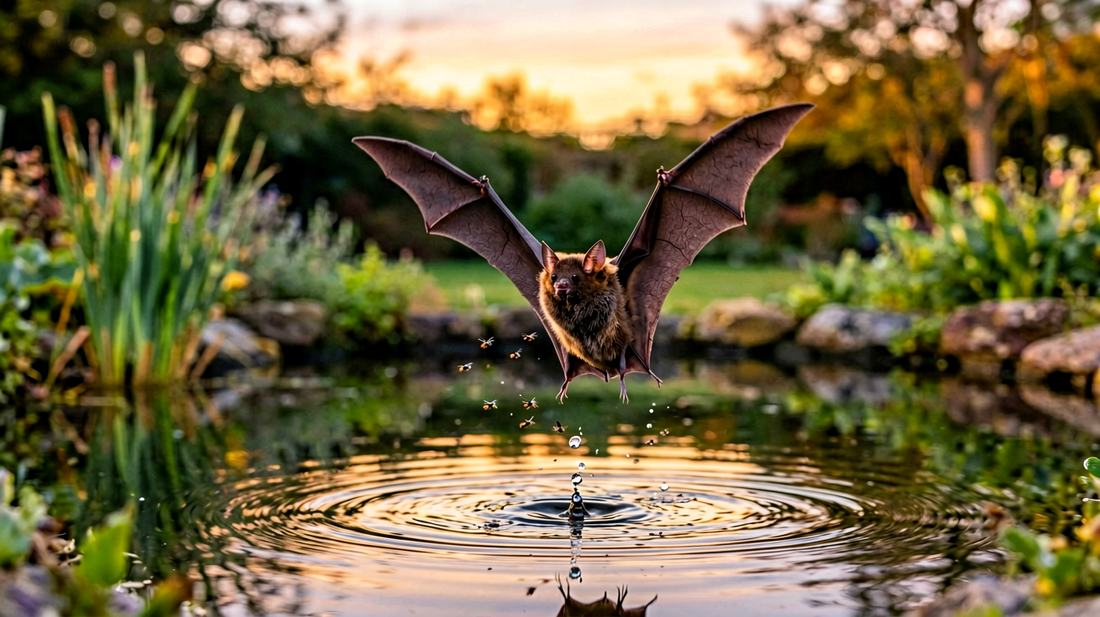
Pipistrellus pipistrellus | Common Pipistrelle
Species Profile · Vespertilionidae
Common Pipistrelle
Europe’s commonest bat: a three-gram flier that catches thousands of midges a night and squeezes into crevices no wider than a thumb.
IUCN: Least Concern
Range
Weight
Wingspan
Call
Young
The bat over the lamp
The common pipistrelle
The common pipistrelle is one of Europe’s smallest bats. It is by far the most often seen. It weighs just two or three grams. At dusk it flutters around street lamps and garden trees. It flits as if the air held invisible obstacles. It emerges early, often before full dark.
It hunts tiny flying insects at a huge rate. A single bat can take thousands of midges in a night. It takes mosquitoes and small moths too. It finds them by shouting and listening for echoes. Its calls are far too high for the human ear. By day it roosts in cracks in buildings and trees.
It squeezes into gaps no wider than a thumb. In winter it hibernates in similar hiding places. It wakes now and then in mild weather. It looks almost identical to two close relatives. Only in the 1990s did scientists split it. Two bats once called by one name are separate species.
Family tree
Kin of the horseshoe bats
The common pipistrelle belongs to the order Chiroptera. It is in the family Vespertilionidae. It is in the genus Pipistrellus. These small bats live across Europe, Asia, Africa and North America. Its best-known larger European relative is the Greater Horseshoe Bat. That bat is far bigger. It has a strange, leaf-like nose. The nose focuses its echo calls. It hangs freely in caves and roof spaces.
It does not squeeze into narrow cracks. The two bats show two great bat strategies. Horseshoe bats are whisper hunters. They spot fluttering prey against cluttered backgrounds. Pipistrelles are fast, open-air hunters. Their calls span a broad pitch range. For most of the 20th century naturalists knew one pipistrelle. In the 1990s call studies split the bats in two. One group called at about 45 kilohertz.
The other called at about 55 kilohertz. Genetic work confirmed two species. They are the common and the soprano pipistrelle. A third, Nathusius’ pipistrelle, is larger and mostly a migrant. The genus Pipistrellus holds about 35 species worldwide. Its members are small with simple noses. Their calls fall in the 40 to 60 kilohertz range.
Three grams of fur and wing
How to identify one
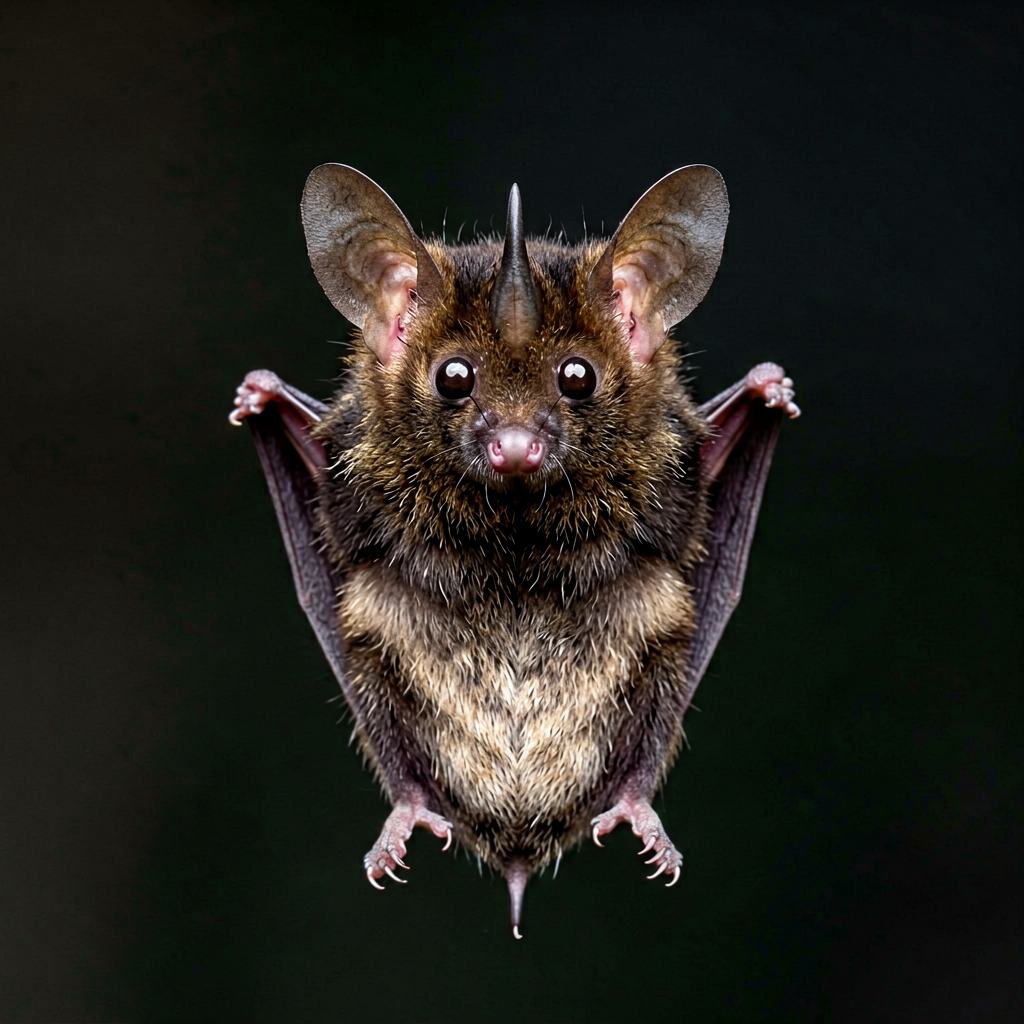
The common pipistrelle is 35 to 45 millimetres long. Its forearm is 28 to 33 millimetres. Its wingspan is 18 to 25 centimetres. It weighs only three to eight grams. That is about the weight of a two-pence coin. The fur is dark brown on the back. The belly is slightly paler. A few bats show a paler, ginger tinge. The face is short and blunt.
The ears are small, rounded and dark. A short, straight tragus sits inside each ear. The wing skins are dark brown. They are so thin that light passes through. The tail lies fully inside a skin. That skin stretches between the hind legs. The eyes are small, as in most bats that hunt by echo. The bat can still see in dim light. Its calls change pitch as they travel.
They sweep from about 70 kilohertz down to 40. Peak energy is at 45 to 47 kilohertz. The calls are so loud they would hurt a human ear. The wings are narrow. Flight is fast, fluttery and nimble. The bat can turn within a few centimetres. Females are slightly larger than males. Young bats show unfused wing joints until their first winter.
1
2
3
Roofs, trees and gardens
Where it lives
The common pipistrelle lives throughout Europe. It ranges from Ireland and Iberia east across Russia. It reaches into parts of Asia. It is the most widespread bat in Britain and Ireland. It is strongly tied to people and water. It forages at woodland edges and tree lines. Hedgerows, rivers and canals attract it. So do lakeshores and lit gardens.
It likes sheltered, complex edges where insects gather. It hunts from just above head height to about fifteen metres. Roosts are almost always in cracks. They may be in buildings or trees. In buildings it uses gaps behind tiles. It uses wall cavities and window frames. It uses soffits and unused roof spaces. Mother colonies return to the same building yearly.
In trees it uses rot holes and cracks. Lifted bark and old woodpecker holes serve too. Winter sites are similar. They include hollow trees and, rarely, caves and tunnels. Bats stay faithful to roost and hunting ground. A single animal may fly two to five kilometres nightly.
What it eats
Three thousand insects a night
The common pipistrelle eats almost only small flying insects. It favours the swarms over water and trees at dusk. Midges and mosquitoes fill most of the catch. So do small mayflies, caddisflies and lacewings. Small moths are taken too. Aphids, small beetles and flying ants add variety. The ants fly on their nuptial days.
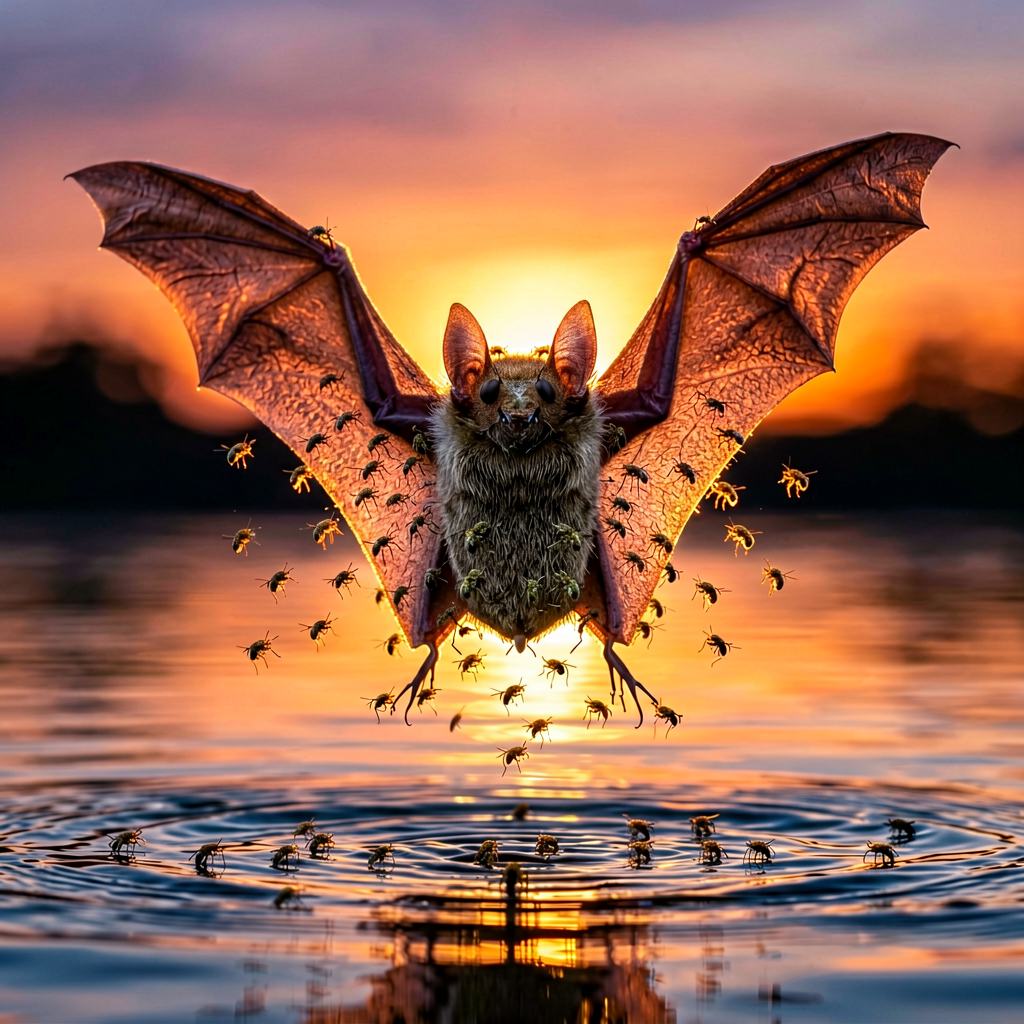
Dropping studies show one bat eats about 3,000 insects nightly. A colony of a hundred mothers removes hundreds of thousands weekly. The bat hunts on the wing. It catches prey in its mouth. It may scoop prey with the tail skin. It passes the catch to its mouth in flight. It hunts where insects swarm.
Street lamps, cattle ponds and hedges draw it. It will fly in light rain. Its loud calls bounce back from ground and leaves. It copes by listening only between calls. Pipistrelles are eaten by tawny and barn owls. Sparrowhawks and cats take them too. They are weak when leaving the roost at dusk.
Songs and maternity roosts
Breeding and hibernation
Common pipistrelles mate in autumn. The males put on a clear show. A male posts himself in a crack, often on a building. He sings a rapid run of social calls at the entrance. He may sing for hours to draw females. Several males may gather nearby. They form a loose display. Females visit before they choose. Mating happens in autumn.
The egg is fertilised in spring. The female stores sperm through winter. She ovulates when she wakes from her winter sleep. In late spring the females form mother colonies. These hold twenty-five to over a hundred bats. They use a warm roof space or tiles. The males roost apart in smaller groups. A single pup is born in June or July. Twins are rare.
The pup weighs less than a gram at birth. The mother leaves it while she forages. She returns several times a night to suckle. The colony often leaves the young together in a creche. The pup flies at about three or four weeks. It is soon on its own. Pipistrelles can live past fifteen years. Most die in their first winter.
Protected by law
Why bats need licences
The common pipistrelle is Least Concern worldwide. In Britain it is the most common bat. Its numbers fell sharply in the 20th century. It remains protected by law across Europe. It is listed in the European bats treaty. In Britain and Ireland wildlife law protects it. It is illegal to disturb, injure or kill a bat. It is illegal to damage a roost without a licence.
The main threats are several. Roost sites are lost when buildings are fixed up. Repointing and new foam seal the gaps. Insect numbers fall from pesticides and heavy farming. Hedgerows and woodland edges are lost as travel routes. Man-made light is a mixed blessing. It draws insects and aids feeding. It also delays emergence and breaks dark routes.
Wind turbines kill many bats on migration. They kill during swarming at winter sleep sites. Cats take a steady toll at dusk. Colonies depend on certain buildings. Surveys are needed before building work. New houses now include man-made roosts.
Quick hits
Five things to remember
- A common pipistrelle weighs only three to eight grams, about as much as a two-pence coin.
- It was only named a separate species from the soprano pipistrelle in the 1990s, when their echolocation calls differed.
- One bat can eat around three thousand small insects in a single night.
- Its call peaks at about 45 kilohertz, far above the range of human hearing.
- Males sing from roost entrances in autumn to attract females, sometimes for hours at a time.