 By st20113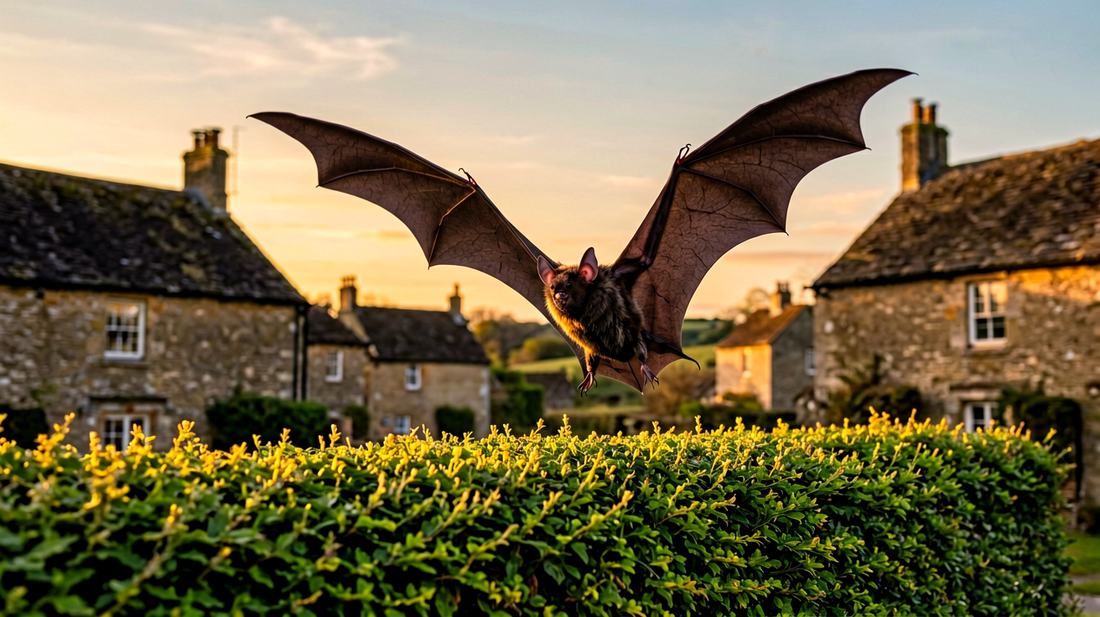
Eptesicus serotinus | Serotine Bat
Species Profile · Vespertilionidae
Serotine Bat
One of the biggest bats in Europe, and one of the few that roosts in roofs, wall gaps and working buildings rather than in caves or old trees.
IUCN: Least Concern
Range
Length
Weight
Roost
Nursery group
The bat in the roof
Europe’s building bat
The serotine is one of the biggest bats in Europe. It is also one of the few that lives in buildings. It roosts in roofs, wall gaps and the space under tiles. It does this almost everywhere it is found. So it has become a close neighbour of people. It comes out late in the evening.
By then the smaller bats have been flying for half an hour. It flies slowly and flaps deeply. It does not flicker about like a pipistrelle. It is large and it flies low. It follows hedges, tree lines and field edges. It hunts over grazed grassland, where dung beetles are common.
That makes it easier to see than most bats. Yet we still know little about it. Its nursery groups are small and hidden inside working buildings. That makes counting them very hard.
Family tree
Eptesicus, the late flier
The serotine is in the family Vespertilionidae. This is the largest bat family in Europe. It is also the largest in the world. It holds more than 400 species. They live on every continent except Antarctica. The serotine sits in the genus Eptesicus. That genus holds about 24 species. They live in temperate and warm parts of both hemispheres.
Its genus name comes from Greek words for upon and to fly. That refers to its habit of hunting near buildings. Its species name serotinus is Latin for late. It was given because the bat comes out so late. The greater horseshoe bat is another large European insect eater. It hunts beetles and moths in the same places. Comparing the two shows two different designs. The horseshoe bat has a nose leaf.
It focuses a constant call. The serotine has a plain muzzle. It uses short, broad sweeps of sound. These work better among trees and bushes. The genus has been hard to sort out. Some forms have been split and then joined again. Modern genetic work shows several hidden species. Their borders do not match the old names.
Fur, wings and late flights
How to identify one
An adult serotine is 62 to 82 mm long. Its forearm is 48 to 58 mm. It weighs 15 to 35 grams. The weight changes with the season. In spring it is about 15 grams. By autumn it can reach 35. That fat lasts through the winter. This makes it one of the heaviest bats in Europe. Only the noctule is clearly bigger.
Its wings are broad and short. The tip is rounded, not pointed. That gives it a heavy, powerful flight. It cannot cruise fast like narrow-winged bats. But it can turn well at slow speed. Its fur is long, dense and silky. Each hair is dark at the base and pale grey-brown at the tip. This gives the coat two tones. The fur also covers the top of the tail membrane.
That is useful when you examine one. Its ears are long and broad. They are separate at the base. Barbastelle ears are joined instead. The tragus is long and gently curved. The face is broad and the muzzle heavy. Adult males have swollen glands on the snout. The eyes are small but useful.

1
2
3
Roofs, barns and churches
Where it lives
The serotine lives across most of Europe. Its range runs from Spain and France to about the 55th parallel. North of that it is scarce. Its range goes on through the Balkans and Turkey. It reaches the Caucasus, Iran and Central Asia. It gets as far as Mongolia and Korea. Another group lives in North Africa. Across this huge area it prefers lowland country. It needs open hunting ground and places to roost.
It is commoner in farmland than in forest. It is also rare in mountains. The short northern summer holds it back. So does the lack of large dung beetles. It roosts mostly in buildings. It uses church roofs, barns and houses. It also uses the space under slates. It uses gaps behind hanging tiles and inside cavity walls. Some roost behind old window shutters.
Nursery groups hold 10 to 50 females. A good roof can hold many more. Only a few roost in trees. When they do, it is in holes in old oaks. Winter sites are poorly known. They are mostly in the same buildings. Cellars and rock cracks are also used. Caves and mines are rare choices.
Big beetles after dark
What it eats
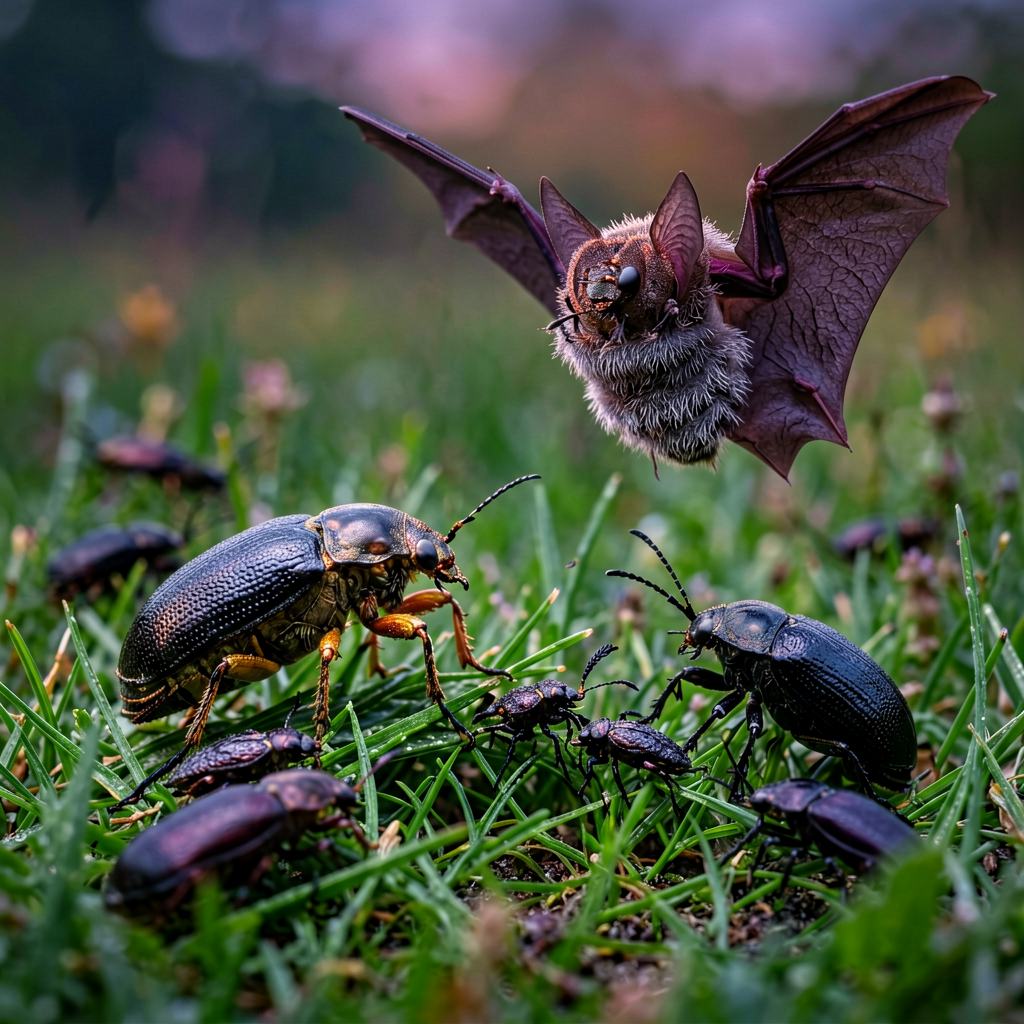
The serotine hunts large flying insects. Beetles dominate its diet. Most smaller European bats eat flies and caddisflies instead. Chafers of the genus Melolontha and Amphimallon are important. So are dung beetles of the genus Aphodius and Geotrupes. Ground beetles and click beetles are eaten too. These beetles fly at dusk on warm evenings. That is when the serotine is most active. It also takes moths, crane flies, caddisflies and lacewings.
It eats large true bugs as well. Its diet shifts with the season. It tracks whatever is common, not a fixed menu. Some bats return to the same hunting areas each year. Its way of flying suits this diet. It cruises slowly, 2 to 10 metres up. It follows hedges, wood edges and water margins. It catches prey in the air. It does not pick insects off leaves.
Its calls are low for a European bat. They sweep from about 45 kHz down to 25. The strongest energy is at 25 to 30 kHz. Low calls travel far. They are not absorbed quickly by the air. So it can find a small beetle 5 metres away. A pipistrelle would need to be within 2 metres.
Sperm kept all winter
The breeding cycle
Serotines mate in the autumn. They often meet near the winter roost. Males may hold small territories there. The female stores sperm all winter. Fertilisation waits until spring. That is when she wakes and starts to feed. Ovulation happens in about March or April. Pregnancy lasts six to eight weeks. A single pup is born in late June or early July. Twins are very rare.
The nursery group holds a dozen to several dozen females. They choose a warm part of the roof. A newborn pup weighs about 5 grams. It is naked and blind. It cannot live on its own. The mothers leave the pups in a tight cluster. They return several times each night to feed them. The young fly at about three weeks. They are weaned by about six weeks. By late August the group starts to break up.
Mating begins again. The bats then build up fat for winter. Hibernation starts in about October. It ends in March or April. Serotines can live a long time. One ringed bat was found after 19 years. Most do not live anything like that long. Many die in their first winter.
A global label hiding a local loss
Least Concern, yet scarce in the west
The serotine is Least Concern worldwide. Its range is huge. It runs from Portugal to Siberia. It is still common in central and eastern Europe. It is also common in much of southern Asia. But the global label hides a worse story in the west. It is scarce in Britain and the Low Countries. It is also scarce in parts of western Germany. Its range there has shrunk. Colonies have become smaller.
The main problem is the loss of roosts. People seal roofs during repairs. Barns are turned into homes. Old tiles and boards are replaced with tight modern ones. Toxic timber treatments are still used. Together these have taken out a huge number of roosts. Farming has changed as well. Permanent pasture has been ploughed up. Cattle are dosed with ivermectin. That drug stays active in dung.
It kills the beetle larvae living there. Hedges and field margins have gone too. All of this cuts the supply of large beetles. This bat needs those beetles far more than smaller bats do. There are simple fixes at a single roost. Put up bat boxes and bat tiles. Time roof repairs outside the nursery season. Use non-toxic timber treatments. But airtight, pest-proof building is now the norm. That is a hard problem for this species.
Quick hits
Five things to remember
- The genus name Eptesicus comes from Greek words meaning upon and to fly, a nod to its habit of hunting around buildings rather than in caves or trees.
- Its species name serotinus is simply Latin for late, and it records how this bat comes out after the pipistrelles have been feeding for half an hour.
- A serotine weighs no more than a bar of chocolate, yet one ringed bat was found after 19 years.
- Its low call can find a beetle 5 metres away, where a pipistrelle would need to be within 2 metres.
- Because it often roosts in church roofs, its British range was once mapped better from church repair records than from any wildlife survey.